
Pump Solutions for Thermal Power Plants
Pump solutions for thermal power plants: boiler feed and high-pressure boosting, condensate, cooling water, pits and sumps, vacuum and water-treatment duties.
A thermal power plant relies on a family of pumps for boiler feedwater, condensate return, cooling water, service water, ash and sludge handling, and auxiliary vacuum duties. Qingdao Green Power supports these services with vertical inline ISG and multistage GDL pumps to 150 m head, submerged ZJL/LZ pumps with a high-temperature version to 300°C, and centrifugal, screw and liquid-ring vacuum pumps for the surrounding systems.
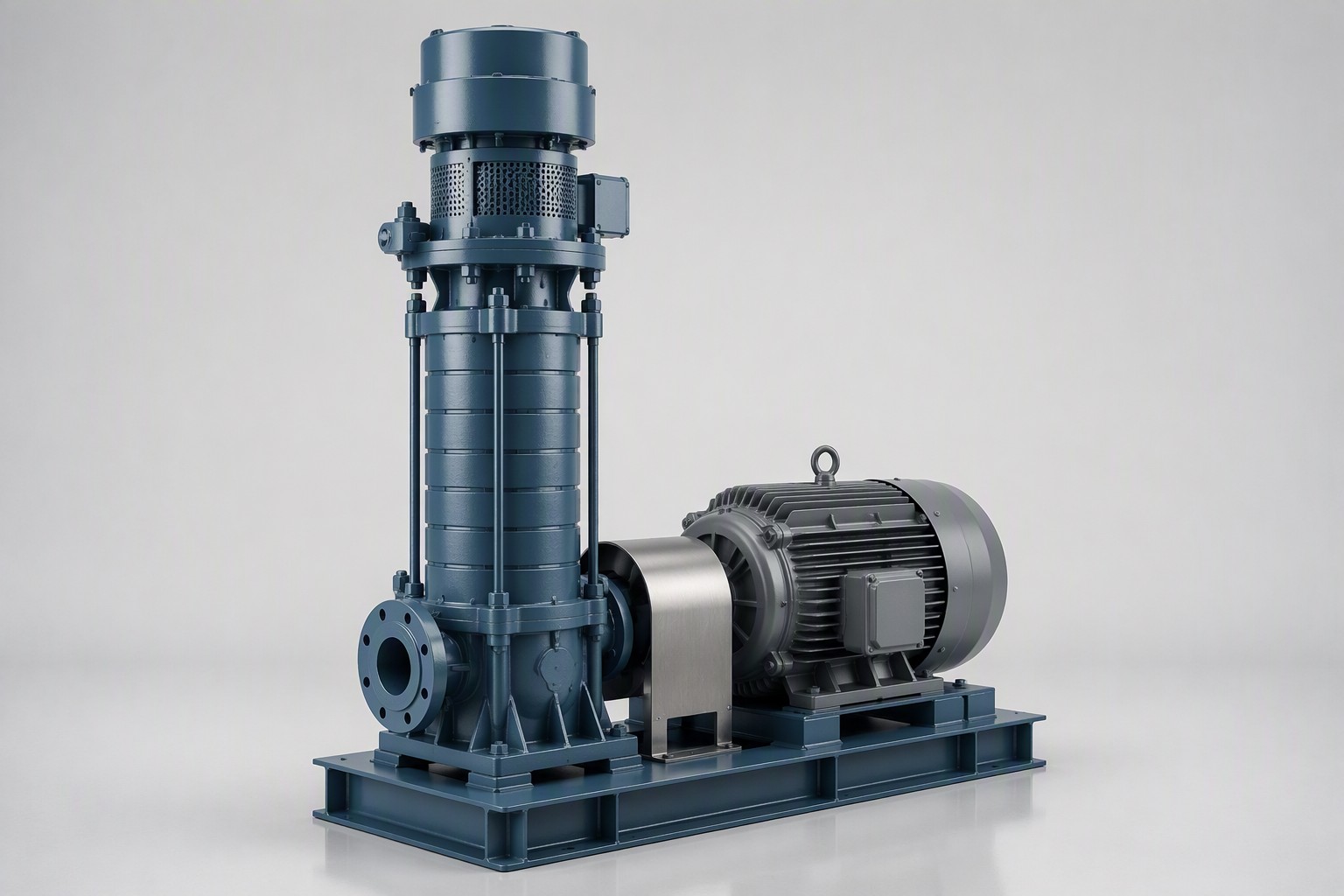
Pump Services Across a Thermal Power Plant
A thermal power plant converts fuel heat into steam, and steam into electricity. Around that steam cycle sits a network of rotating machines that move feedwater, condensate, cooling water and auxiliary fluids. Each service imposes its own combination of flow, head, temperature and reliability requirements, so no single pump type serves a whole plant; a coordinated set of pumps is selected duty by duty.
Duty selection starts from the water and steam balance. The feed system must return treated water to the boiler at firing pressure; the condensate system recovers spent steam as water; the cooling-water system rejects waste heat to the environment; and auxiliary systems handle chemical dosing, sludge, ash slurry and vacuum. Choosing the right pump family for each station keeps efficiency and availability high over the plant's working life.
Boiler Feedwater and High-Pressure Boosting
Boiler feed is the most demanding pumping service in the plant. The pump must deliver deaerated, near-boiling water at a discharge pressure above the boiler's operating pressure, continuously, for tens of thousands of hours. Multistage pumps are the standard answer because stacking stages builds head without extreme impeller speeds. In Qingdao Green Power's vertical inline range, the GDL multistage variant reaches the higher heads — above 80 m and up to 150 m within the series — needed for boiler feed and high-rise pressure boosting; the ISG/GDL series spans 1.6–1200 m³/h at 5–150 m head with 0.18–132 kW motors for water at -20°C to 120°C.
Qingdao Green Power Pump Families for Power-Plant Duties
| Plant service | Qingdao Green Power series | Key range |
|---|---|---|
| Boiler feed, high-pressure boosting | ISG vertical inline / GDL multistage | 1.6–1200 m³/h; head 5–150 m (GDL above 80 m); 0.18–132 kW; -20°C to 120°C |
| Water and low-viscosity process liquids | IS / ISW centrifugal | 1.5–1600 m³/h; head 2–125 m; 0.18–250 kW; ≤80°C |
| Tanks, pits, sumps and hot duties | ZJL / LZ submerged vertical | 2–600 m³/h; head 8–100 m; immersion 0.5–3 m; ≤100°C standard, ≤300°C high-temperature version |
| Condenser air removal, vacuum | 2BV liquid-ring vacuum pump | 0.45–8.33 m³/min; ultimate vacuum 0.097 MPa absolute |
| Fuel and lube oil transfer | 3GB triple screw | 2.4–241.7 m³/h; oil temperature up to 350°C |
Where the feed train runs at extreme pressure, every pump detail is engineered for the specific plant; see our notes on boiler feed pump applications and the wider industrial pumps for power plants topic for the full picture.
Condensate, Cooling Water and Service Water
Below the boiler, the plant recovers condensate from the turbine condensers and returns it to the feed train, circulates cooling water through the condenser to reject waste heat, and distributes treated service water around the site. For these water duties, horizontal end-suction and vertical inline centrifugal pumps are the workhorses: simple, efficient, easily maintained, and matched to flows from small services to very large circulation duties.
Vertical inline ISG pumps install directly in the pipe run with suction and discharge flanges on one axis, saving floor space in crowded plant pump rooms. Where suction conditions are tight, an end-suction arrangement with a lower NPSH requirement is preferred; both sit inside the ISG/GDL pipeline pump and centrifugal pump ranges, and the same families serve make-up and demineralisation duties under the water treatment pump selection approach.
Submerged Pumps for Pits, Sumps and Hot Duties
Not every liquid sits at pump-room floor level. Condensate collects in pits below the turbine hall, cooling-water returns gather in underground sumps, and drainage accumulates in floor pits. For liquid below grade, a submerged vertical pump — motor above the liquid, impeller under it, and the shaft running through a bearing column with no mechanical seal immersed in the liquid — removes the suction-piping and priming problems of surface pumps.
ZJL/LZ submerged pumps cover 2–600 m³/h at 8–100 m head with immersion depths of 0.5–3 m, standard service to 100°C and a high-temperature version to 300°C for hot-water pits. The submerged pump page covers construction and installation.
Vacuum, Sludge and Fuel-Oil Auxiliary Duties
Beyond water movement, a plant leans on auxiliary pump types. Liquid-ring vacuum pumps extract air and non-condensable gases from the condenser and support gland sealing; because the liquid ring tolerates wet, vapour-laden gas, they suit the condenser better than dry-running machines. Screw pumps handle heavy fuel oil or lubricating-oil transfer where viscosity defeats a centrifugal pump — the 3GB triple-screw design moves low-viscosity oils up to 350°C. Sludge and ash slurry need pumps tolerant of solids and viscous media.
Each auxiliary duty deserves the same selection care as the main feed pump — see the liquid-ring vacuum pump selection guide, the industrial sludge transfer topic and the screw pump product page.
Selecting Pumps as a Package
A power station rarely buys a single pump; it buys a coordinated set, and the value lies in matching every machine to its service — flow, head, temperature, liquid quality, suction conditions and duty cycle. Supply the full duty list and each service can be mapped to the right family, with common spare parts and maintenance practices where possible. Because plant-specific selection depends on the confirmed current range, confirm current model availability and specifications with Qingdao Green Power before procurement.
Frequently Asked Questions
Which pumps are used for boiler feedwater in a thermal power plant?
Boiler feedwater is handled by multistage pumps that build high discharge pressure. Qingdao Green Power's GDL multistage vertical inline pumps reach heads above 80 m — up to 150 m in the series — for boiler feed and high-rise boosting; the ISG/GDL range spans 1.6–1200 m³/h at 5–150 m head.
Why use vertical inline pumps in a power plant?
ISG vertical inline pumps mount directly in the pipeline with suction and discharge on the same axis, so they save floor space in crowded plant pump rooms and need no separate pump base or elbow fittings. Where suction conditions are challenging, an end-suction layout with a lower NPSH requirement is preferred.
Can submerged pumps handle hot liquids in power-plant service?
Yes. ZJL/LZ submerged vertical pumps install with the impeller in the liquid and no mechanical seal in the liquid — the shaft runs through a bearing column. Standard service covers liquids to 100°C and a high-temperature version reaches 300°C for hot-water pits and similar duties.
Why does a power plant need a vacuum pump?
A liquid-ring vacuum pump removes air and non-condensable gases from the condenser and supports gland sealing and priming. Because the liquid ring tolerates wet, condensable vapour, it suits the condenser environment better than dry vacuum pumps.
List your plant's pump duties — flow, head, temperature and liquid — and the engineering team will map each service to the right pump range.
Get a Quote
Send your fluid data and duty point. Engineers reply within 24 hours.
Contact Us →💬 WhatsApp NowRelated Products
- Pipeline Pump — ISG/GDL
- Centrifugal Pump
- Submerged Pump — ZJL/LZ
Related Articles
Boiler Feed Pump Applications
Feed system duties
Industrial Pumps for Power Plants
Station-wide overview
Water Treatment Pump Selection
Make-up and demineralisation