
Boiler Feed Pump Industrial Applications
Boiler feed pump industrial applications explained: where multistage feedwater pumps run — power plants, industrial boiler houses, cogeneration and heat-recovery plants — and why the boiler feed duty is the most critical pumping job in the steam cycle.
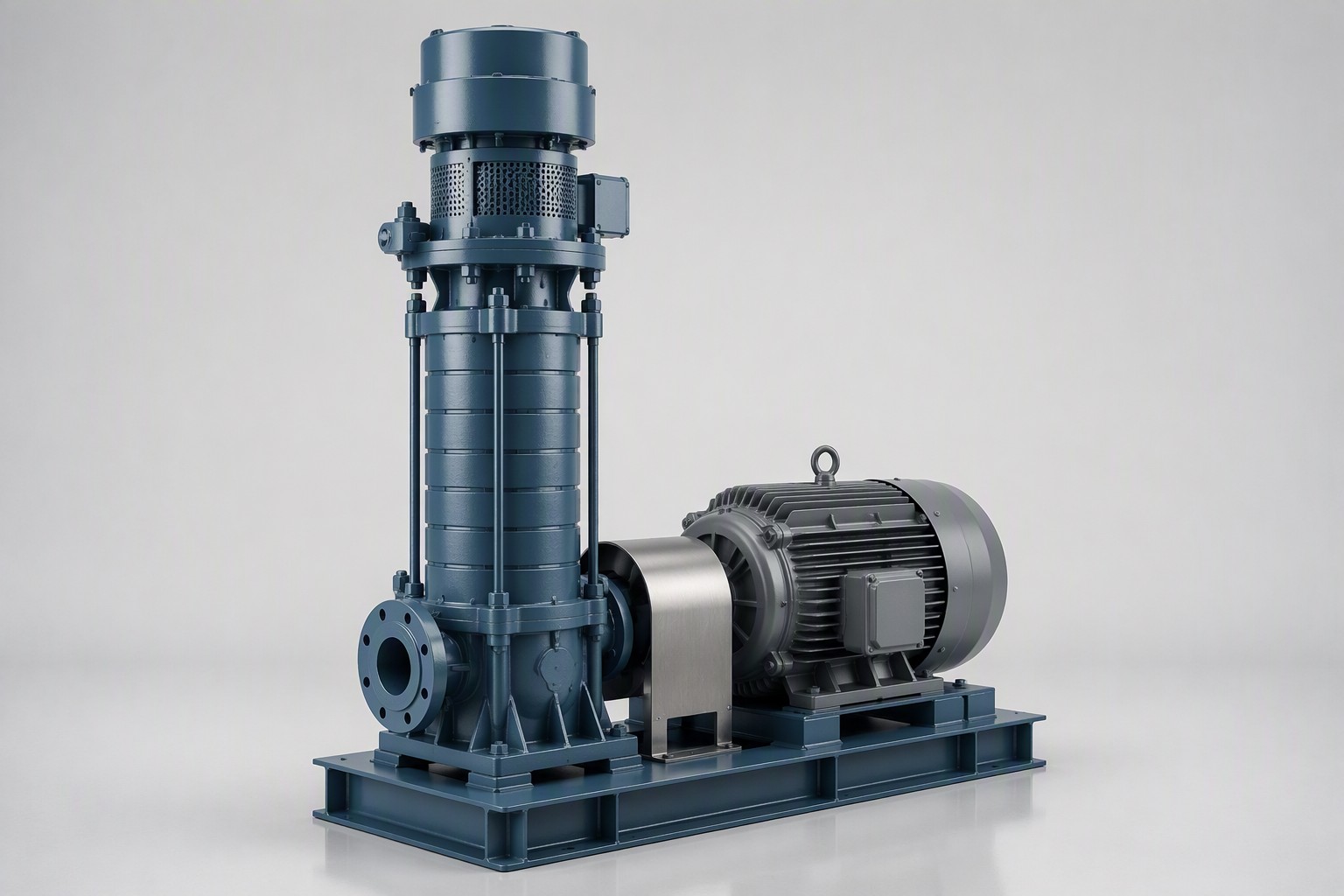
A boiler feed pump delivers treated, deaerated feedwater into a steam boiler at a pressure reliably above the boiler's operating pressure, and it is found wherever steam is generated — utility and captive power plants, industrial boiler houses, cogeneration and heat-recovery installations. Because boiler pressure converts into high total head, the standard machine is a multistage centrifugal pump that runs continuously and follows the steam load. Qingdao Green Power covers the boiler feed band of this application with the GDL multistage variant of its ISG/GDL pipeline pump range, published for higher-head service above 80 m.
What Makes Boiler Feed a Demanding Application
In every steam plant the feed pump sits between the deaerator and the boiler, and the plant cannot produce steam without it. The application is defined less by exotic media than by severity: hot water close to its vapour pressure on the suction side, high discharge pressure on the delivery side, and a load that changes whenever steam demand changes. A feed pump that trips stops the plant, so the whole feedwater system is usually designed with redundancy, minimum-flow protection and monitoring around this single machine. It belongs to the group of industrial pumps for power plants that must run for years between overhauls.
Main Applications of Boiler Feed Pumps
Boiler feed pumps are applied across the whole range of steam-raising industries. The plants differ in size and pressure, but each one asks the pump to do the same core job: replace every kilogram of steam that leaves the boiler with an equal mass of feedwater.
Utility and captive power plants
In electricity generating stations the boiler feed pump feeds the steam generator at the flow and pressure the turbine demands. Large stations run the pump continuously at high power, often with a duty machine plus standby and startup provision, and the feedwater circuit includes a deaerator, an economiser and feedwater control valves that the pump must push against. The same high-head logic applies from small captive power sets to large utility boilers, as covered in the review of pumps used in thermal power plants.
Industrial process steam and cogeneration
Food, beverage, textile, paper, chemical and refinery plants raise steam for heating, cooking, distillation and drying. Many of these sites are cogeneration (CHP) plants that produce electricity and process steam together, and their boiler loads swing with production shifts and batch cycles. That makes turndown, rapid load response and reliable low-load recirculation as important as the rated duty point.
Heat-recovery and auxiliary boiler plants
Heat-recovery steam generators behind gas turbines, waste-heat boilers on kilns and furnaces, and package boilers for heating all need the same feedwater service at smaller scale. Where feedwater is prepared by softening, demineralising or deaerating plant upstream, the whole train from water treatment pump selection to the boiler feed pump is sized as one system.
Inside the Feedwater System the Pump Serves
Understanding where the pump sits explains how it must be applied. Treated make-up water and returned condensate are collected and deaerated in a feed tank that strips oxygen and other corrosive gases, because oxygen and carbon dioxide attack boiler metal at temperature. The boiler feed pump takes suction from this tank and discharges through a feedwater control valve and the economiser into the boiler drum (or through the full length of a once-through boiler).
- Positive suction head: the deaerator tank is normally elevated so the pump has a static suction head of hot water instead of a lift.
- Minimum-flow recirculation: at low load a recirculation line returns surplus flow to the tank, keeping the pump above its minimum stable flow.
- Control margin: the pump head must exceed boiler operating pressure by enough to give the control valve authority at all loads.
- Hot-water NPSH: feedwater in the tank is near saturation, so the available NPSH is small and the pump suction design must protect the first stage from cavitation.
The ISG/GDL Range for Boiler Feed Duty
In many industrial steam and power applications the feedwater flow and head sit inside the envelope of Qingdao Green Power's vertical inline ISG/GDL pipeline pump range. Vertical inline construction lets the pump mount directly in the pipe run, saving floor space, and the multistage GDL variant is the configuration aimed at the higher-head band where boiler feed duties live.
Published ISG/GDL Pipeline Pump Envelope
| Parameter | Value |
|---|---|
| Flow rate (ISG series) | 1.6–1200 m³/h |
| Head | 5–150 m |
| Motor power | 0.18–132 kW |
| Liquid temperature | -20°C to 120°C |
| Installation | Vertical inline — motor above, in-line flanges |
| GDL multistage variant | Higher-head band above 80 m — boiler feed, high-rise boost |
Confirm the actual duty point — boiler maximum continuous rating, discharge pressure, deaerator elevation and feedwater temperature — against the selected model's performance curve before finalising the configuration.
Application Checks That Protect the Machine
Reliability in boiler feed service is won in application engineering as much as in manufacturing. Operators and engineers apply the same checks across power and industrial sites:
- Run at the duty point: an oversized pump runs away from its best-efficiency point, loads its bearings and drifts into unstable recirculation flow.
- Respect the minimum flow: keep the recirculation valve functional; low flow heats the water inside the pump and can cause vapour binding.
- Guard the suction: keep suction piping short and leak-free — air ingress on the suction side destroys feed pump performance and encourages cavitation.
- Watch the seals and bearings: log vibration, seal leakage and bearing temperature so wear is caught before it becomes a forced outage.
With feedwater temperatures climbing toward the upper part of the pump's temperature band, confirm seal, gasket and material grades with the manufacturer so the whole machine suits your feedwater chemistry and operating temperature.
Frequently Asked Questions
What are the main industrial applications of a boiler feed pump?
Boiler feed pumps supply treated, deaerated feedwater to steam boilers wherever steam is generated — utility and captive power plants, industrial boiler houses serving process steam, cogeneration (CHP) plants and heat-recovery installations. In every case the pump runs continuously, delivering flow that matches steam demand at a pressure above boiler operating pressure.
Why is the boiler feed pump a critical machine in a steam plant?
If feedwater flow stops, boiler water level falls and the plant must trip or risk serious damage, so the feed pump is treated as a critical continuously running machine. It must hold head across load swings, ride through transients, and be protected at low load by a minimum-flow recirculation line back to the deaerator tank.
What type of pump is used for boiler feed applications?
Because boiler operating pressures translate into high total head — typically above 80 m — the standard configuration is a multistage centrifugal pump that builds head stage by stage. Qingdao Green Power's GDL multistage variant of the ISG/GDL pipeline pump range covers this higher-head band above 80 m for boiler feed duties.
Why does the boiler feed application need special NPSH care?
Feedwater in the deaerator tank is hot and close to its vapour pressure, so the net positive suction head available at the pump is small. Mount the pump below the deaerator for positive static head, keep the suction piping short and straight, and select a model with adequate NPSH margin so the first stage does not cavitate.
Send your boiler rating, feedwater temperature, deaerator elevation and discharge pressure — the engineering team will confirm the right ISG or GDL configuration for your plant.
Get a Quote
Send your boiler and feedwater data. Engineers reply within 24 hours.
Contact Us →💬 WhatsApp NowRelated Products
- ISG/GDL Pipeline Pump
- Centrifugal Pump
Related Articles
Pumps in Thermal Power Plants
Feed and utility pump duties
Industrial Pumps for Power Plants
Power station applications
Water Treatment Pump Selection
Feedwater preparation duties