
Industrial Pumps for Oil and Gas Applications
Industrial pumps for oil and gas applications explained: how centrifugal, pipeline, screw and submerged pumps serve crude transfer, produced water, tank farms and refinery utility duties, and which technology fits each duty.
Industrial pumps for oil and gas move everything from water and light hydrocarbons to heavy crude, produced water and hot fuel oil, so the right choice is driven by liquid viscosity, temperature and solids content. Centrifugal machines carry the water and light-liquid duties; screw pumps take over for viscous and hot-oil services. Qingdao Green Power covers the field with IS/ISW centrifugal pumps (1.5–1600 m³/h, 2–125 m), CYZ self-priming fuel and oil pumps (3.2–600 m³/h, 12–80 m), G and 3GB screw pumps and ZJL/LZ submerged pumps, with guidance to switch to screw pumps above about 150 cSt.
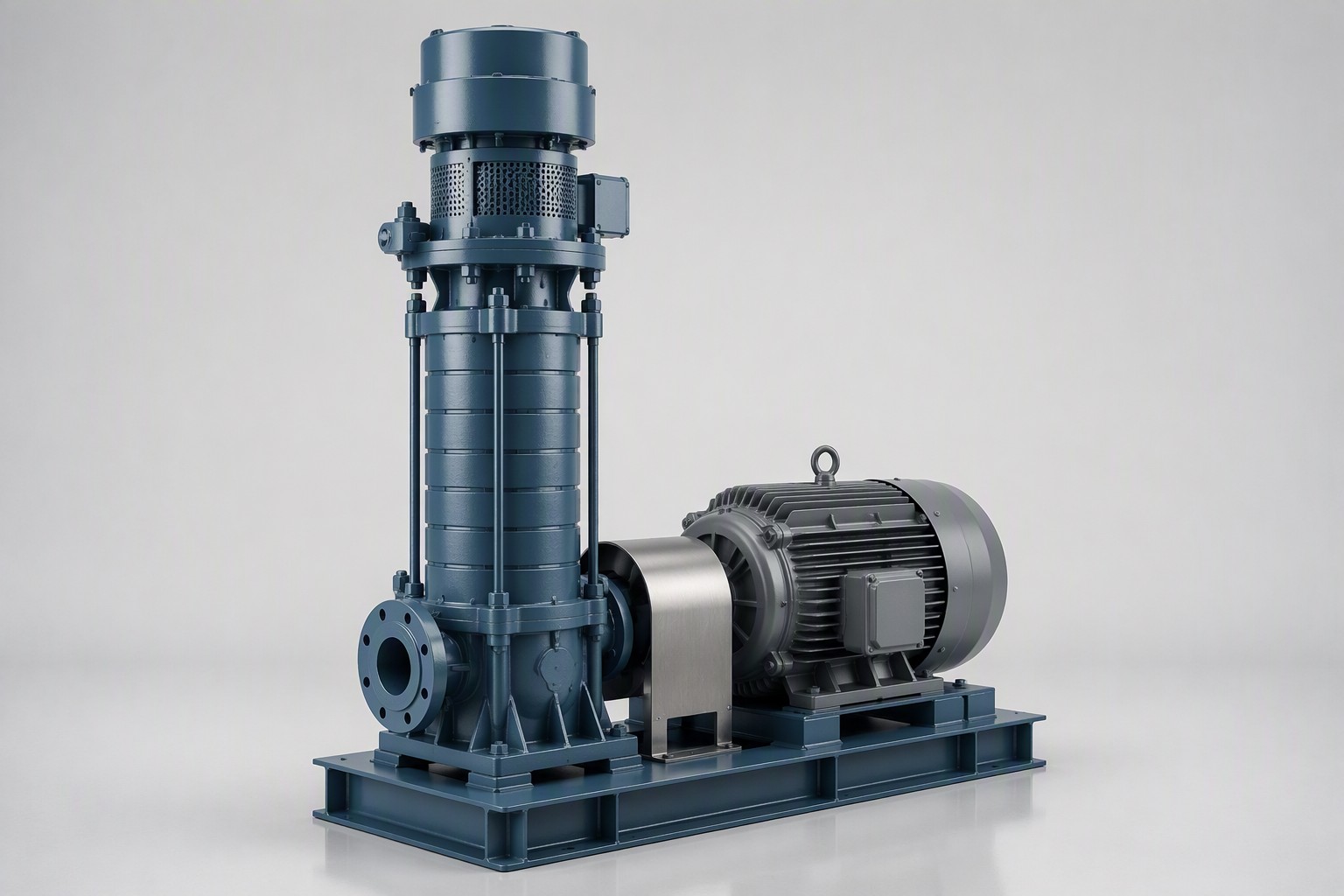
The Oil and Gas Pumping Landscape
Oil and gas sites group pumping work into three broad stages, each with its own chemistry, temperature and flow profile.
Upstream production
Upstream facilities move crude from the wellhead through separation, treat produced water and inject water for pressure maintenance. Liquids range from light condensate to waxy and heavy crude, often carrying produced sand and emulsions, so screw and solids-tolerant machines appear alongside standard centrifugals.
Midstream transfer and storage
Midstream terminals, tank farms and pipeline stations transfer crude and finished products between storage and transport. Duties include tanker loading, pipeline boosting and tank-bottom evacuation — applications where self-priming centrifugal and screw pumps are both common.
Downstream processing and utilities
Refineries and petrochemical plants pump process feed, reflux, cooling water, fire water, boiler feed and finished products. Most are continuous water and light-hydrocarbon duties, engineered with the same care as the industrial pumps used in power plants.
Matching Pump Technology to Oil and Gas Duties
Each pump family suits its own band of viscosity, temperature and solids. Qingdao Green Power's published envelopes map the field:
QGP Pump Families for Oil and Gas Service (Published Envelopes)
| Pump family | Published range | Typical oil and gas duty |
|---|---|---|
| IS/ISW centrifugal | 1.5–1600 m³/h · 2–125 m · to 80°C | Cooling water, utility water and light condensate |
| CYZ self-priming centrifugal | 3.2–600 m³/h · 12–80 m | Fuel and oil transfer, tanker loading, line draining |
| ISG/GDL pipeline pump | 1.6–1200 m³/h · 5–150 m · -20°C to 120°C | Vertical inline booster and transfer; GDL multistage above 80 m for boiler feed |
| G single screw (progressive cavity) | 0.1–150 m³/h · 0.6–2.4 MPa | Heavy crude, residue, tank sludge and abrasive slurries — never run dry |
| 3GB triple screw | 2.4–241.7 m³/h · up to 350°C | Clean low-viscosity oil kept hot, hot fuel and heat-transfer services |
| ZJL/LZ submerged pump | 2–600 m³/h · 8–100 m · immersion 0.5–3 m | Below-grade tank pits and sumps; to 100°C standard, 300°C high-temperature version |
For clean fuel and light oil, the compact answer is usually a centrifugal pump, including the self-priming CYZ configuration; the screw-pump families on the G and 3GB industrial screw pump page carry the viscous and high-temperature duties.
Application Notes by Duty Type
Water, produced water and sludge
Cooling water, fire water and produced water are handled by end-suction and inline centrifugal pumps, with solids-handling variants for sand and oily sludge. The train follows the same logic as water treatment pump selection, while oilfield wastewater and sludge duties are covered in our wastewater pump solutions and industrial sludge transfer pump guides.
Steam and utility systems
Steam-flood projects, refinery boiler houses and cogeneration units all need reliable feedwater pumping. Multistage and vertical inline machines such as the GDL variant of the ISG/GDL pipeline pump cover the head band above 80 m used for boiler feed duties, described in our boiler feed pump applications article.
Oil transfer and tank farms
Transfer splits between light products and viscous stocks. Light fuels move well with self-priming centrifugals that pull from buried tanks; heavy crude, residue and tank bottoms need positive displacement — the G-type single screw moves media above about 1500 cSt, while the 3GB triple screw suits clean oil kept hot and thin. Where the pump sits in a pit or below-grade sump, a submerged pump installs directly in the tank with no seal in the liquid.
Selection Checks for Oil and Gas Sites
- Viscosity and temperature: confirm the fluid at the coldest start condition and at operating temperature; above about 150 cSt a screw or gear pump replaces the centrifugal option.
- Solids and abrasives: produced sand, scale and sludge call for solids-tolerant rotors and hardened or elastomeric wear parts.
- Pressure and NPSH: define the discharge pressure or head, the suction arrangement and the available NPSH — especially on hot liquids close to vapour pressure.
- Hazardous-area rating: match the motor, electrical components and temperature class to the site area classification and gas group.
- Seals and materials: choose the seal plan and wetted materials for the actual chemistry; corrosive or sour services need verified material grades.
- Dry-run and relief protection: progressive cavity stators fail within seconds without liquid, so fit relief protection against blocked discharge.
Frequently Asked Questions
Which industrial pumps are most widely used in oil and gas applications?
Centrifugal pumps carry most water and light-hydrocarbon duties — Qingdao Green Power publishes its IS/ISW range at 1.5–1600 m³/h and 2–125 m head, and its CYZ self-priming variant at 3.2–600 m³/h and 12–80 m for fuel and oil transfer. Screw pumps cover the viscous side: the G-type single screw (0.1–150 m³/h, 0.6–2.4 MPa) for heavy crude and residue, and the 3GB triple screw (2.4–241.7 m³/h, up to 350°C) for clean hot oil.
Can a standard centrifugal pump handle crude oil transfer?
Only when the crude is light and free-flowing. Qingdao Green Power's published guidance for its IS/ISW centrifugal range is to switch to a gear or screw pump above about 150 cSt, so heavy crude, waxy crude and tank bottoms belong with the G-type single screw pump (0.1–150 m³/h, 0.6–2.4 MPa). Confirm the specific crude gravity, viscosity and temperature with Qingdao Green Power before selecting.
Why are screw pumps used for heavy oil and sludge in oil and gas service?
Heavy oil, residue and tank sludge are viscous and often contain solids or water, which makes impeller-type pumps inefficient and erosion-prone. The G-type single screw (progressive cavity) pump moves such media gently at 0.1–150 m³/h and 0.6–2.4 MPa, but it must never run dry because the elastomeric stator is destroyed within seconds without liquid.
What must be checked before installing a pump in a hazardous oil and gas area?
Confirm the area classification and gas group, the required temperature class, motor and electrical certification, the seal plan and the wetted materials against the actual fluid chemistry. For any specific oil and gas model, confirm current availability and specifications with Qingdao Green Power before procurement.
Describe your oil and gas duty — liquid, viscosity, temperature, flow, pressure and site area classification — and the engineering team will confirm the pump family and configuration.
Get a Quote
Send your fluid data and duty point. Engineers reply within 24 hours.
Contact Us →💬 WhatsApp NowRelated Products
- Centrifugal Pump (IS / ISW / CYZ)
- Industrial Screw Pump (G / 3GB)
Related Articles
Industrial Pumps for Power Plants
Power station utility duties
Boiler Feed Pump Applications
Steam and feedwater duties
Wastewater Pump Solutions
Produced and oily water