
Wastewater Pump Solutions for Every Treatment Stage
Wastewater pump solutions explained stage by stage: solids-handling centrifugal pumps for raw sewage, submerged pumps for lift stations, screw pumps for sludge and standard centrifugals for clarified water.
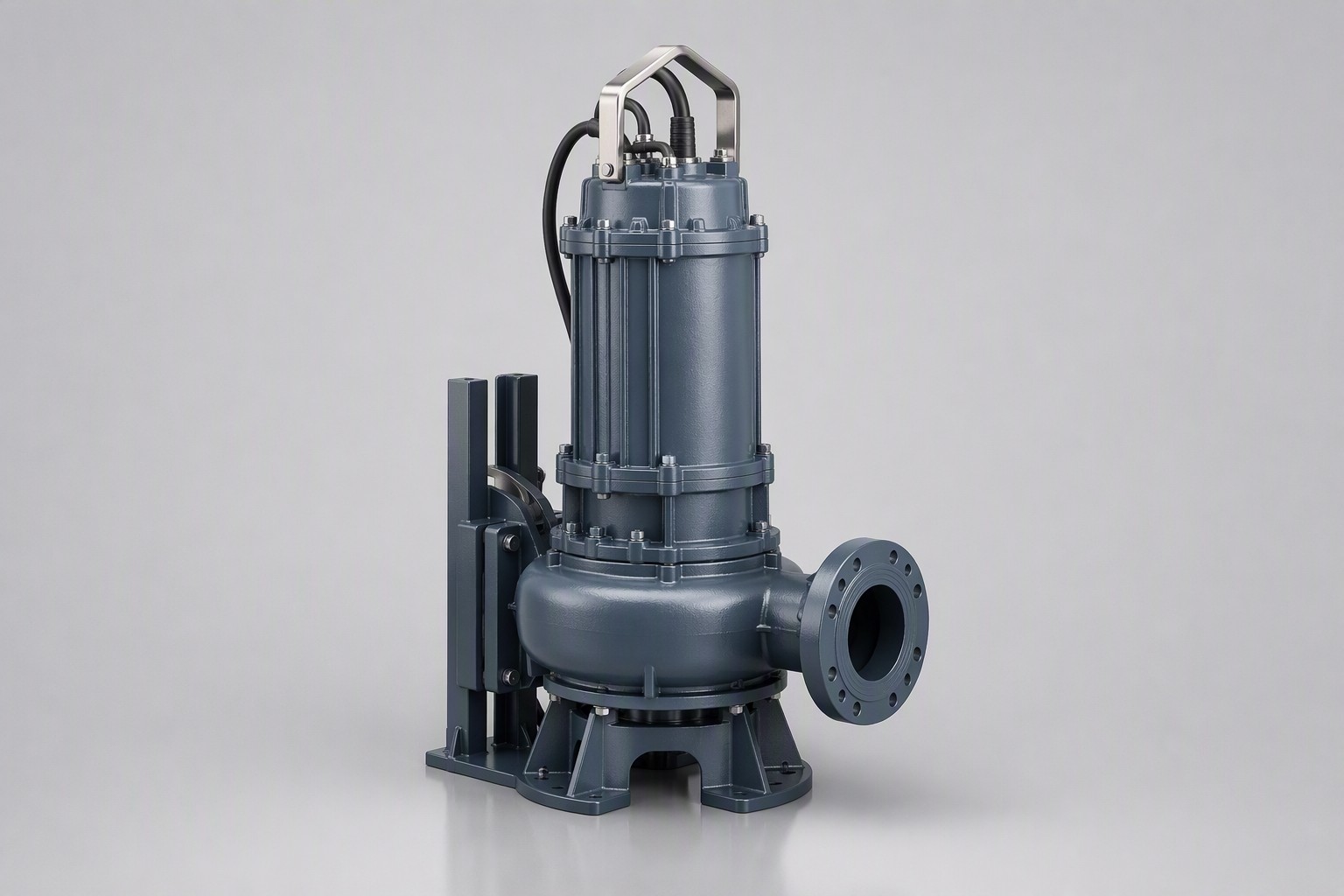
No single pump moves a whole wastewater plant: each treatment stage has its own fluid and its own pump solution. Raw sewage needs a solids-handling centrifugal pump (ZW series); below-grade lift stations use submerged vertical pumps (ZJL/LZ); thick sludge goes to a G-type single-screw progressive cavity pump; and clarified water between clarifiers moves with standard centrifugal pumps. Solids size, viscosity and dry-run risk decide which family fits.
Match the Pump to the Treatment Stage
Wastewater changes character through a plant: raw sewage loaded with rags, grit and solids at the inlet; thick, abrasive sludge in the sludge lines; nearly clean water after clarification. Each fluid would destroy the wrong pump, so the plant is a chain of pump solutions chosen stage by stage. Our wastewater pump selection guide covers sizing; here we map the four classic duties:
- Raw sewage and screened solids — solids-handling centrifugal pumps with generous impeller passages.
- Below-grade lift stations and wet wells — submerged vertical pumps that sit in the pit.
- Thick sludge — progressive cavity (screw) pumps that push viscous media steadily.
- Clean water between clarifiers — conventional centrifugal pumps.
Raw Sewage: Solids-Handling Centrifugal Pumps
The plant's first duty is the worst: raw sewage carries rags, grit and stringy solids that jam closed impellers quickly. The answer is a centrifugal pump designed for solids handling, with a wide clog-resistant impeller passage sized to the debris. Qingdao Green Power publishes the ZW series for this wastewater and solids-handling duty inside its industrial centrifugal pump range: 5–800 m³/h flow, 14–80 m head and 2.2–55 kW. Match the impeller passage to the largest expected solids — not the average flow — and keep the suction flooded to prevent clogging and dry-run damage.
Lift Stations and Wet Wells: Submerged Vertical Pumps
Below-grade sewage cannot be lifted by a surface pump without deep, expensive suction piping, so lift stations use a submerged vertical pump such as the ZJL/LZ series: the impeller sits under the liquid while the motor stays above on a flanged top plate, connected by a long shaft through a bearing column — with no mechanical seal in the liquid. Qingdao Green Power publishes the ZJL/LZ range at 2–600 m³/h flow, 8–100 m head and 0.5–3 m immersion depth (customisable), with standard service to 100°C and a high-temperature version to 300°C; full details are on the submerged vertical pump product page.
Wastewater Pump Solutions by Treatment Stage
| Treatment stage | Recommended pump family | Published range (Qingdao Green Power) |
|---|---|---|
| Raw sewage / solids | ZW solids-handling centrifugal | 5–800 m³/h, head 14–80 m, 2.2–55 kW |
| Below-grade lift station | ZJL/LZ submerged vertical | 2–600 m³/h, head 8–100 m, immersion 0.5–3 m |
| Thick sludge | G-type screw (progressive cavity) | 0.1–150 m³/h, 0.6–2.4 MPa |
Thick Sludge: Screw and Progressive Cavity Pumps
Sludge is concentrated, viscous and sometimes abrasive, moved at low, steady flow to digesters and dewatering. Centrifugal pumps lose efficiency quickly as viscosity climbs, so thick sludge goes to a positive displacement machine. The G-type single-screw (progressive cavity) pump uses a helical metal rotor inside an elastomeric stator; the two form sealed cavities that travel from suction to discharge with little shear. Qingdao Green Power publishes the G-type range at 0.1–150 m³/h flow and 0.6–2.4 MPa, with stator grades (NBR, EPDM or FKM) matched to the sludge. One rule dominates: never run a progressive cavity pump dry — the elastomer stator is destroyed within seconds. See our article on screw pumps for viscous fluids and the industrial sludge transfer pump guide for stator selection.
Clean Water Transfer Between Clarifiers
By the clarifiers, most solids are gone and the duty becomes ordinary water transfer — return sludge lines, recycling and discharge. Here a standard centrifugal pump is the economical choice, selected by the normal rules of flow, head and NPSH. Because the stages are hydraulically linked, balance capacities across the site with our water treatment plant pump selection article so no stage becomes the bottleneck.
Selection Checklist: Solids, Viscosity and Dry-Run Risk
Three fluid facts drive the choice of a wastewater pump solution:
- Solids size and type — match the impeller free passage to the largest debris; rags favour open or non-clog designs.
- Viscosity and concentration — thin sewage suits centrifugal pumps; thick sludge points to screw pumps.
- Dry-run risk — level control and low-level cut-out protect both pump families.
- Temperature and corrosiveness — confirm wetted materials and the temperature rating (standard to 100°C, high-temperature versions available).
Provide flow, solids loading, viscosity and pit arrangement per stage, and the Qingdao Green Power engineering team will map each duty to the current ZW, ZJL/LZ or screw-pump range. Confirm availability before procurement.
Frequently Asked Questions
What pump type moves raw sewage containing solids?
A solids-handling centrifugal pump whose impeller passage suits the expected debris. Qingdao Green Power's ZW wastewater series is published at 5–800 m³/h flow, 14–80 m head and 2.2–55 kW for wastewater and solids-handling duty. Match the free passage to the largest solids so rags and grit pass without jamming.
When should a lift station use a ZJL/LZ submerged pump instead of a standard centrifugal pump?
When sewage arrives below grade in a wet well where a surface pump would have poor or impossible suction. ZJL/LZ submerged vertical pumps install through a flanged top plate with the impeller submerged and the motor above, and no mechanical seal sits in the liquid. Published range: 2–600 m³/h flow, 8–100 m head and 0.5–3 m immersion (customisable), standard service to 100°C and a high-temperature version to 300°C.
What kind of pump is used for thick sludge?
Thick sludge is usually moved by a G-type single-screw (progressive cavity) pump: a helical metal rotor inside an elastomeric stator forms sealed cavities that push the sludge steadily to discharge. The published range is 0.1–150 m³/h at 0.6–2.4 MPa. Never run it dry — the elastomer stator is destroyed within seconds.
How do I prevent clogging in a wastewater pump?
Match the impeller's solids passage to the largest debris the stream can carry and use solids-handling designs on raw sewage. Keep wet wells and suction piping free of stagnant zones, and reserve standard centrifugal pumps for cleaner water between clarifiers. Confirm current models and sizing with Qingdao Green Power for your solids loading.
Send your flow, solids loading, viscosity and pit arrangement per stage — the engineering team will map each duty to the right pump family.
Get a Quote
Send your fluid data and duty point. Engineers reply within 24 hours.
Contact Us →💬 WhatsApp NowRelated Products
- ZW Wastewater Pump
- ZJL/LZ Submerged Pump
Related Articles
Wastewater Pump Selection Guide
Step-by-step sizing method
Industrial Sludge Transfer
Moving thick sludge reliably
Water Treatment Plant Pumps
Balancing the whole site