
Wastewater Pump Selection Guide
How to size and choose pumps for sewage, effluent and sludge: solids-handling, submerged and progressive cavity wastewater pumps from Qingdao Green Power.
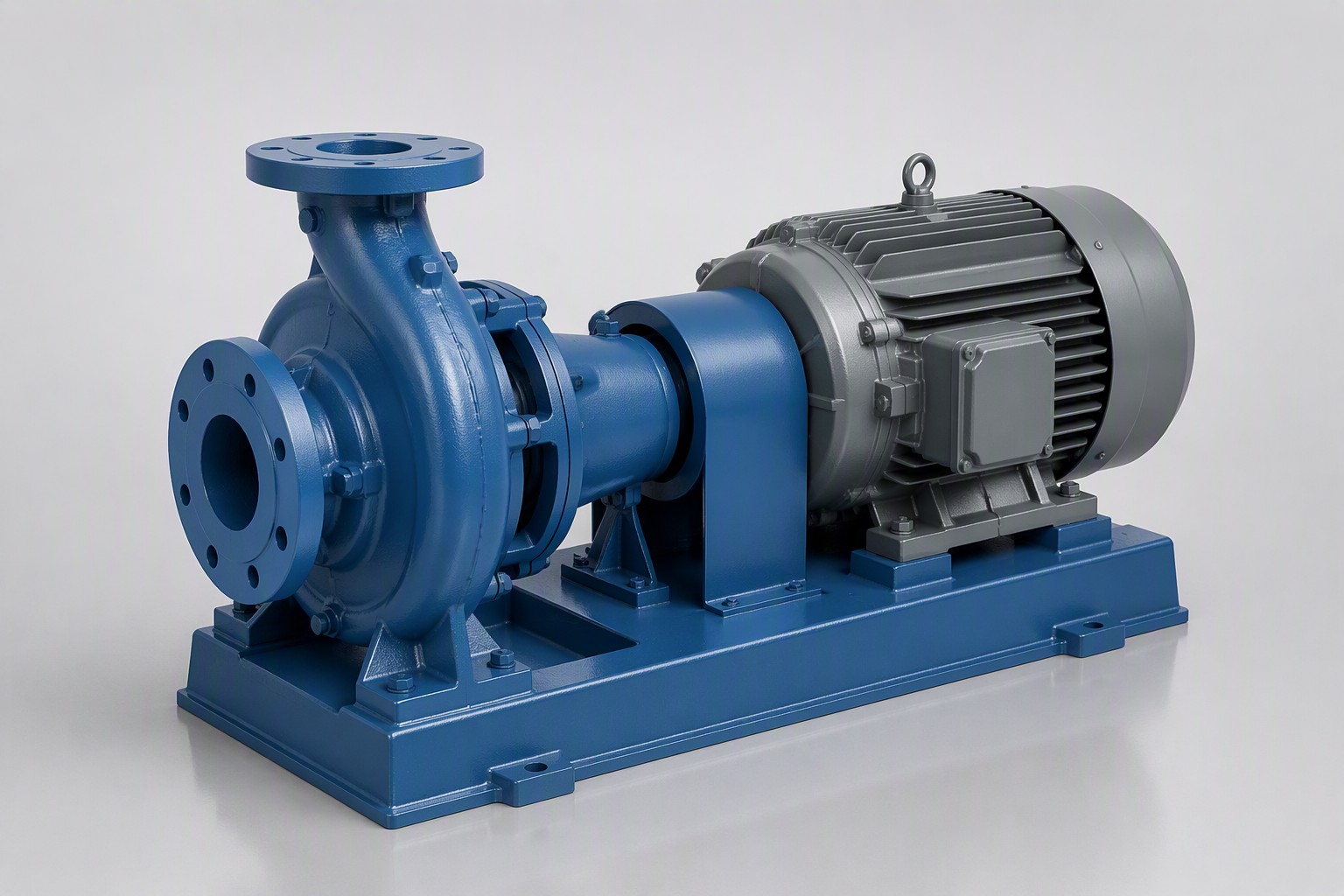
Selecting a wastewater pump starts with the solids, not the catalogue: define the flow and head, characterise the debris, then match the pump family whose impeller passage and installation fit the duty. Raw sewage suits a solids-handling centrifugal pump such as the ZW series; below-grade wet wells call for a ZJL/LZ submerged pump; thick sludge needs a G-type progressive cavity pump; clarified water moves with an IS/ISW centrifugal pump.
Why Wastewater Pumps Are Harder to Select
Wastewater is not one liquid: the same network can carry thin, debris-laden sewage, chemically aggressive industrial effluent and concentrated sludge. A pump that suits one of these fluids can be destroyed by the next, so selection is made fluid by fluid. Failures concentrate in five predictable ways:
- Clogging — rags and stringy solids wrap around a closed impeller and stop the flow.
- Cavitation — a starved suction flashes liquid to vapour inside the impeller and erodes the metal.
- Dry running — an emptied wet well leaves the pump spinning without liquid, damaging the seal.
- Abrasion and corrosion — grit wears the casing; sour or chemical effluent attacks the metallurgy.
- Viscosity miscalculation — paste-like sludge is sent to a pump family that cannot move it.
Step 1: Collect the Duty Data Before You Compare Pumps
Every wastewater quotation starts from the same data set, so collect it first: flow in normal and peak conditions, total head, liquid name and temperature, specific gravity and viscosity, the size and type of solids present, and available NPSH at the suction. The installation — flooded suction, wet well or pit — decides whether the pump sits above ground or must be submerged; the discipline is covered in our article on pump selection and fluid properties.
Step 2: Match the Pump Family to the Wastewater Duty
With the duty defined, compare published envelopes rather than generic labels. Qingdao Green Power's families cover most wastewater services within verified limits:
Wastewater Pump Families — Qingdao Green Power Published Envelopes
| Wastewater duty | Recommended pump family | Published envelope |
|---|---|---|
| Raw sewage and solids-laden streams | ZW solids-handling centrifugal | Flow 5–800 m³/h · head 14–80 m · 2.2–55 kW |
| Below-grade wet wells and pits | ZJL/LZ submerged vertical | Flow 2–600 m³/h · head 8–100 m · immersion 0.5–3 m |
| Thick sludge and slurries | G-type single-screw (progressive cavity) | Flow 0.1–150 m³/h · pressure 0.6–2.4 MPa |
| Clarified and clean water | IS/ISW end-suction centrifugal | Flow 1.5–1600 m³/h · head 2–125 m · up to 80 °C |
ZW and ZJL/LZ machines belong to the wider industrial centrifugal and submerged vertical pump ranges; the G-type progressive cavity pump sits in the industrial screw pump range. For thixotropic or heavily viscous sludges, follow our high-viscosity pump application guide before fixing the model.
Step 3: Size the Impeller Passage to the Solids
On raw sewage the single most important number is the impeller free passage: it must clear the largest solid the stream can carry, not the average particle. Open and single-channel impellers give the widest passages and the best non-clog behaviour with rags; closed impellers are more efficient on cleaner water. For extreme debris loads, fit screens or grinders upstream instead of forcing a marginal impeller.
Step 4: Protect the Suction Side and the Pump Itself
Wet wells and lift stations are suction-challenged by design: the water level swings, the inflow is uneven and a surface pump can lose prime. Keep available NPSH comfortably above the pump's required NPSH at the worst low-water condition, mount for flooded suction wherever possible, and fit level controls with a low-level cut-out so the pump never runs dry. On the discharge side, keep velocity high enough to carry grit or debris settles in the line.
Step 5: Check Materials, Seals and Motor Power
Finally, match the wetted parts, shaft seal and drive to the real fluid. Cast iron suits neutral municipal sewage; stainless steel or coated alloys serve corrosive or abrasive effluent, and elastomer grades must survive both the chemistry and the temperature — submerged high-temperature versions run to 300 °C. Select mechanical seals for the solids loading, flushed with clean water on aggressive duty. Size the motor for the densest and most viscous condition, including cold start; an oversized motor wastes energy on 24-hour duty — see our pump efficiency improvement guide for the operating side.
From the Paper Duty to a Confirmed Model
Selection does not end at the catalogue: verify the shortlist on its curve at the worst operating point and check the spare-part story before ordering. Aggressive industrial effluent follows the same method — see how wastewater duties are handled across the chemical sector in our industrial pumps for the chemical industry review. Every Qingdao Green Power wastewater range is confirmed against the current production programme, so send your duty data — flow, head, solids loading, temperature and pit layout — and the engineering team will confirm current model availability and specifications before procurement.
Frequently Asked Questions
What data do I need to select a wastewater pump?
Flow in normal and peak conditions, total head or discharge pressure, liquid temperature, and the solids story — type, size and concentration — plus viscosity for sludge and available NPSH at the wet well. Qingdao Green Power builds wastewater quotations from this data set; confirm current model availability before procurement.
What is the difference between a ZW wastewater pump and a ZJL/LZ submerged pump?
The ZW series is a surface-mounted solids-handling centrifugal pump for flooded suction duties on raw sewage — published at 5–800 m³/h flow, 14–80 m head and 2.2–55 kW. The ZJL/LZ series is a submerged vertical pump with the impeller under the liquid and the motor above — 2–600 m³/h, 8–100 m head and 0.5–3 m immersion (customisable), with no mechanical seal in the liquid. Use ZW where suction is flooded; use ZJL/LZ where the source is below grade.
How do I stop a sewage pump from clogging?
Match the impeller's free passage to the largest solids the stream can carry, choose an open or non-clog impeller for rags and stringy debris, keep flow velocity high enough to carry grit, and avoid stagnant zones in the wet well and suction line. Screens or grinders upstream protect the pump where debris loads are extreme.
Which Qingdao Green Power pump moves thick sludge?
The G-type single-screw (progressive cavity) pump handles thick sludge and slurries at 0.1–150 m³/h flow and 0.6–2.4 MPa, with the elastomer stator (NBR, EPDM or FKM) matched to the sludge chemistry and temperature. Never run it dry — the stator is destroyed within seconds. Confirm the current model with Qingdao Green Power.
Send your flow, head, solids loading, temperature and pit layout — the engineering team will confirm the wastewater pump family, model and configuration that fits your site.
Get a Quote
Send your fluid data and duty point. Engineers reply within 24 hours.
Contact Us →💬 WhatsApp NowRelated Products
- Centrifugal Pump (ZW)
- ZJL/LZ Submerged Pump
- Industrial Screw Pump
Related Articles
Pump Selection and Fluid Properties
Why the liquid decides first
High-Viscosity Pump Applications
When sludge turns thixotropic
Pump Efficiency Improvement
Cut energy on 24-hour duty