
Pump Efficiency Improvement Guide
Pump efficiency improvement guide: right-size the pump, operate near the best efficiency point, add variable speed drives, trim impellers and protect NPSH to cut pumping energy.
Pump efficiency improvement starts with the pumping system, not the pump alone. Oversizing, throttling, running far from the best efficiency point, poor suction conditions and worn internal clearances all waste energy. Right-size the machine, control speed to the load, protect the NPSH margin and maintain the pump.
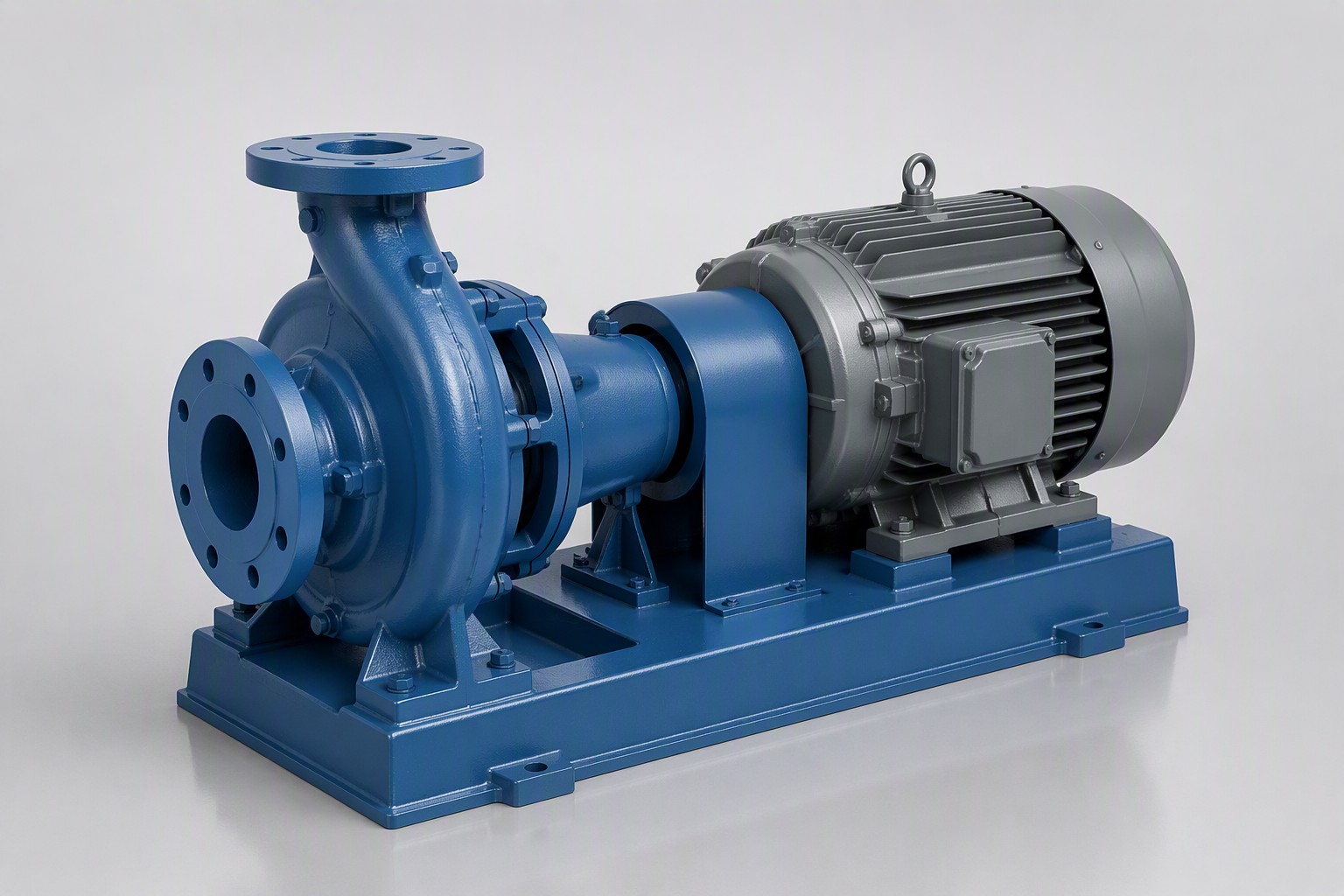
What Actually Drives Pumping Energy Cost
Pumping energy is consumed by the pump hydraulics, the motor and the pipe system together, and the biggest losses are often in the system rather than inside the pump. A fixed-speed pump sized for a worst-case duty frequently runs at part load, where efficiency falls and recirculation rises. Throttling a control valve strangles the flow while the impeller keeps pushing against it, turning surplus energy into heat, noise and wear.
Match the Pump Technology to the Duty First
Technology choice sets the ceiling on achievable efficiency. Centrifugal pumps are the efficient, economical answer for clean, thin liquids, but viscous drag multiplies friction losses inside the casing once the fluid thickens. As a practical rule, above about 150 cSt the advantage disappears and a gear or screw pump is better; our guide to pump selection based on fluid properties explains the crossover. Qingdao Green Power publishes its IS/ISW centrifugal range at 1.5–1600 m³/h flow, 2–125 m head and temperatures up to 80 °C for water and low-viscosity liquids. Viscous, abrasive and shear-sensitive media belong on the industrial screw pump range, where the G-type single-screw pump is published at 0.1–150 m³/h and 0.6–2.4 MPa. Choosing the wrong family is the most expensive efficiency mistake a plant can make.
Operate Near the Best Efficiency Point
Every centrifugal pump has a best efficiency point (BEP) on its performance curve, where hydraulic losses are lowest. Selecting the impeller and motor so the normal duty sits close to the BEP keeps efficiency high and vibration low. If an installed pump is permanently oversized, impeller trimming reduces the produced head and power to match the real duty: head changes roughly with the square of the impeller diameter and power with the cube, so a modest trim gives a meaningful power reduction. Keep the trim within the manufacturer's recommended range and confirm it with the pump supplier.
Use Variable Speed Instead of Throttling
For duties where flow demand varies through the day, speed control is far more efficient than throttling. The affinity laws of centrifugal pumps state that flow changes in proportion to speed, head with the square of speed, and power with the cube of speed. Because power follows the cube, a modest speed reduction cuts shaft power sharply, which is why variable frequency drives (VFDs) are the standard energy-saving retrofit on variable-load water, circulation and process duties. Avoid running below minimum continuous speed, where seals, bearings and NPSH behaviour become unreliable, and confirm the motor and electrical supply are compatible with drive operation. Where flow is nearly constant, a correctly sized fixed-speed pump is often the simpler answer.
Protect the Suction Side: NPSH and Pipe Losses
Available NPSH at the suction flange must exceed the pump's required NPSH with a safety margin, or the liquid vaporizes at the impeller eye and the collapsing bubbles cavitate. Cavitation cuts flow, head and efficiency, pits the impeller, and shortens seal and bearing life. Keep the suction run short and direct, use adequately sized pipe, keep strainers clean, and remember that hot liquids have higher vapour pressure and therefore less available NPSH. Discharge-side friction matters too: pressure drop grows with line length, fittings and the square of velocity, silently raising the head the pump must produce.
Sustain Efficiency with Condition and Maintenance
Efficiency is not a one-time setting; it decays as the pump wears. Enlarged wear rings and internal clearances allow slip and recirculation, impeller erosion changes the shape of the curve, and misalignment, seal leakage and bearing wear add parasitic drag. Measuring flow, pressure and motor power against a baseline catches drift early, and dry-running protection matters most — an unlubricated screw-pump stator can be destroyed within seconds. Qingdao Green Power's engineering team can review the duty point and operating data and recommend the right machine within its published ranges, whether that is a centrifugal pump, a screw pump or a more efficient configuration.
Qingdao Green Power Published Envelopes for Energy-Efficient Duties
| Series | Published envelope | Energy-efficient fit |
|---|---|---|
| IS/ISW centrifugal | 1.5–1600 m³/h · 2–125 m · ≤80 °C | Water and low-viscosity process liquids |
| ISG/GDL pipeline | 1.6–1200 m³/h · 5–150 m · -20 °C to 120 °C | Inline circulation and boosting with fewer fittings |
| G-type single screw | 0.1–150 m³/h · 0.6–2.4 MPa | Viscous, abrasive and shear-sensitive media |
| RY thermal oil | 1–500 m³/h · up to 350 °C | Heat-transfer fluid with air-cooled bearings, no cooling-water circuit |
Frequently Asked Questions
What is the most effective way to improve pump efficiency in an existing system?
No single change is enough: match the pump technology to the liquid, operate near the best efficiency point, replace throttling with variable speed control where the load varies, keep a healthy NPSH margin, and maintain internal clearances and seals. A duty-point audit by Qingdao Green Power engineers can identify which of these gives the largest saving for a given plant.
What are the pump affinity laws and why do they matter for energy saving?
For a centrifugal pump at constant impeller diameter, flow changes in proportion to speed, head changes with the square of speed, and power changes with the cube of speed. Because power follows the cube, a modest speed reduction cuts shaft power sharply, which is why variable speed drives save energy on variable-load duties. The same cubic relationship applies approximately when an impeller is trimmed to a smaller diameter.
Why does NPSH affect pump efficiency?
When available NPSH falls below the pump's required NPSH, the liquid vaporizes at the impeller eye and the collapsing bubbles cause cavitation. Cavitation lowers flow, head and efficiency, pits the impeller, and shortens seal and bearing life. Keep a safety margin by minimizing suction lift and suction losses, keeping strainers clean, and controlling liquid temperature.
Can Qingdao Green Power help improve the efficiency of a pump system?
Qingdao Green Power engineers can review the duty point, recommend the right technology within its published centrifugal, screw, chemical, thermal-oil, pipeline and vacuum pump ranges, and advise on operation and maintenance. Provide the pump type, liquid properties and operating data; confirm current model availability and specifications with Qingdao Green Power before procurement.
Send your pump duty and operating data — flow, head, liquid and run hours — and the engineering team will identify where the energy is going and how to recover it.
Get a Quote
Send your fluid data and duty point. Engineers reply within 24 hours.
Contact Us →💬 WhatsApp NowRelated Products
- IS/ISW Centrifugal Pump
- Industrial Screw Pump
- Pipeline Circulation Pump
Related Articles
Pump Selection Based on Fluid Properties
Viscosity to NPSH
High-Viscosity Pump Application Guide
PD technology for thick fluids
Wastewater Pump Selection Guide
Solids-handling duties