
Pump Selection Based on Fluid Properties
Pump selection based on fluid properties: how viscosity, temperature, corrosivity, solids and NPSH decide between centrifugal, screw, chemical and thermal-oil pumps.
Choose the pump from the fluid, not from the pipe size. Viscosity, temperature, corrosivity, solids, shear sensitivity, specific gravity and vapour pressure each point to a different pump technology and material. Qingdao Green Power quotes from exactly this data set, so describing the liquid completely is the foundation of a reliable selection.
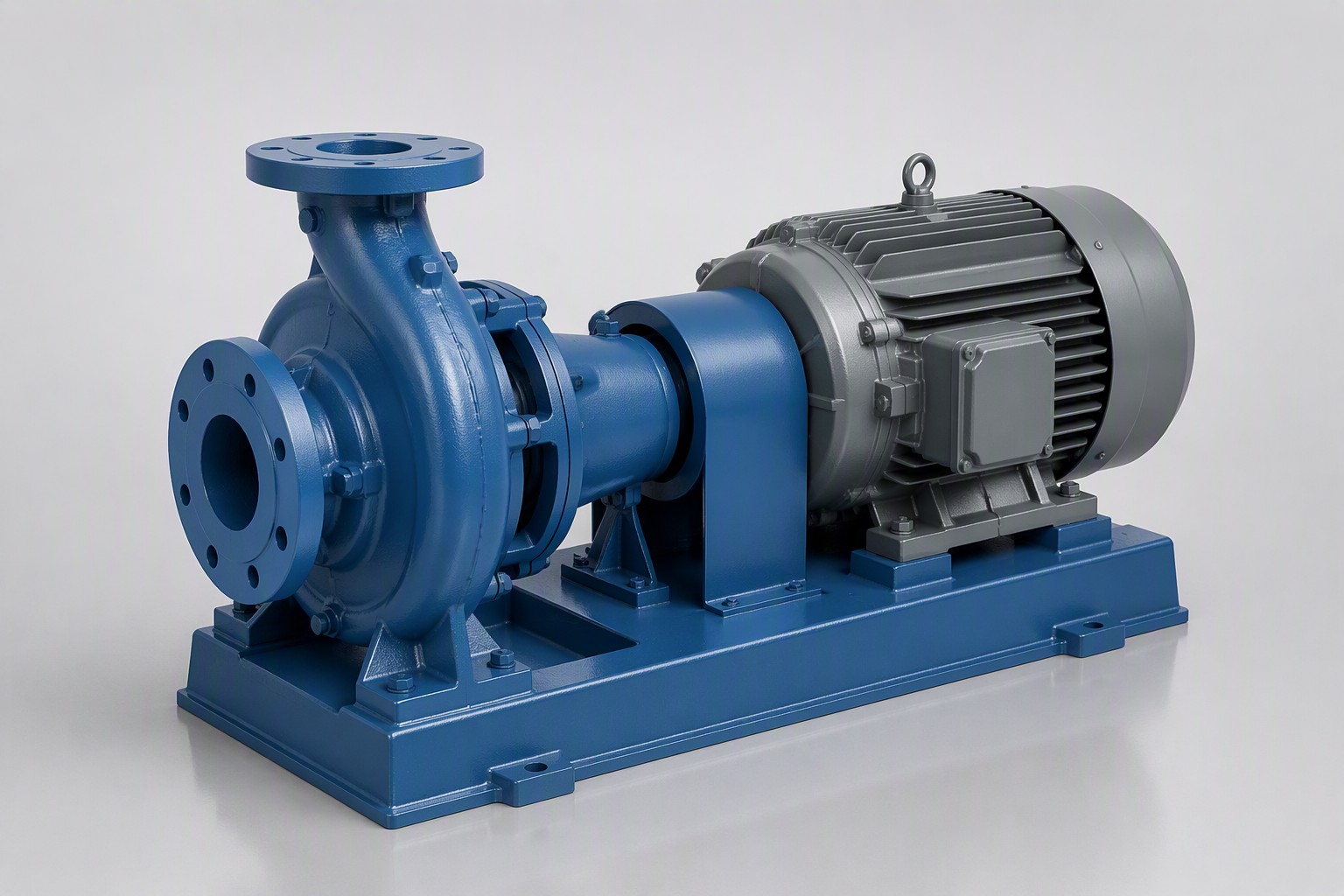
The Fluid Data Sheet Every Quote Needs
Suppliers can match a pump to the duty only when the liquid is fully described — the same data set Qingdao Green Power uses for a quotation:
- Flow rate — average and maximum duty in m³/h, plus future margin.
- Head or pressure — total dynamic head in metres, or discharge pressure, at the worst case.
- Liquid identity — name, temperature, specific gravity and viscosity, with solids content.
- Available NPSH — suction head at the pump flange, worst case.
- Site conditions — motor voltage and IP class, plus installation orientation.
Viscosity: The First Filter
Viscosity usually decides between centrifugal and positive displacement technology. A centrifugal impeller accelerates thin liquid efficiently, but viscous drag multiplies friction losses inside the casing, so efficiency, flow and head fall steeply as the fluid thickens. As a practical rule, above about 150 cSt a gear or screw pump is the better technology. Qingdao Green Power publishes its IS/ISW centrifugal pump range at 1.5–1600 m³/h, 2–125 m head and up to 80 °C for water and low-viscosity liquids, while its G-type single-screw pump in the screw pump range handles viscous oils, resins, sludge and slurries at 0.1–150 m³/h and 0.6–2.4 MPa. See our high-viscosity pump application guide for more on thick media.
Temperature Sets the Pump Class
Temperature acts on the liquid and the machine together: hot liquid has higher vapour pressure, which reduces available NPSH, and it changes seal, gasket and material limits. For thin process liquids up to 80 °C the standard IS/ISW range applies; for inline circulation from -20 °C to 120 °C the ISG/GDL pipeline series fits. Heat transfer fluid is different: thermal oil must not contact a standard water pump, and the RY thermal oil circulation pump serves -20 °C to 350 °C with air-cooled bearings and no external cooling-water circuit. Always confirm the cold-start condition: an oil that pumps easily at operating temperature can be far too viscous at ambient start-up.
Corrosivity Selects the Wetted Materials
Chemical compatibility is decided by the liquid, its concentration and its temperature. Qingdao Green Power's chemical pump range splits the duty cleanly: the IH series in SS304 or SS316L handles mild chemicals, dilute acids and weak alkalis up to 80 °C, while the IHF fluoroplastic-lined series (PTFE, FEP or PFA) handles strong mineral acids such as sulfuric, hydrochloric and hydrofluoric acid, strong alkalis and oxidising agents up to 100 °C. Both series are published at 3.5–400 m³/h and 4.5–125 m head, with single or double mechanical seals depending on the duty. Always verify the specific concentration and temperature against the compatibility chart.
Solids, Abrasives and Shear-Sensitive Products
Entrained solids, abrasiveness and shear sensitivity change the pump type and its internal design. A single-screw pump moves slurries, sludge and pastes gently, provided solids stay below the minimum flow passage dimension; the stator elastomer (NBR, EPDM or FKM) must match the chemical and temperature. Never run such a pump dry — the rubber stator is destroyed within seconds. For corrosive liquid stored in a tank or pit below ground level, a ZJL/LZ submerged pump mounted on the tank top avoids long suction lines and keeps mechanical seals out of the liquid.
Vapour Pressure and the NPSH Check
Fluid vapour pressure is the hidden partner of every suction calculation. If available NPSH falls below the pump's required NPSH, the liquid flashes at the impeller eye and cavitation begins — noise, vibration, lost capacity and rapid impeller pitting. High temperature, high suction lift, long suction lines, strainers and low tank level all reduce available NPSH, so check the worst case. When the tank sits below the pump and gravity feed is impossible, choose a submerged or self-priming configuration rather than a pump that cavitates all day.
Fluid-to-Technology Map — Qingdao Green Power Published Envelopes
| Fluid characteristic | Recommended series | Published envelope | Selection note |
|---|---|---|---|
| Water, thin process liquids | IS/ISW centrifugal | 1.5–1600 m³/h · 2–125 m · ≤80 °C | Below about 150 cSt |
| Strong acids, alkalis, oxidisers | IHF fluoroplastic-lined | 3.5–400 m³/h · 4.5–125 m · ≤100 °C | PTFE/FEP/PFA lining |
| Viscous, abrasive, sludge, shear-sensitive | G-type single screw | 0.1–150 m³/h · 0.6–2.4 MPa | Never run dry |
| Tank/pit service, corrosive, hot liquids | ZJL/LZ submerged | 2–600 m³/h · 8–100 m · ≤100 °C (≤300 °C option) | No mechanical seal in liquid |
Where two technologies could both work, compare them over the real operating range using the logic of our pump efficiency improvement guide, then confirm current model availability with Qingdao Green Power before procurement.
Frequently Asked Questions
What fluid properties matter most when selecting a pump?
Viscosity is usually the first filter because it decides between centrifugal and positive displacement technology, but temperature, corrosivity, solids and abrasiveness, shear sensitivity, specific gravity and vapour pressure can each disqualify a candidate. Send the complete fluid data set together with flow and head so the pump is matched to the liquid rather than guessed.
Why does viscosity push selection from a centrifugal to a screw or gear pump?
Viscous drag multiplies friction losses inside a centrifugal casing, so efficiency falls quickly and the produced flow and head drop steeply above roughly 150 cSt. Above that level a positive displacement pump is preferred — Qingdao Green Power's G-type single-screw pump is published at 0.1–150 m³/h and 0.6–2.4 MPa for high-viscosity media.
When should I choose an IHF fluoroplastic-lined pump over an IH stainless pump?
Choose IHF when the liquid is a strong mineral acid such as sulfuric, hydrochloric or hydrofluoric acid, a strong alkali, or an oxidising agent that attacks SS316L. IH stainless steel is sufficient for dilute acids, weak alkalis, salt solutions and mild chemicals up to 80 °C, while the IHF fluoroplastic-lined range extends to 100 °C; verify the specific concentration and temperature against the compatibility chart.
What published temperature limits should I compare when selecting a Qingdao Green Power pump?
IS/ISW centrifugal pumps suit liquids up to 80 °C, ISG/GDL pipeline pumps cover -20 °C to 120 °C, IH chemical pumps reach 80 °C and IHF fluoroplastic-lined pumps 100 °C, ZJL/LZ submerged pumps handle up to 100 °C standard with a high-temperature version to 300 °C, and RY thermal-oil pumps run from -20 °C to 350 °C. Confirm current model availability and specifications with Qingdao Green Power before procurement.
Describe your liquid completely — name, viscosity, temperature, corrosivity and solids — with the duty flow and head, and the engineering team will recommend the pump technology, materials and seal configuration.
Get a Quote
Send your fluid data and duty point. Engineers reply within 24 hours.
Contact Us →💬 WhatsApp NowRelated Products
- IH / IHF Chemical Pump
- IS/ISW Centrifugal Pump
- Industrial Screw Pump
Related Articles
Pump Efficiency Improvement Guide
Cutting pumping energy
High-Viscosity Pump Application Guide
PD technology for thick fluids
Pumps in the Chemical Industry
Corrosive process duties