
High Viscosity Pump Application Guide
High viscosity pump application guide: where screw, gear and lobe pumps are applied across industry, and how to match pump technology to thick, shear-sensitive fluids.
Where do high-viscosity pumps earn their keep? Whenever a liquid is too thick for a centrifugal pump, a positive displacement machine — screw, gear or lobe — moves a fixed volume per revolution, so flow holds up as viscosity and discharge pressure rise. Qingdao Green Power publishes its G-type single screw (progressive cavity) pump for thick, shear-sensitive and abrasive media at 0.1–150 m³/h and 0.6–2.4 MPa, and its 3GB triple screw pump for clean oil at 2.4–241.7 m³/h up to 350°C. Above about 150 cSt the IS/ISW centrifugal range gives way to a gear or screw pump.
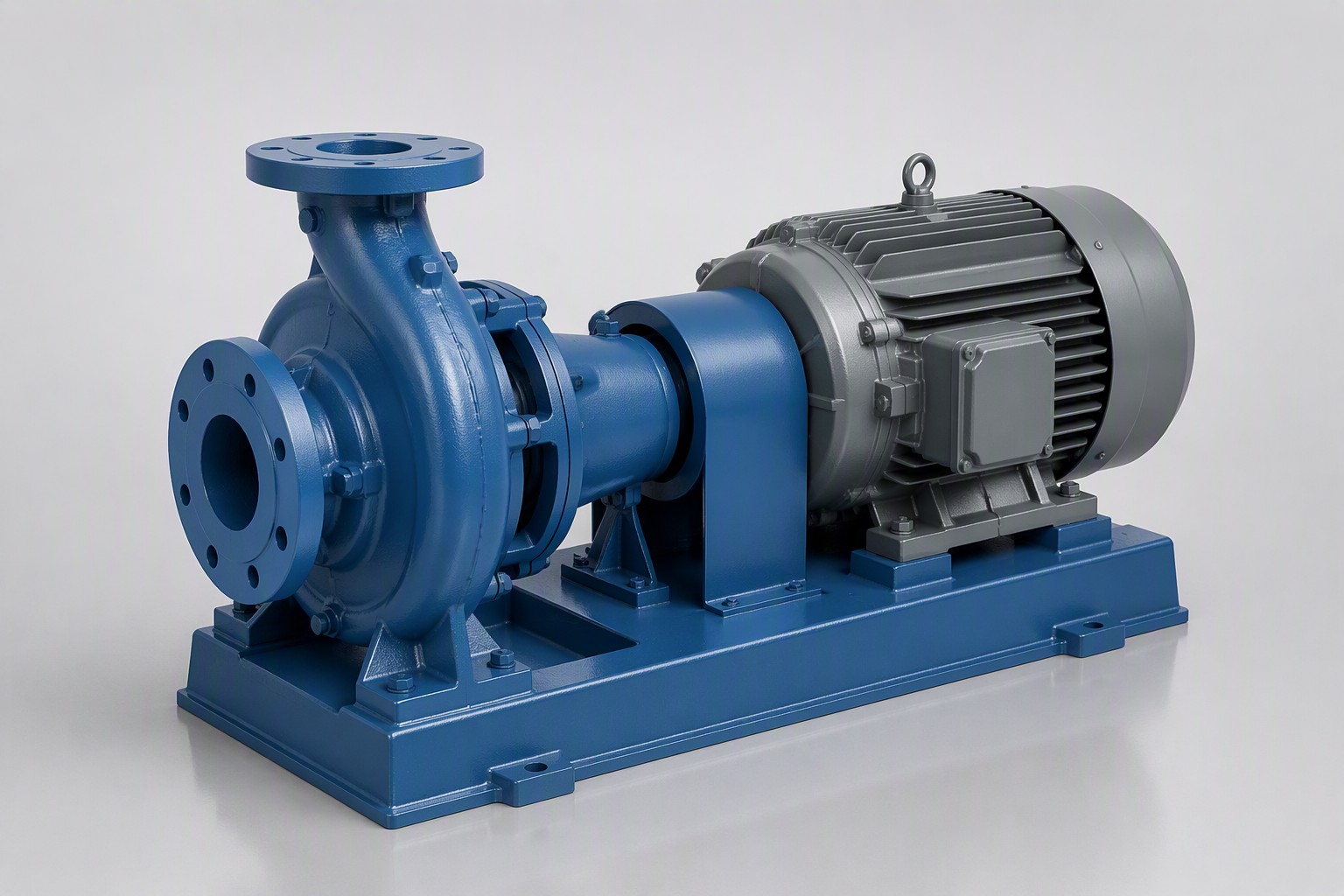
Where High-Viscosity Pumps Are Applied
High-viscosity pumping is a recurring task across process industry, not a special case. Heavy fuel oil, bitumen, resins, polymer melts, adhesives, chocolate, syrups and thickened sludge are moved daily through storage, blending, dosing and loading systems, each with its own viscosity, temperature and shear-sensitivity limits.
In practice the applications fall into a few clusters. Chemical and polymer plants transfer resins, polymer solutions and pastes where gentle handling protects product quality — duties covered in our overview of pumps for the chemical industry. Oil depots handle heavy fuel and lubricating oils that must be heated to flow, food plants move pastes and syrups under hygienic rules, and treatment plants dose thick sludge. Understanding viscosity behaviour is the first step in every duty, as our pump selection and fluid properties article explains.
Centrifugal or Positive Displacement: Matching the Technology
A centrifugal pump converts impeller velocity into head and flow. In a thick liquid, friction inside the impeller makes head and flow collapse while efficiency falls, so the published guidance for Qingdao Green Power's IS/ISW centrifugal pump range is clear: the IS/ISW machines suit water and low-viscosity process liquids, and above about 150 cSt the duty should move to a gear or screw pump.
A positive displacement (PD) pump behaves in the opposite way: each revolution traps a fixed volume and pushes it out against system pressure, and a more viscous liquid seals the internal clearances better rather than worse. That is why screw, gear and lobe pumps dominate genuinely thick-fluid duty, with flow staying predictable even when the medium is cold at start-up.
Screw Pumps for the Hardest High-Viscosity Duties
Screw pumps carry the widest range of high-viscosity applications. The G-type single screw pump is a progressive cavity machine: a helical metal rotor turns inside an elastomeric stator, forming sealed cavities that travel steadily from suction to discharge. Qingdao Green Power publishes it at 0.1–150 m³/h and 0.6–2.4 MPa for high-viscosity oils and resins above about 1500 cSt, sludge, slurry, bitumen, food pastes and shear-sensitive polymers, provided any solids stay below the minimum flow passage dimension.
The stator is the sealing and wearing element, so its elastomer (NBR, EPDM or FKM) must suit the fluid chemistry and temperature — and a G-type pump must never run dry, because the stator is destroyed within seconds. The 3GB triple screw pump takes the other end of the duty map: three intermeshing screws convey clean oil kept hot to stay thin, at 2.4–241.7 m³/h and up to 350°C. Both families are presented on the G and 3GB industrial screw pump product page.
Application Selection at a Glance
Matching a Pump Technology to a High-Viscosity Application
| Application | Preferred technology | Guidance |
|---|---|---|
| Water and low-viscosity process liquids | Centrifugal (IS / ISW) | Efficient, non-pulsating flow below about 150 cSt |
| Clean fuel and lubricating oil at moderate viscosity | External gear pump | Compact and robust; confirm current model availability and specifications with Qingdao Green Power |
| Thick, shear-sensitive, abrasive or sludge media | G single screw (progressive cavity) | Published at 0.1–150 m³/h and 0.6–2.4 MPa; never run dry |
| Clean oil kept hot to stay thin, up to 350°C | 3GB triple screw | Published at 2.4–241.7 m³/h; quiet, low-pulsation flow |
System Design for Reliable High-Viscosity Service
A high-viscosity installation lives or dies by system design. Apply these rules when planning any thick-fluid duty:
- Heat the fluid, not just the pump. Tank coils, tracing and jacketed suction piping keep the liquid feeding the pump at a workable viscosity.
- Keep the suction short and flooded. Long suction lines starve a PD pump of inlet pressure; place the pump close to the source, flooded where possible.
- Size the motor for the cold start. Starting torque rises steeply with viscosity, so confirm the coldest, thickest condition the pump will ever see.
- Protect against a closed discharge. Confirm the maximum discharge pressure and fit a relief valve sized for full pump flow.
- Guard a G-type pump against dry running. Fit low-level or dry-run protection, because the stator fails within seconds without liquid.
Frequently Asked Questions
What industries use high-viscosity pumps?
High-viscosity pumps appear wherever thick fluids must be moved reliably: chemical and polymer plants (resins, polymer solutions, pastes), oil depots and tank farms (heavy fuel oil, base oils, bitumen), food processing (syrups, chocolate, dough) and wastewater or sludge treatment. Qingdao Green Power publishes its G-type single screw pump at 0.1–150 m³/h and 0.6–2.4 MPa for media that include sludge and slurry.
At what viscosity should you switch from a centrifugal to a positive displacement pump?
Qingdao Green Power's published guidance for its IS/ISW centrifugal pump range is to switch to a gear or screw pump above about 150 cSt. Below that level, centrifugal pumps give efficient, non-pulsating flow for water and low-viscosity process liquids.
What is the difference between the G single screw and the 3GB triple screw pump?
The G-type is a progressive cavity pump — a helical rotor turning inside an elastomeric stator — for thick, shear-sensitive, abrasive and sludge media, published at 0.1–150 m³/h and 0.6–2.4 MPa, and it must never run dry. The 3GB triple screw conveys clean low-viscosity oil through three intermeshing screws, published at 2.4–241.7 m³/h up to 350°C.
What system precautions matter most in high-viscosity applications?
Heat the fluid so it feeds the pump at a workable viscosity, keep the suction short and flooded, size the motor for the cold start, and fit a relief valve against a closed discharge. If a G-type single screw pump is used, protect it from dry running because the rubber stator is destroyed within seconds without liquid.
Describe your fluid — viscosity, chemistry, temperature, flow and pressure — and the engineering team will recommend the pump technology for your application.
Get a Quote
Send your fluid data and duty point. Engineers reply within 24 hours.
Contact Us →💬 WhatsApp NowRelated Products
- Industrial Screw Pump (G / 3GB)
- Chemical Pump (IH / IHF)
Related Articles
Industrial Oil Transfer Pump
Heavy oil duties
Wastewater Pump Selection
Sludge and effluent
Pump Selection & Fluid Properties
How fluid data drives choice