
Industrial Pump Solutions for Chemical Industry
Industrial pump solutions for the chemical industry: corrosion-resistant centrifugal pumps, lined pumps for strong acids, screw pumps for viscous media, and how to match pump materials and seals to chemical duty.
Industrial pump solutions for the chemical industry combine corrosion-resistant wetted materials, leak-tight sealing and the right hydraulic principle for acids, alkalis, solvents and viscous polymers. The core of any chemical plant pumping package is a chemical centrifugal pump — stainless steel where the medium is mild, fluoroplastic-lined where it is aggressively corrosive — supported by positive displacement screw pumps for viscous or abrasive chemicals, submerged pumps for tank service and liquid ring vacuum pumps for distillation and degassing.
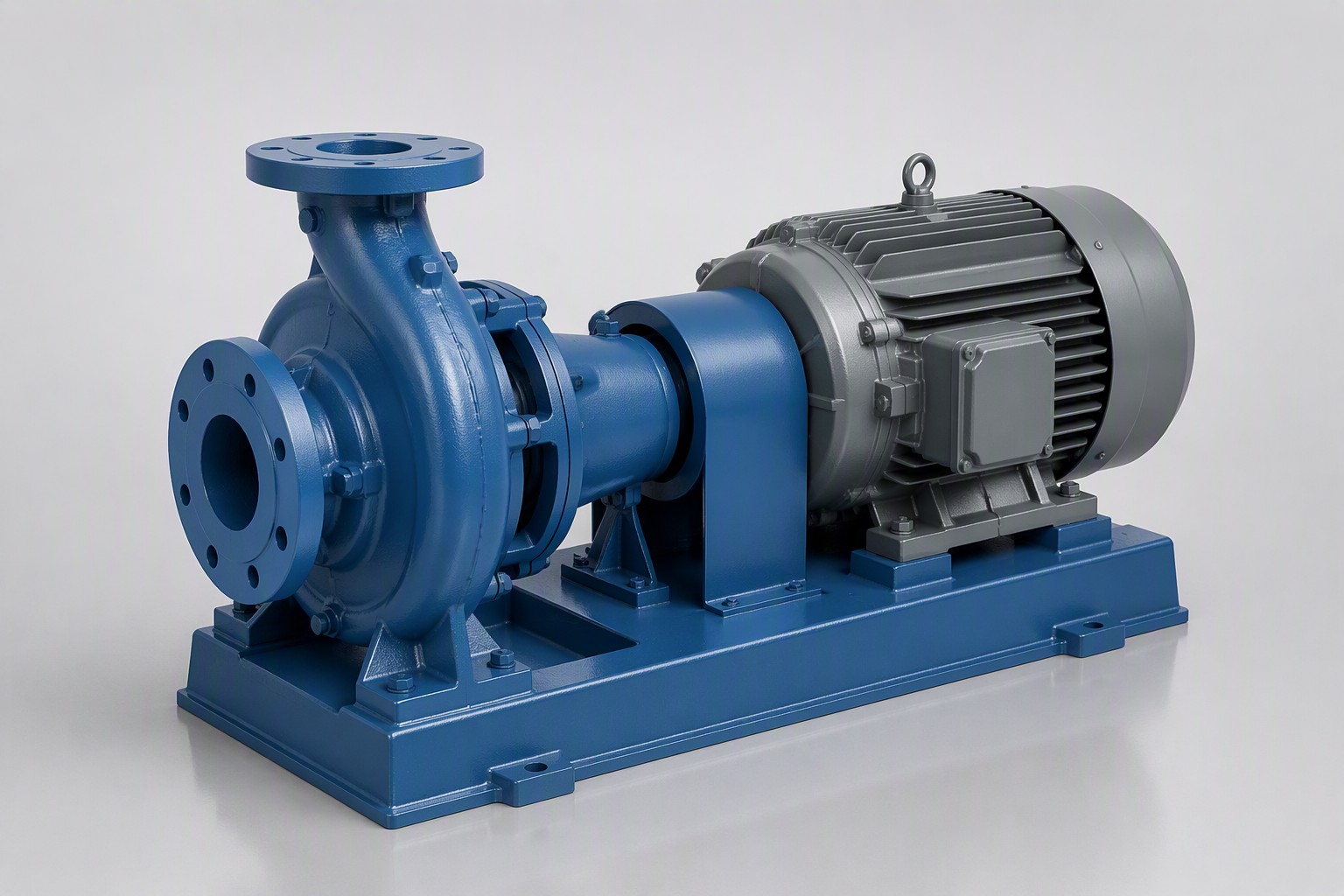
What Chemical Plant Pumping Duties Have in Common
Chemical plants move hundreds of liquids, yet the duties repeat a small set of demands. The medium is often corrosive — sulphuric or hydrochloric acid, caustic, solvents or oxidisers — so wetted materials must match the exact chemical, concentration and temperature. Many streams are volatile, toxic or flammable, making shaft sealing a safety issue, not just a maintenance one. Viscosity spans water-thin solvents to resins of many thousands of centipoise, so no single pump type covers a plant. Processes also often run at low available suction head, which decides between flooded, submerged and self-priming layouts. Understanding how fluid properties drive pump selection is the correct starting point for any chemical duty.
Chemical Centrifugal Pumps: IH Stainless and IHF Lined
The workhorse of a chemical plant is the chemical centrifugal pump, and Qingdao Green Power builds two complementary series. The IH series is manufactured in SS304 or SS316L and is intended for mild chemicals, dilute acids and alkalis up to about 80°C. Where the liquid attacks stainless steel — strong mineral acids such as sulphuric, hydrochloric or hydrofluoric acid, strong alkalis and oxidising agents — the IHF series uses a PTFE, FEP or PFA fluoroplastic lining that protects the casing from the medium at temperatures to 100°C. Both series are published at 3.5–400 m³/h with heads of 4.5–125 m. Single or double mechanical seals isolate the shaft, and seal faces, elastomers and gaskets need the same compatibility check as the casing.
Choosing Between IH Stainless and IHF Lined Chemical Pumps
| Condition | IH stainless (SS304/SS316L) | IHF fluoroplastic-lined |
|---|---|---|
| Typical media | Dilute acids, weak alkalis, salts | Strong acids, alkalis, oxidisers |
| Examples | Mild chemical solutions to ~80°C | H₂SO₄, HCl, HF, HNO₃ to 100°C |
| Flow range | 3.5–400 m³/h | 3.5–400 m³/h |
| Head range | 4.5–125 m | 4.5–125 m |
| Wetted lining | Metal alloy surface | PTFE / FEP / PFA lining |
Always confirm compatibility at the real operating concentration and temperature before specifying; the chemical pump range pages carry material guidance for each series.
Positive Displacement Solutions for Viscous and Shear-Sensitive Chemicals
Resins, polymers, adhesives, pastes and slurries defeat impeller pumps because their viscosity is far above the economic range of a centrifugal machine. The standard answer is a positive displacement pump such as the G-type single screw (progressive cavity) design, where a helical rotor turns inside an elastomeric stator and carries sealed cavities of liquid to discharge — handling high-viscosity, shear-sensitive and abrasive media, with solids below the minimum passage dimension. Qingdao Green Power publishes the G-type at 0.1–150 m³/h and 0.6–2.4 MPa. Match the stator elastomer — NBR, EPDM or FKM — to chemical and temperature, and never run the pump dry: the rubber stator is destroyed within seconds. See the industrial screw pump and the high-viscosity pump application guide for the full picture.
Submerged, Pipeline and Vacuum Pumps Around the Plant
A complete chemical industry pump solution reaches beyond the process line. Submerged vertical pumps (ZJL/LZ series) mount on tank flanges with the impeller below the liquid level, removing suction problems and keeping shaft seals out of the liquid; the standard temperature limit is 100°C with a high-temperature version to 300°C. Inline pipeline pumps slot directly into transfer lines for circulation and boosting duties. Around reactors and evaporators, liquid ring vacuum pumps such as the 2BV series (0.45–8.33 m³/min, down to 0.097 MPa absolute) provide vacuum for distillation, drying, degassing and filtration and tolerate the wet, condensable vapours typical of chemical processing. For the oil and solvent side of a plant, the industrial oil transfer pump guide covers fuels, lubricants and heat transfer fluids.
How to Build a Chemical Industry Pump Solution
Work through the duty in a fixed order and the correct pump solution usually emerges without guesswork:
- Chemistry first: identify the liquid, its concentration and temperature, then verify casing, impeller, seal faces and elastomers against a compatibility chart — corrosion resistance outranks every other criterion.
- Choose the hydraulic principle: centrifugal for thin corrosives, screw or other PD types above roughly 150 cSt and for shear-sensitive or abrasive media.
- Define flow, head and suction: size for the real operating range and check NPSH; use a submerged or self-priming layout where suction is poor.
- Specify sealing and safety: single or double mechanical seals, or a sealless submerged arrangement, per toxicity, volatility and leak policy.
- Plan for efficiency and service: compare pump efficiency improvement options across the duty cycle and consider spares before buying.
For global buyers, the industrial pump export manufacturer guide covers supplier documentation, material traceability and after-sales support, and the wastewater pump selection guide covers plant effluent and waste streams.
Frequently Asked Questions
What pumps are used in the chemical industry?
Chemical plants rely mainly on chemical centrifugal pumps for acids, alkalis and solvents — stainless steel for mild media, fluoroplastic-lined for strong corrosives — plus screw pumps for viscous polymers and resins, submerged pumps for tank service and liquid ring vacuum pumps for distillation and degassing.
When should I choose a fluoroplastic-lined pump over stainless steel?
Choose an IHF fluoroplastic-lined (PTFE/FEP/PFA) pump when the liquid is a strong mineral acid (sulphuric, hydrochloric or hydrofluoric), a strong alkali or an oxidising agent that attacks SS316L. IH stainless (SS304/SS316L) is sufficient for dilute acids, weak alkalis, salt solutions and mild chemicals up to about 80°C. Always verify the actual concentration and temperature against the compatibility chart.
How do I pump viscous chemicals such as resins and polymers?
Use a positive displacement pump such as the G-type single-screw (progressive cavity) pump, which moves high-viscosity, shear-sensitive and abrasive media through sealed cavities; Qingdao Green Power publishes it at 0.1–150 m³/h and 0.6–2.4 MPa. Match the stator elastomer (NBR, EPDM or FKM) to the chemical and temperature, and never run it dry — the rubber stator is destroyed within seconds.
What does Qingdao Green Power offer for chemical industry pump solutions?
Qingdao Green Power's verified range for chemical plants covers IH stainless and IHF fluoroplastic-lined chemical pumps (3.5–400 m³/h, heads 4.5–125 m), G-type and 3GB screw pumps for viscous media, ZJL/LZ submerged pumps for tank service and 2BV liquid ring vacuum pumps. Confirm current model availability and specifications with Qingdao Green Power before procurement.
Describe your chemical — name, concentration, temperature, flow and head — and the engineering team will propose the corrosion-resistant pump solution that fits your process.
Get a Quote
Send your fluid data and duty point. Engineers reply within 24 hours.
Contact Us →💬 WhatsApp NowRelated Products
- Chemical Pump
- Industrial Screw Pump
Related Articles
Fluid Properties in Pump Selection
Why the liquid decides the pump
Pump Efficiency Improvement
Cut energy cost per m³
High-Viscosity Pump Applications
Resins, polymers and pastes