
Industrial Oil Transfer Pump Guide
Industrial oil transfer pump guide: let the oil's viscosity pick the technology — IS/ISW centrifugal pumps for thin oils, G-type screw pumps for heavy oils and the 3GB triple-screw pump for hot oil service.
An industrial oil transfer pump moves lubricating, hydraulic, fuel and process oils from storage to point of use, and the oil's viscosity decides the pump technology. Thin oils and light fuels are handled economically by centrifugal pumps such as Qingdao Green Power's IS/ISW series, published at 1.5–1600 m³/h flow, 2–125 m head and up to 80 °C. Above roughly 150 cSt a screw or gear pump takes over: the G-type single-screw pump covers 0.1–150 m³/h at 0.6–2.4 MPa, and the 3GB triple-screw pump handles lower-viscosity oil at high temperature.
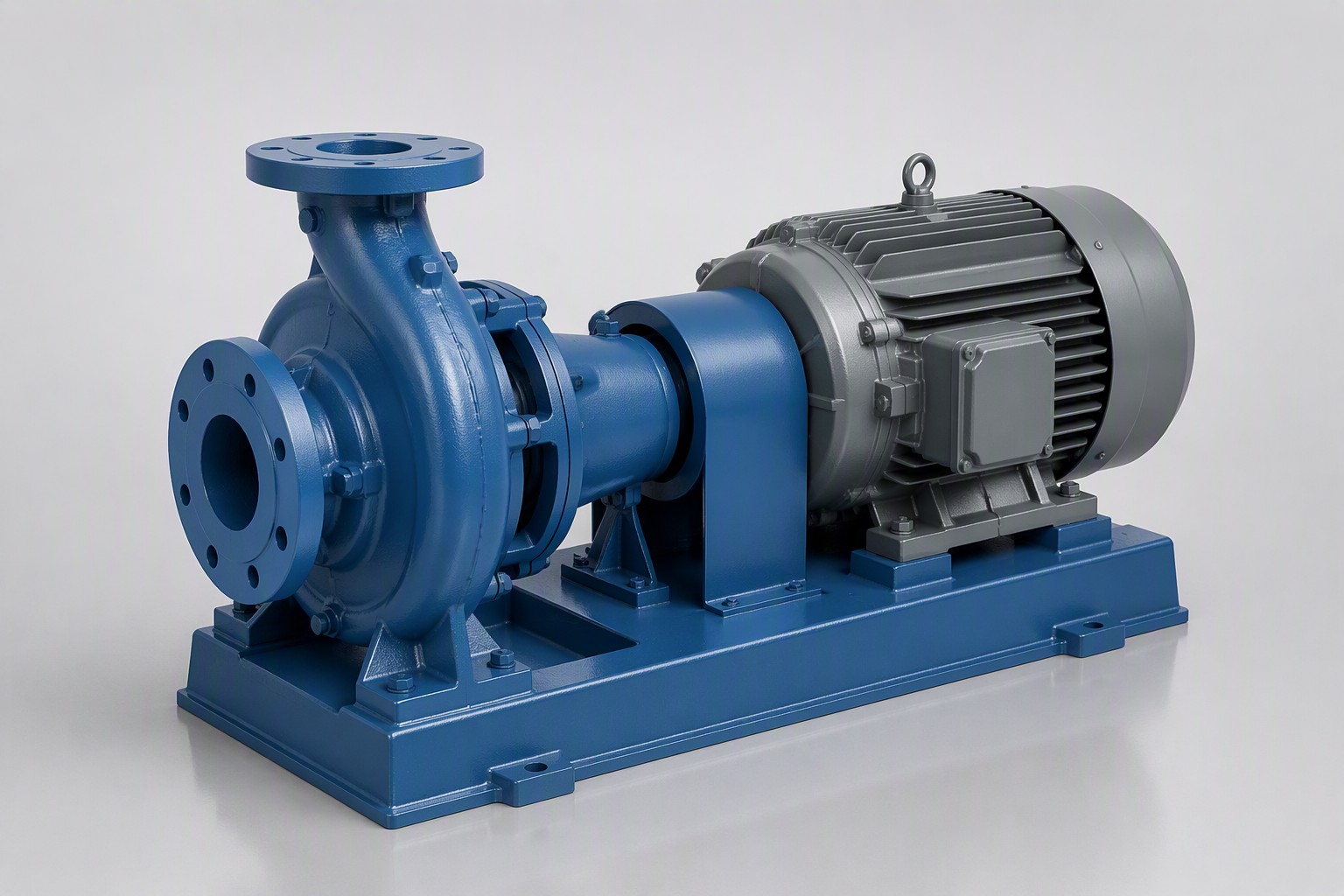
What Is an Industrial Oil Transfer Pump?
An oil transfer pump unloads tankers and ISO containers, fills day tanks, circulates lubricating oil, forwards fuel to burners and moves waste oil to recovery. These duties share a profile: moderate flow, discharge pressure set by pipe length and elevation, and an oil whose viscosity changes strongly with temperature. The machine must start reliably on the coldest day of the year and still run efficiently when the tank is warm, which is why the fluid properties — not the pipe size — drive the selection. A framework for reading those properties is given in the article on pump selection and fluid properties.
Why Viscosity Is the First Selection Criterion
Industrial oils span a huge viscosity range, from thin diesel and kerosene through lubricating and hydraulic oils, up to heavy fuel oils and residues that are hundreds of times thicker. The same oil flows freely when hot and sluggishly when cold, so always size for the worst-case cold start. Centrifugal pumps are economical up to roughly 150 cSt, which covers water-thin fuels and light lubes; beyond that, positive displacement machines hold their flow far better. The crossover behaviour is covered in our high-viscosity pump application guide.
Matching the Pump Technology to the Oil
With the viscosity band fixed, the technology map below summarises how Qingdao Green Power series line up against typical oil duties:
Oil Transfer Technology Map — Qingdao Green Power Series
| Characteristic | IS/ISW centrifugal | G-type single screw | 3GB triple screw |
|---|---|---|---|
| Best oil duty | Thin oils and light fuels up to about 150 cSt | High-viscosity oils, heavy fuel and residues | Lower-viscosity oil at high temperature |
| Published flow | 1.5–1600 m³/h | 0.1–150 m³/h | 2.4–241.7 m³/h |
| Pressure / head | Head 2–125 m | Pressure 0.6–2.4 MPa | Confirm with Qingdao Green Power |
| Temperature | Up to 80 °C | Confirm with Qingdao Green Power | Up to 350 °C |
| Flow character | Continuous, non-pulsating | Positive displacement | Positive displacement |
The IS/ISW machines suit clean, thin oil service such as light fuel forwarding and lube circulation; the G-type single-screw pump handles heavy, pasty oils and sludge-like residues; the 3GB triple-screw pump is the choice when the oil is thin but hot. Full details are on the screw pump and centrifugal pump product pages.
Sizing the Pump: Flow, Pressure and Suction
Start with the required flow in m³/h at the worst operating temperature. Then calculate the discharge pressure the system really needs: pipe length, filters, heaters, elevation and oil viscosity all add friction, and a long cold line can demand far more pressure than a warm short run. On the suction side, keep lines short and consider flooded suction for heavy oils, because viscous liquid drains slowly and a starved suction causes cavitation in centrifugal pumps and wear in screw pumps. For poor suction or sludge-like oil, the flooded-suction logic in our wastewater pump selection guide applies.
Seals, Materials and Safety for Oil Service
Seals and wetted materials must match the oil grade and operating temperature — a seal correct for cold lubricating oil may not survive hot heavy fuel. For low-flash fuels, motors and piping must match the site's hazardous-area classification, with bonding and earthing. Filtration matters: dirty oil wears seals and rotors, so fit a suction strainer or filter and watch its pressure drop. Always protect a positive displacement pump with a relief valve, and never run a screw pump dry — the elastomer stator of a G-type pump can be destroyed within seconds.
Operating an Efficient Oil Transfer System
- Keep the oil warm enough — trace heating or tank heaters hold viscosity in the pump's design band and cut energy use.
- Start against a controlled discharge — open the discharge path before start-up and close it gradually on stop.
- Monitor pressure and temperature — a rising discharge pressure signals a blocked filter; a falling one signals wear or internal slip.
- Log running hours and seal condition — planned replacement beats an unplanned spill, and efficiency measures are covered in our pump efficiency improvement article.
Sourcing from an experienced export manufacturer simplifies the whole package — duty review, model confirmation, documentation and after-sales support — as covered in the industrial pump export manufacturer guide.
Frequently Asked Questions
Which pump is best for transferring industrial oil?
The oil's viscosity decides. Thin oils and light fuels move well with a centrifugal pump — Qingdao Green Power's IS/ISW series is published at 1.5–1600 m³/h, 2–125 m head and up to 80 °C. Above roughly 150 cSt a positive displacement pump is better: the G-type single-screw pump covers 0.1–150 m³/h at 0.6–2.4 MPa for high-viscosity oils.
Can a centrifugal pump handle heavy oil?
Not economically once the viscosity is high. Centrifugal efficiency falls steeply above about 150 cSt, so heavy fuel oils and residues normally go to a gear or screw pump. Confirm current model availability and specifications with Qingdao Green Power for your exact oil grade and temperature.
What is the 3GB triple-screw pump used for in oil transfer?
It suits lower-viscosity oil at high temperature, with flow published at 2.4–241.7 m³/h and service up to 350 °C. It is a positive displacement screw pump, so fit proper relief protection and never run it dry; confirm the exact duty data with Qingdao Green Power.
What safety and operating points matter most for oil transfer pumps?
Match seals and wetted materials to the oil grade and temperature, use flameproof-rated motors and earthing for low-flash fuels, keep suction lines short to protect NPSH, and never run a screw pump dry — the elastomer stator can be destroyed within seconds. Confirm the specific requirements with Qingdao Green Power.
Describe your oil — grade, viscosity at pumping temperature, flow and discharge pressure — and the engineering team will recommend the centrifugal or screw solution that fits.
Get a Quote
Send your fluid data and duty point. Engineers reply within 24 hours.
Contact Us →💬 WhatsApp NowRelated Products
- Industrial Screw Pump
- IS/ISW Centrifugal Pump
Related Articles
Pump Selection & Fluid Properties
Which liquid data matters
High-Viscosity Pump Guide
Heavy oil and pasty media
Industrial Pump Manufacturer
Export and sourcing support