
How to Select a Pump for Viscous Fluids
How to select a pump for viscous fluids: a step-by-step method that uses viscosity, temperature, flow and pressure to choose between centrifugal, screw, gear and lobe pumps.
Selecting a pump for a viscous fluid starts with viscosity: below about 150 cSt a centrifugal pump remains practical, while above it a positive displacement pump — screw, gear or lobe — is the dependable choice. Qingdao Green Power publishes its IS/ISW centrifugal pumps for water and low-viscosity process liquids, its G-type single screw (progressive cavity) pump at 0.1–150 m³/h and 0.6–2.4 MPa for thick, shear-sensitive and abrasive media, and its 3GB triple screw pump at 2.4–241.7 m³/h for clean oil up to 350°C.
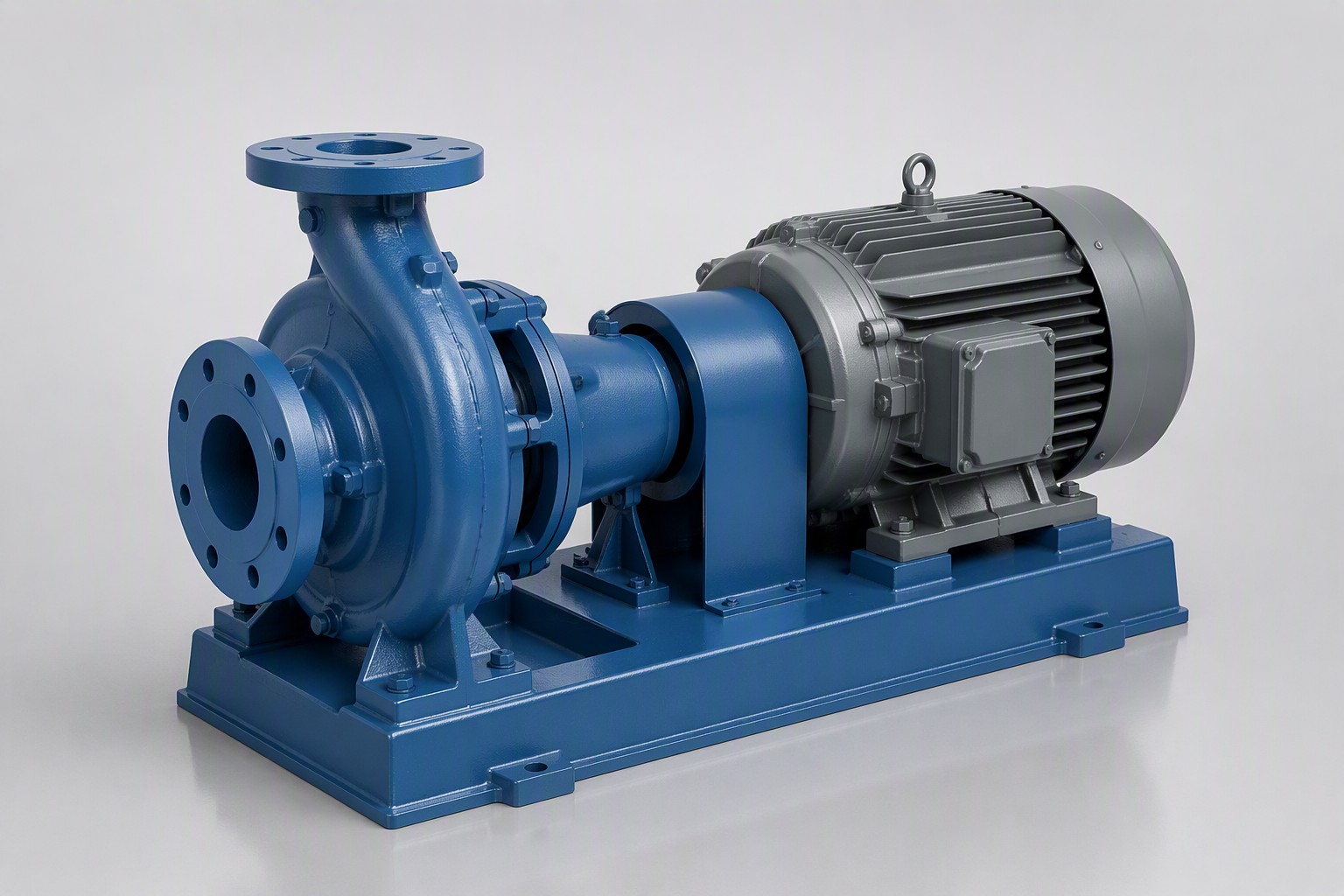
Step 1 — Characterise the Fluid Before Anything Else
Viscosity is the liquid's internal resistance to flow, measured in centistokes (cSt). Water sits near 1 cSt, thin process oils at tens of cSt, and heavy fuel oils, resins, syrups and pastes from thousands to millions of cSt. Viscosity also falls steeply when the liquid is heated, so a single number is never enough: record the viscosity at the coldest condition the pump will ever start from and at normal operating temperature.
Next to viscosity, capture the fluid chemistry and temperature range, shear sensitivity, and any solids or abrasive content. These parameters decide not only the pump family but the wetted materials and seal — and they matter across the whole industrial pump range, as explained in our industrial pump selection guide.
Step 2 — Match the Technology to the Viscosity Band
Two physics principles drive the choice. A centrifugal pump adds velocity energy with an impeller, which a viscous liquid resists — so head, flow and efficiency collapse as viscosity climbs. A positive displacement (PD) pump traps a fixed volume per revolution, so flow holds up and the thick liquid itself seals the clearances; the deeper comparison is drawn in our article on positive displacement vs centrifugal pumps.
Pump Selection by Fluid Viscosity
| Viscosity / condition | Recommended technology | Typical duty | QGP reference |
|---|---|---|---|
| Below about 150 cSt | Centrifugal (IS / ISW) | Water, thin process liquids, continuous flow | Flow 1.5–1600 m³/h; temperature ≤80°C |
| High viscosity (typically above ~1500 cSt) | G single screw (progressive cavity) | Thick oils, resins, sludge, pastes, shear-sensitive media | 0.1–150 m³/h; 0.6–2.4 MPa |
| Clean oil at high temperature | 3GB triple screw | Hot-oil transfer where heat keeps the oil thin | 2.4–241.7 m³/h; up to 350°C |
| Clean oils; gentle thick media | Gear / rotary lobe | Fuel, lube and hygienic or delicate products | Confirm current model availability and specifications with Qingdao Green Power |
Both screw families are described on the G and 3GB industrial screw pump product page, and the main pump families are surveyed in our industrial pump types overview.
Step 3 — Fix the Duty Point: Flow, Pressure and Speed
For a PD pump, flow is proportional to speed and largely independent of discharge pressure, while for a centrifugal pump the opposite is true. Define the average and peak flow, the discharge pressure or head, and the pipe system resistance. Because a viscous duty can generate high pressure if the discharge is restricted, plan a relief valve or pressure protection. A variable-speed drive is often worthwhile: it sets the exact flow without bypass losses and gives a soft, low-torque start on thick, cold fluid.
Step 4 — Check Suction Conditions and Piping
Viscous liquid generates high friction in the inlet line, which consumes available NPSH and can starve the pump. Keep the suction short, straight, large-bore and flooded, and locate the pump close to the tank. Where the fluid is too thick to feed reliably, heating the tank outlet or jacketing the suction line lowers the viscosity at the pump inlet — the same logic used for high-viscosity pump duties and for hot, thin media moved by thermal oil circulation pumps.
Step 5 — Confirm Materials, Seals and Elastomers
Match the wetted materials and seal type to the chemistry and temperature of the liquid, not just its viscosity. If the fluid is corrosive as well as viscous, review the chemical pump options. If the choice is a progressive cavity pump, select the stator elastomer (NBR, EPDM or FKM) against the fluid and temperature, and protect the pump from dry running — an elastomeric stator fails within seconds without liquid. Where a gear or lobe machine is the candidate, the comparison in rotary lobe vs gear pump helps refine the decision.
Common Mistakes in Viscous-Fluid Pump Selection
- Sizing on the warm viscosity only. The pump must also start at the coldest viscosity the line will ever see.
- Staying with a centrifugal pump above the limit. Above about 150 cSt the IS/ISW range should give way to a gear or screw pump.
- Ignoring suction limitation. Viscous liquids need a short, large-bore, flooded inlet — or heating — to avoid starvation.
- Forgetting dry-run protection. A progressive cavity stator can be destroyed within seconds without liquid.
- Skipping elastomer and material checks. Confirm stator grade and wetted materials against the actual fluid and temperature.
Frequently Asked Questions
What viscosity limit can a centrifugal pump handle?
Centrifugal pumps suit water and low-viscosity process liquids. Qingdao Green Power's published guidance for its IS/ISW range is to change to a gear or screw pump above about 150 cSt, because impeller friction then makes head, flow and efficiency fall quickly.
What type of pump is best for viscous fluids?
Positive displacement pumps are the standard answer. Qingdao Green Power publishes the G-type single screw (progressive cavity) pump at 0.1–150 m³/h and 0.6–2.4 MPa for thick, shear-sensitive, abrasive and sludge media, and the 3GB triple screw pump at 2.4–241.7 m³/h for clean hot oil up to 350°C; gear and rotary lobe pumps cover clean-oil and gentle-handling duties — confirm current model availability and specifications with Qingdao Green Power.
How do I choose between a gear pump and a screw pump for viscous oil?
Gear pumps are compact and economical for clean oils at low-to-moderate viscosity. Choose a screw pump when the oil is more viscous, shear-sensitive or abrasive — the G-type single screw is published at 0.1–150 m³/h and 0.6–2.4 MPa — or when clean oil must be moved hot in large volumes, where the 3GB triple screw runs at 2.4–241.7 m³/h up to 350°C. Confirm the model and specification with Qingdao Green Power for your duty.
What data does Qingdao Green Power need to select a viscous-fluid pump?
Send the fluid name and viscosity at both cold start and operating temperature, minimum and maximum temperature, required flow, discharge pressure or head, suction conditions and available NPSH, shear sensitivity, solids content and chemistry. Qingdao Green Power then recommends the pump family, size, speed, wetted materials and seal configuration.
Send the viscosity curve, temperature, flow and pressure — the engineering team will confirm the pump technology, size and materials for your viscous-fluid duty.
Get a Quote
Send your fluid data and duty point. Engineers reply within 24 hours.
Contact Us →💬 WhatsApp NowRelated Products
- Centrifugal Pump
- Industrial Screw Pump (G / 3GB)
- Chemical Pump
Related Articles
Industrial Pump Selection
Choosing across the range
PD vs Centrifugal Pump
Which technology fits?
Rotary Lobe vs Gear Pump
Comparing PD rotaries