
What Is a High Viscosity Pump?
What is a high viscosity pump? Positive displacement screw, gear and lobe pumps for thick liquids, the viscosity limits of centrifugal pumps, and how to choose.
A high viscosity pump is a positive displacement machine engineered for thick liquids — a screw, gear or lobe pump that traps and moves a fixed volume of fluid per shaft revolution. Unlike a centrifugal pump, whose head and flow collapse as friction rises, a positive displacement pump keeps delivering because thicker liquid seals its internal clearances. Qingdao Green Power publishes its G-type single screw (progressive cavity) pump at 0.1–150 m³/h and 0.6–2.4 MPa and its 3GB triple screw pump at 2.4–241.7 m³/h up to 350°C.
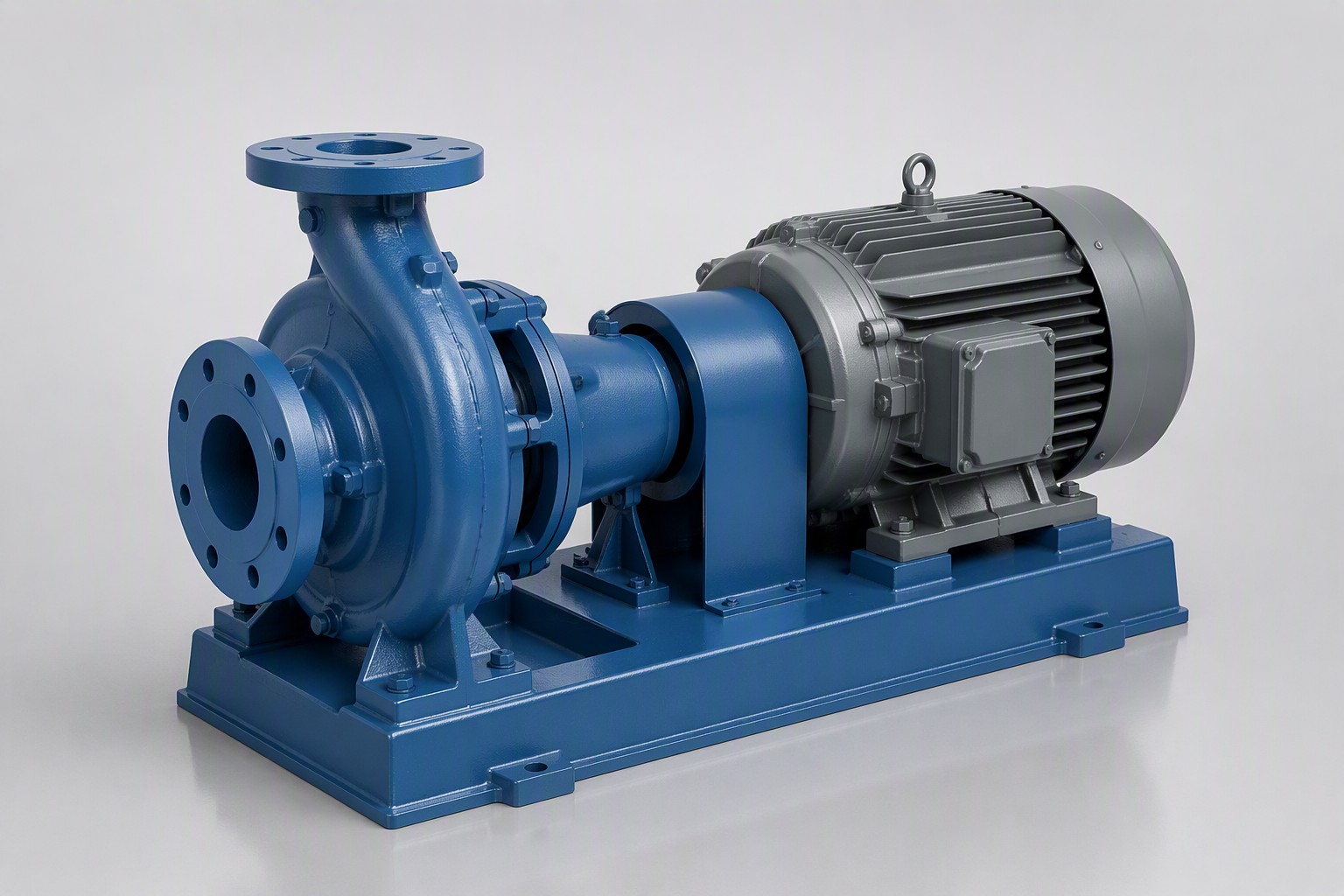
Defining Viscosity and the High Viscosity Pump
Viscosity is a liquid's internal resistance to flow, usually expressed in centistokes (cSt). Water sits near 1 cSt at room temperature; heavy fuel oils reach thousands of cSt and food pastes, resins and bitumen can reach hundreds of thousands. The higher the viscosity, the more the pump technology itself decides whether the duty succeeds.
A high viscosity pump is not a single machine type but a class of positive displacement machines selected for such fluids — our industrial pump types overview groups every major technology by operating principle and duty.
Why Positive Displacement Is the Defining Principle
Centrifugal pumps convert impeller velocity into pressure and flow. In a thick liquid, friction in the impeller and casing makes head and flow fall while efficiency drops steeply. Positive displacement (PD) pumps work the other way: each revolution traps a fixed volume, so flow is set mainly by speed and a thicker liquid improves internal sealing. The two families are compared in depth in our positive displacement vs centrifugal pump article.
High Viscosity Pump Technologies at a Glance
| Characteristic | G single screw (progressive cavity) | 3GB triple screw | Centrifugal (IS/ISW) |
|---|---|---|---|
| Operating principle | Helical rotor in elastomeric stator; sealed cavities travel from suction to discharge | Three intermeshing screws conveying fluid axially | Impeller converts velocity into pressure |
| Published flow | 0.1–150 m³/h | 2.4–241.7 m³/h | 1.5–1600 m³/h |
| Pressure / temperature | 0.6–2.4 MPa | Up to 350°C | Head 2–125 m; up to 80°C |
| Best duty | Thick, shear-sensitive, abrasive and sludge media | Clean low-viscosity oil kept hot | Water and low-viscosity process liquids |
External gear pumps move clean oils compactly, while rotary lobe pumps handle shear-sensitive and hygienic products gently — the trade-offs are laid out in our rotary lobe vs gear pump comparison.
Screw Pumps: The Viscosity All-Rounders
The most common high viscosity pump is the screw pump, and the name covers two machines. The G-type single screw is a progressive cavity pump: a helical metal rotor turns inside an elastomeric stator, forming sealed cavities that travel from suction to discharge with low-shear, near-pulseless flow. Qingdao Green Power publishes it for high-viscosity oils and resins above about 1500 cSt, sludge, slurry, bitumen, food pastes and shear-sensitive polymers, at 0.1–150 m³/h and 0.6–2.4 MPa. The stator elastomer (NBR, EPDM or FKM) must match the chemistry and temperature of the liquid, and the pump must never run dry because the rubber stator is destroyed within seconds.
The 3GB triple screw pump is the other family: three intermeshing screws convey clean, low-viscosity oil axially with balanced loads, giving quiet, low-pulsation flow up to 350°C at 2.4–241.7 m³/h. Both families are presented on the G and 3GB industrial screw pump product page.
Where Centrifugal Pumps Fit — and Where They Stop
Centrifugal pumps remain the right tool for water, solvents and thin process liquids, where continuous, non-pulsating flow and low cost dominate. Qingdao Green Power's IS/ISW centrifugal pump range is published at 1.5–1600 m³/h with heads to 125 m, but the guidance is clear: above about 150 cSt, switch to a gear or screw pump, and thick, shear-sensitive media point further toward progressive cavity or lobe designs.
Choosing a High Viscosity Pump: Practical Checks
Selection starts with the fluid, not the catalogue — the same discipline as in our industrial pump selection and viscous fluid pump selection guides:
- Viscosity and temperature at the worst case: size for the coldest, thickest condition — it drives torque and suction.
- Flow and discharge pressure: PD flow rises with speed and is largely independent of pressure; confirm the maximum pressure and fit relief protection.
- Solids and shear sensitivity: abrasive or fragile products point to progressive cavity or lobe designs, with solids kept below the minimum flow passage.
- Elastomer, seal and material: match stator rubber, seal type and wetted materials to the chemistry and temperature of the liquid.
- Dry-run protection: progressive cavity pumps in particular must never run dry — fit low-level protection.
Frequently Asked Questions
What is a high viscosity pump?
A high viscosity pump is a positive displacement machine designed for liquids too thick for a centrifugal pump. Screw, gear and lobe designs trap a fixed volume per revolution; Qingdao Green Power's G-type single screw (progressive cavity) pump is published at 0.1–150 m³/h and 0.6–2.4 MPa for high-viscosity, shear-sensitive and abrasive media.
At what viscosity does a centrifugal pump stop being practical?
Above about 150 cSt. Qingdao Green Power's published guidance for its IS/ISW centrifugal range is to switch to a gear or screw pump beyond that point, because impeller friction makes head, flow and efficiency fall rapidly in thick liquids.
Which pump technology handles the very highest viscosities?
Progressive cavity and lobe designs lead at the top of the viscosity range. The G-type single screw pump is published for high-viscosity oils and resins above about 1500 cSt, sludge, slurry, food pastes and shear-sensitive polymers; its elastomeric stator must match the fluid and it must never run dry. Confirm the current model with Qingdao Green Power.
How is a high viscosity pump different from a centrifugal pump?
A centrifugal pump converts impeller velocity into pressure and flow, so performance collapses as viscosity rises. A high viscosity (positive displacement) pump moves a fixed volume per revolution, so flow is set mainly by speed and is largely independent of discharge pressure; a thicker liquid even improves internal sealing. Confirm the model for your specific duty with Qingdao Green Power.
Describe your liquid — viscosity, temperature, solids content, flow and pressure — and the engineering team will recommend the high viscosity pump technology and configuration that fits your duty.
Get a Quote
Send your fluid data and duty point. Engineers reply within 24 hours.
Contact Us →💬 WhatsApp NowRelated Products
- Industrial Screw Pump (G / 3GB)
- Centrifugal Pump
Related Articles
PD vs Centrifugal Pump
Which technology fits?
Industrial Pump Types
Technology overview
Viscous Fluid Pump Selection
Sizing for thick fluids