
How to Select a 3RP Lobe Pump
3RP lobe pump selection guide: the duty data, fluid properties, viscosity, wetted materials, seal type and speed checks that turn a process requirement into a reliable rotary lobe pump specification.
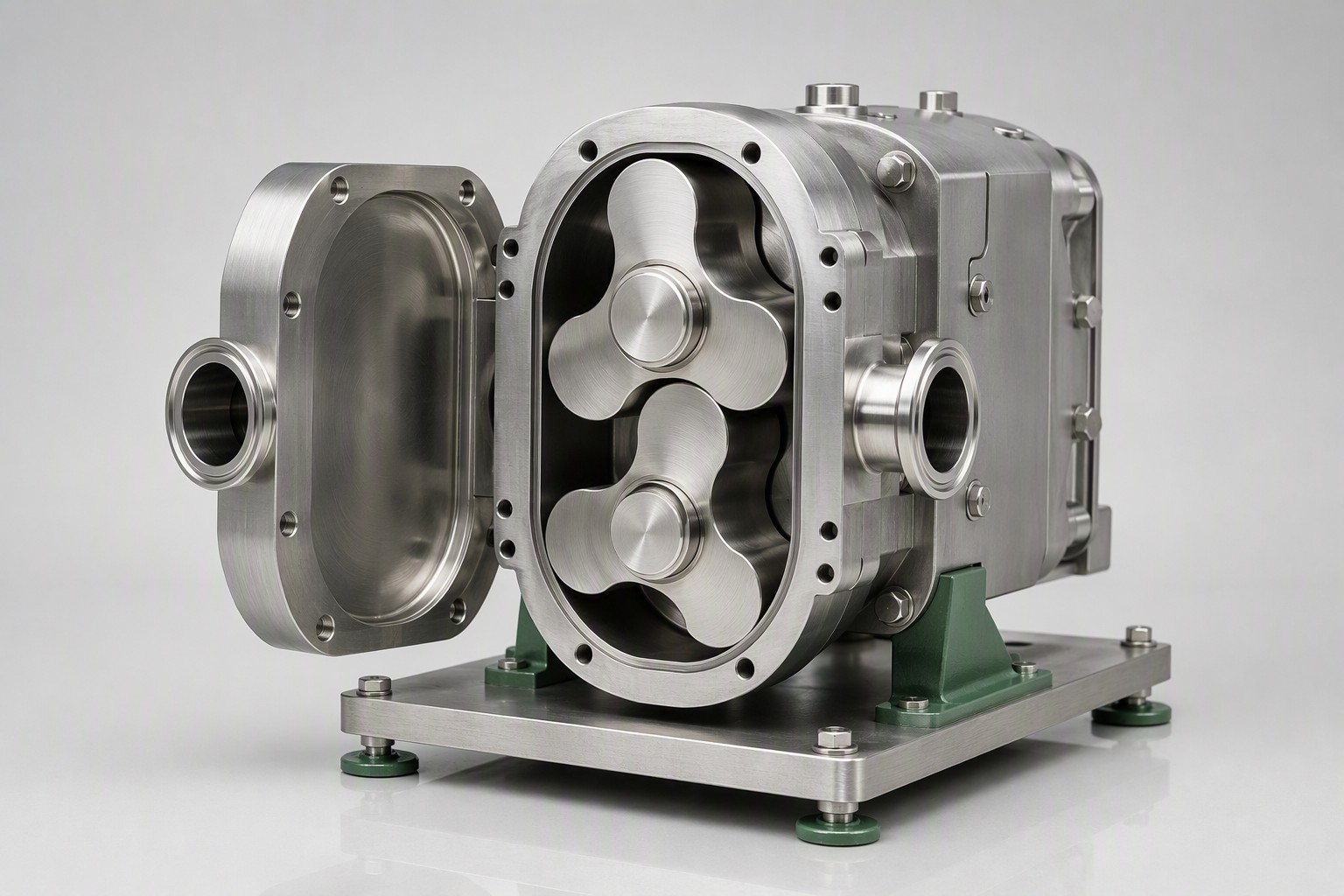
A 3RP lobe pump is selected from the duty, not from a catalogue alone: define the flow range, discharge pressure, liquid viscosity at pumping and cold-start temperature, solids content, shear sensitivity and available suction conditions, then match rotor size, speed, wetted materials and seal type to the fluid. Because the rotary lobe pump is a positive-displacement machine, flow is proportional to speed, so selection balances capacity, viscosity and pressure against the model performance curve and the suction conditions of the system.
Start From the Duty Point, Not the Pump Name
Every serious pump selection starts with the process requirement, and a lobe pump duty is no exception. Define the flow rate the line must deliver — normal, minimum and maximum — together with the differential pressure the pump must overcome, which is the discharge pressure minus the suction pressure, including static head, pipe friction and the pressure of the receiving vessel. A common mistake is to pick a pump from a maximum catalogue flow; the operating duty should instead be checked against the selected model's actual performance at the required speed. If the pumping principle itself is new to the project, review the 3RP lobe pump working principle first so the selection criteria make sense in context.
The Fluid Profile: Viscosity, Solids and Sensitivity
Lobe pumps are chosen for demanding fluids, so the liquid itself does most of the work of deciding the configuration. Record these properties before contacting a supplier:
- Viscosity at pumping temperature — and equally important, viscosity at cold start-up. Thick, cold media raise shaft power and slow the pump; the cold-start case often sizes the drive and the relief valve.
- Shear sensitivity — emulsions, polymers and food products lose quality if crushed or rubbed. The non-contacting rotors of a lobe pump make it one of the gentlest positive-displacement options available.
- Solids and abrasives — soft or fibrous particles up to the rotor clearance can pass through a lobe pump, but hard abrasive solids shorten the life of rotors, casing liners and seals and should be stated honestly.
- Chemistry and temperature — corrosiveness sets the wetted materials; temperature sets material, seal and elastomer ratings.
Step-by-Step Lobe Pump Selection Checks
With the fluid profile documented, work through the mechanical selection in order:
- Flow and speed: because displacement per revolution is fixed, select the rotor size and gear ratio for the required average and peak flow, keeping the speed within the range recommended for the viscosity.
- Pressure and relief: confirm the maximum discharge pressure and set the relief valve below the pump's safe limit to protect the pump, seal and piping.
- Suction conditions: check net positive suction head available (NPSHa) against the pump's requirement, and the suction lift against the self-priming vacuum limit — long or restricted suction lines are a frequent cause of poor lobe pump performance.
- Materials: choose wetted parts for the medium — stainless steel for food, hygienic and corrosive duties, cast iron or coated materials for clean industrial oils.
- Seal type: single mechanical seals suit most clean chemical and hygienic services; double seals protect against hazardous or abrasive media; packed glands remain an option on heavy-viscosity duty.
Selection Data Checklist at a Glance
Data Needed for a Lobe Pump Quotation
| Parameter | What it determines | Typical value to record |
|---|---|---|
| Flow rate | Rotor size and speed | Normal, minimum, maximum (m³/h or L/min) |
| Differential pressure | Drive power and relief setting | Inlet and outlet pressure (bar) |
| Viscosity | Speed, power, slip | At pumping and at cold start (cP or cSt) |
| Temperature | Materials, seal, clearances | Normal and maximum (°C) |
| Fluid chemistry | Wetted materials and elastomers | Name, concentration, pH |
| Solids and sensitivity | Rotor type, clearances, shear rating | Size, hardness, concentration |
| Suction conditions | NPSH and self-priming check | NPSHa, lift height, line length |
Rotor, Materials and Seal — the Configurable Part of Selection
The same lobe pump frame can be configured for very different duties. Rotor lobe count and profile affect pulsation and solids passage; wetted materials must be confirmed against the actual medium, concentration and temperature rather than assumed from a standard build; and the seal is usually the highest-wear component, so it should be specified for the fluid, temperature and any dry-running risk in the duty. For very high viscosity media, refer to the high-viscosity lobe pump guidance before fixing the specification.
When a Lobe Pump Is — and Is Not — the Right Technology
A rotary lobe pump earns its place where product gentleness, solids tolerance, hygiene or CIP cleanability is the deciding factor. For clean, low-viscosity water-like liquids, a centrifugal pump is normally the economical choice — Qingdao Green Power's guidance is to switch from centrifugal to a gear or screw pump once viscosity rises above roughly 150 cSt. For clean lubricating oils at higher pressures a gear pump is more compact, and for the largest viscous or multiphase capacities an industrial screw pump is a proven alternative. See the KCB gear pump selection guide when the fluid is a clean oil rather than a shear-sensitive product.
Common Selection Mistakes
- Specifying from a peak flow only, leaving the pump oversized at the normal duty.
- Ignoring cold-start viscosity, which sets the power, relief valve and starting torque.
- Forgetting that suction piping and NPSH limit the self-priming ability of the pump.
- Assuming standard materials suit the medium — always verify chemistry against wetted parts.
Send the Data, Confirm the Model
Share the completed checklist — flow, pressures, fluid properties, temperature and duty pattern — and the engineering team can confirm whether a rotary lobe pump fits and how it should be configured. 3RP lobe pumps are treated on this site as a technical-reference topic — confirm current model availability and specifications with Qingdao Green Power before procurement.
Frequently Asked Questions
What data do I need to select a 3RP lobe pump?
Provide the flow range (normal, minimum and maximum), differential pressure or discharge head, liquid name, viscosity at pumping temperature and at cold start-up, temperature, solids content and shear sensitivity, available suction conditions (NPSH), and any hygiene or CIP requirement. Together these define the rotor size, speed, wetted materials and seal type.
What viscosity range can a lobe pump handle?
Rotary lobe pumps cover a very wide viscosity span — from thin, water-like liquids up to thick pastes of 1,000,000 cP or more, depending on configuration and speed. The practical limit is usually set by cold-start viscosity, inlet conditions and available shaft power rather than by the rotor design alone.
What seal and material options should I specify for a lobe pump?
A single mechanical seal suits most clean chemical and hygienic duties; a double mechanical seal is used for hazardous, toxic or abrasive fluids; packed glands remain an option on heavy-viscosity services. Wetted materials must match the medium and temperature — stainless steel for food, hygienic and corrosive media, cast iron or coated materials for industrial oils. Confirm the configuration for your fluid with Qingdao Green Power.
Are 3RP lobe pumps a current Qingdao Green Power core product?
3RP lobe pumps are treated on this site as a technical-reference topic. Confirm current model availability and specifications with Qingdao Green Power before procurement.
Send your completed duty checklist — flow, pressure, viscosity, temperature and fluid name — and the engineering team will confirm the pump technology and configuration that fits your line.
Get a Quote
Send your fluid data and duty point. Engineers reply within 24 hours.
Contact Us →💬 WhatsApp NowRelated Products
- Industrial Screw Pump
- Centrifugal Pump
Related Articles
What Is a 3RP Rotary Lobe Pump?
Technology overview
3RP Lobe Pump Working Principle
How the pump operates
3RP Lobe Pump for High Viscosity
Thick-fluid handling guide