
How to Select a KCB Gear Pump for Oil Transfer
KCB gear pump selection starts with viscosity and flow: how external gear pumps behave on fuel oil, heavy oil and lubricating oil, and how to size temperature, pressure, sealing and motor power correctly.
An external gear pump moves liquid by trapping it between the teeth of two meshing gears and the pump casing. As the gears rotate, the tooth spaces carry liquid from the suction side to the discharge side, creating positive displacement. KCB-style gear pumps are a practical choice for clean, lubricating liquids such as fuel oil, heavy oil and lubricating oil.
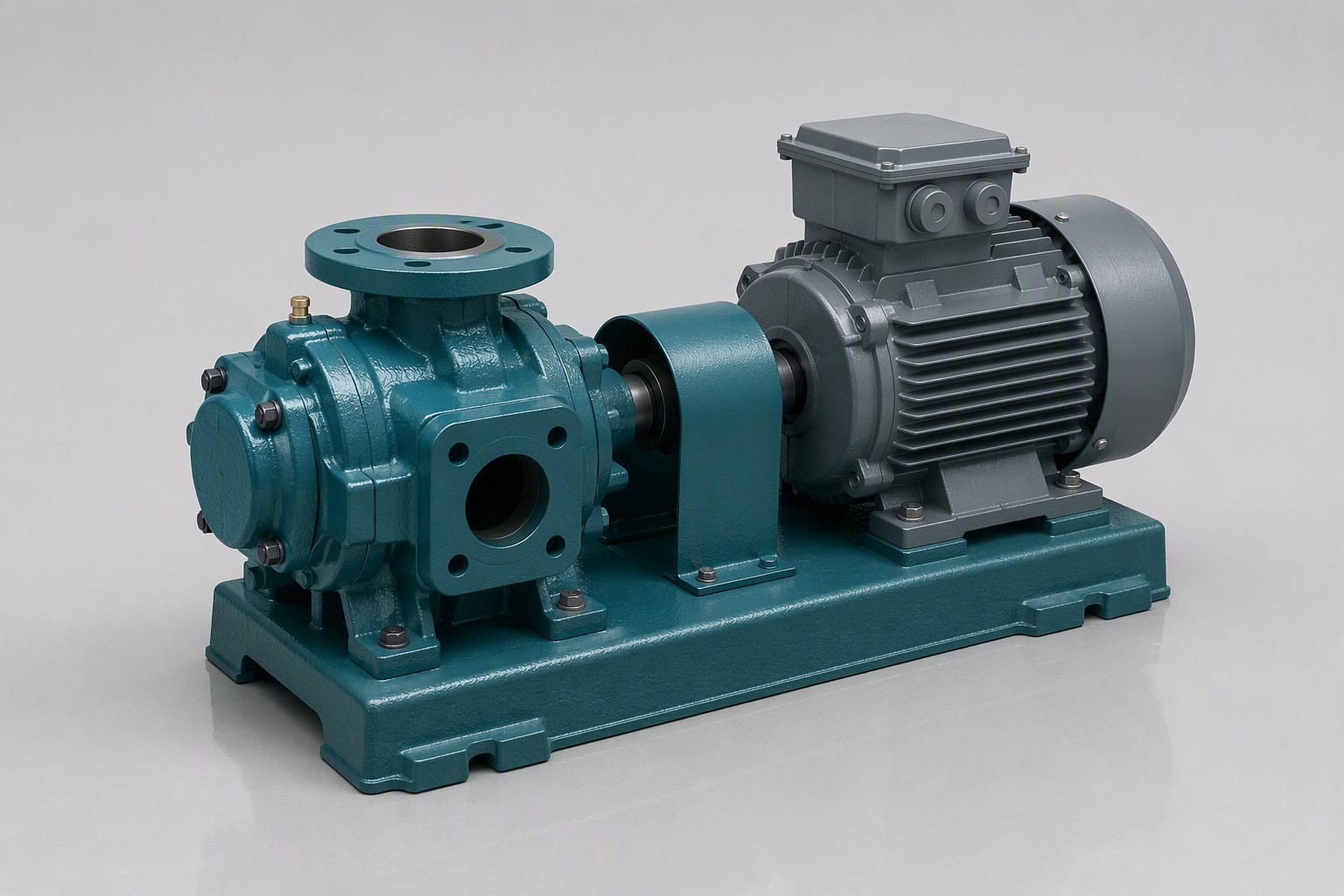
What a KCB Gear Pump Is
The KCB designation refers to a classic line of external gear pumps widely used for oil transfer. Two externally meshing gears — usually one driven and one idler — rotate inside a close-clearance casing. Liquid fills the cavities between the gear teeth, is carried around the outside of the gears, and is discharged as the teeth mesh again at the centre. This is positive displacement: each revolution delivers a nearly fixed volume, so flow is stable against varying discharge pressure.
Step 1 — Define the Liquid and Its Viscosity
Viscosity is the single most important variable for gear pump selection. Gear pumps work well across a very wide viscosity window — from light kerosene-like fuels to heavy viscous oils — because the pumped liquid itself provides internal sealing between gear teeth and casing. But viscosity also drives power demand:
- Light oils (2–50 cP): lower slip resistance, easy starting; watch for internal slip at low speed.
- Medium oils (50–500 cP): the sweet spot — good volumetric efficiency with moderate power demand.
- Heavy oils (500–10,000+ cP): excellent sealing but sharply higher shaft power, especially at cold start; confirm the motor for the worst-case (coldest) viscosity.
Step 2 — Set Flow, Pressure and Temperature
KCB Gear Pump Selection Checklist
| Parameter | What to specify | Typical effect on selection |
|---|---|---|
| Required flow | m³/h or L/min at operating speed | Sets gear size and speed |
| Discharge pressure | bar at the pump outlet | Sets casing rating, shaft load and motor power |
| Viscosity | cP at pumping and cold-start temperature | Dominant factor for motor sizing and clearances |
| Temperature | minimum and maximum oil temperature | Affects materials, clearances and heating requirement |
| Suction condition | static head, line length, lift | Gear pumps have limited suction lift — keep the suction line short and full |
| Solids / water | cleanliness of the oil | Abrasive solids and free water shorten gear pump life |
For heavy oil, heating the suction line or tank to lower viscosity is often more economical than oversizing the motor. The colder the oil at start-up, the higher the breakaway torque required.
Step 3 — Match the Pump to the Duty
Materials
Standard KCB pumps use cast iron or ductile iron casings with hardened steel gears, which suits fuel oil, lubricating oil and similar non-corrosive media. For sour or chemically aggressive oils, confirm the wetted-material rating with the manufacturer.
Shaft sealing
Mechanical seals are the common choice for oil transfer to minimise leakage; packed glands are sometimes used for very heavy, dirty oils where a mechanical seal face could be damaged. Confirm the seal material is compatible with the oil temperature.
Relief valve
Many KCB gear pumps include an integral relief valve protecting the pump and piping if the discharge line is closed while the pump runs. The relief setting should be confirmed against the system design pressure.
Frequently Asked Questions
What viscosity range suits a KCB gear pump?
KCB-style gear pumps handle a broad viscosity window, typically from light fuel oils up to heavy viscous oils. Higher viscosity improves internal sealing and volumetric efficiency, but it raises shaft power demand, so the motor must be sized for the cold-start viscosity.
Can a gear pump handle water or solvents?
Water and low-viscosity solvents give poor internal sealing and higher slip, and many gear pump materials are not rated for corrosive chemicals. Use a gear pump for lubricating oils and fuels; for water or chemicals select the appropriate pump family.
How do I size the motor for a gear pump?
Calculate shaft power from flow, discharge pressure and viscosity at the worst-case (coldest) temperature, then add a service margin. A viscosity rise can double or triple power demand compared with a light-oil duty.
Are KCB gear pumps a current Qingdao Green Power core product?
KCB gear pumps are treated on this site as a technical-reference topic. Confirm current model availability and specifications with Qingdao Green Power before procurement.
Tell us the oil type, viscosity at pumping temperature, flow and discharge pressure — the engineering team will confirm the right gear pump configuration and motor size.
Get a Quote
Send your oil data and duty point. Engineers reply within 24 hours.
Contact Us →💬 WhatsApp NowRelated Products
- RY Thermal Oil Pump
- Industrial Screw Pump
Related Articles
What Is a KCB Gear Pump?
Technology overview
KCB Gear Pump for Heavy Oil
Application guide
KCB Gear Pump Working Principle
How gear pumps operate