
Thermal Oil Pump for Heat Transfer Systems
Thermal oil pumps for heat transfer systems: how the air-cooled RY series circulates heat-transfer fluid to 350°C, and why suction head, sealing and selection matter.
A thermal oil pump for a heat transfer system is a centrifugal pump that keeps heat-transfer fluid (HTF) moving around a closed heating loop — from the heater through the process consumers and back — delivering process heat without pressurising the oil circuit. Qingdao Green Power's RY series covers 1–500 m³/h at 1–12.5 bar for oil from -20°C to 350°C, cooled by natural air-cooling fins with no cooling-water requirement.
The Role of the Pump in a Hot-Oil Loop
A heat transfer system is a closed loop. A heater raises the temperature of the thermal oil, the hot oil is delivered to the process consumers — reactors, presses, dryers, extruders, heated tanks — and the cooled oil returns to be reheated. The circulation pump does not generate the heat; its job is to overcome the friction losses of the piping, fittings, heaters and consumers so that the oil keeps moving at a steady, controlled flow. Because the loop is closed and runs at modest system pressure, a centrifugal pump is a natural fit: it delivers smooth, continuous, non-pulsating flow that follows the loop's system curve.
Selection starts from the duty point — the flow needed to carry the required kilowatts of heat, and the head needed to push the oil around the circuit. As HTF temperature rises, viscosity falls, which helps the pump, but vapour pressure rises steeply, which complicates suction conditions. That is why hot-oil circulation is not the same as ordinary hot-water pumping, and why dedicated thermal oil pumps exist.
RY Series: Built for Hot-Oil Duty
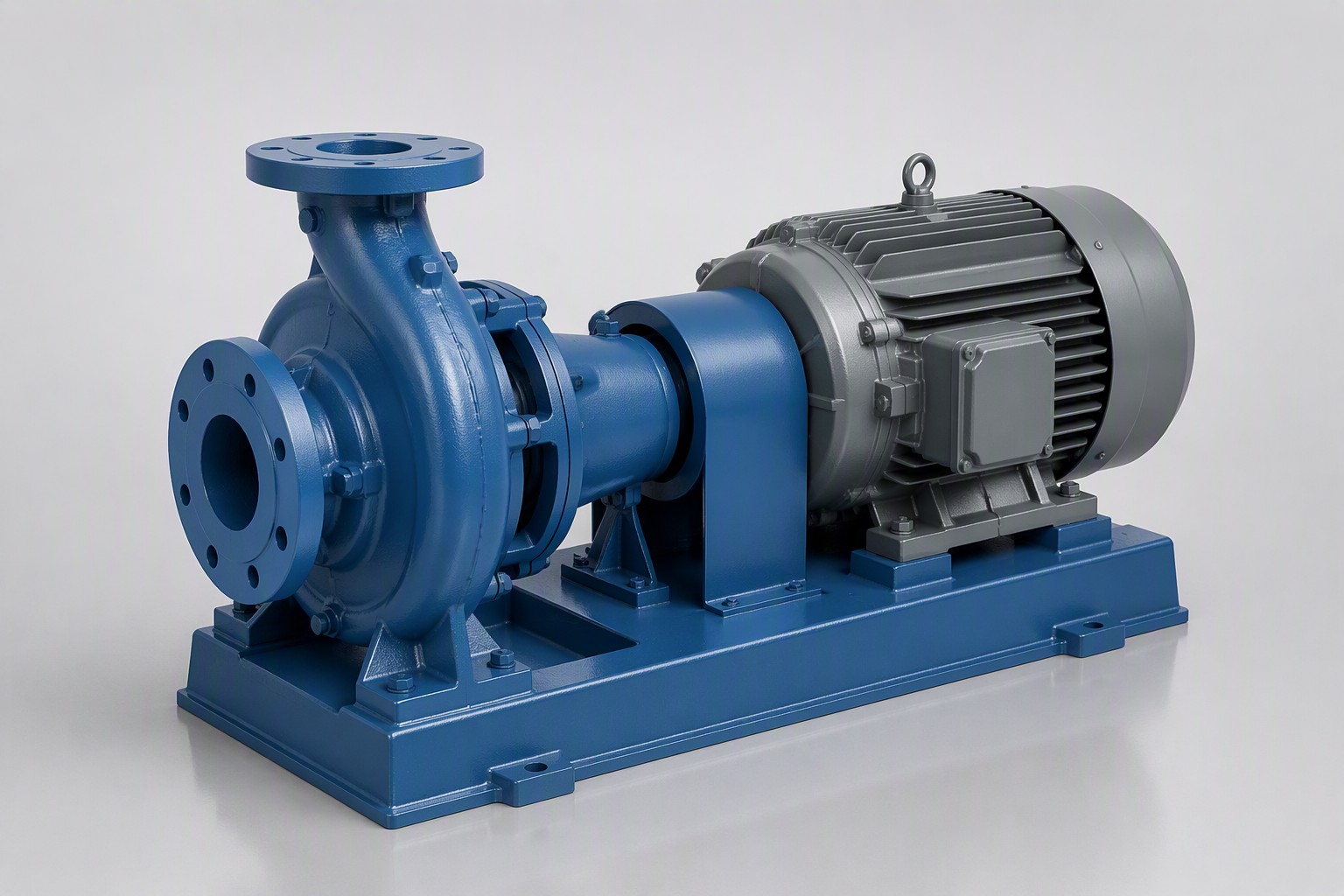
The RY thermal oil circulation pump is a horizontal, single-stage centrifugal pump designed specifically for heat-transfer fluid. Qingdao Green Power offers the RY series for flows from 1 to 500 m³/h at pressures from 1 to 12.5 bar and oil temperatures from -20°C to 350°C. It is intended for thermal oil, heat-conduction oil and compatible heat-transfer fluids, and is not suitable for water, chemicals or abrasive media — those duties should be directed to a different pump type.
RY Thermal Oil Circulation Pump — Key Parameters
| Parameter | Value |
|---|---|
| Pump type | Centrifugal, horizontal, single-stage |
| Flow rate | 1–500 m³/h |
| Pressure | 1–12.5 bar |
| Temperature range | -20°C to 350°C |
| Medium | Thermal oil / heat-transfer fluid (HTF) |
| Sealing | Packing seal with heat-resistant auxiliary seal |
| Cooling | Natural air-cooling fins — no external cooling water |
For the full product background and construction details, see the RY thermal oil circulation pump product page.
Design Features That Protect Hot-Oil Service
Several design decisions matter on a pump that must handle oil at 300°C and above:
- Cooling: natural air-cooling fins shed heat from the bearing and seal housing to the ambient air, so no cooling-water jacket or supply is required.
- Sealing: a packing seal with a heat-resistant auxiliary seal suits hot, relatively low-viscosity HTF, where ordinary elastomers would quickly degrade.
- Coupling: the pump is typically driven by an electric motor through a flexible coupling; a flexible spacer coupling option allows the pump bracket to be removed from the baseplate without disturbing the pump casing or the motor.
- Guarding: the coupling is protected by a guard to prevent accidental contact and external damage.
For a step-by-step explanation of how this pump moves the oil, read our guide on the thermal oil pump working principle.
Where are such systems used? Thermal oil heating suits processes that need stable temperatures well above the boiling point of water without the pressure of a steam system — chemical reactors, plastics and rubber processing lines, presses, dryers and bitumen heating. The circulation pump simply has to keep the oil moving, reliably, for years of continuous service.
Suction Conditions and NPSH on High-Temperature Oil
The most common source of problems in hot-oil pumping is cavitation. Because the vapour pressure of heat-transfer fluid climbs steeply with temperature, hot oil flashes easily: if the pressure at the pump suction falls to the vapour pressure, vapour bubbles form in the impeller eye and collapse downstream, causing noise, vibration, erosion and falling flow. The remedy is to keep the available NPSH above the pump's required NPSH.
In practice that means locating the expansion and deaerator tank well above the pump so a positive static suction head exists at the pump inlet, keeping suction piping short and direct, and avoiding unnecessary strainers, valves and elbows on the suction side. For a walkthrough of duty points and margin checks, see our thermal oil pump selection guide.
Pumping Technologies Around the Loop
The circulation pump is the core of the loop, but auxiliary duties matter too: hot-oil systems are filled, drained and occasionally degassed, and ancillary circuits may handle flushing oil or lubricants. For wet or vapour-laden suction duties such as tank degassing and line evacuation, a liquid-ring vacuum pump is a dependable choice, while viscous oil transfer may suit a screw pump better than a centrifugal — the trade-offs are covered in our centrifugal vs positive displacement pump comparison. Discussing every duty with the supplier at the design stage avoids mismatched equipment later.
Frequently Asked Questions
What does a thermal oil pump do in a heat transfer system?
It circulates heat-transfer fluid around a closed loop — from the heater through the process consumers and back — overcoming the circuit's friction losses so the oil delivers process heat at a steady flow. It does not generate heat itself.
Why does the RY thermal oil pump need no cooling water?
The RY series uses natural air-cooling fins on the bearing and seal housing, so heat is shed to the ambient air without a cooling-water jacket or supply — an advantage where cooling water is unavailable or undesirable.
Can the RY pump handle water or chemicals?
No. The RY series is designed for thermal oil, heat-conduction oil and compatible heat-transfer fluids at -20°C to 350°C; it is not suitable for water, chemicals or abrasive media.
Why is suction head so important on high-temperature oil?
Hot heat-transfer fluid has a high vapour pressure. If suction pressure falls to the vapour pressure, the oil flashes and the pump cavitates. An elevated expansion and deaerator tank, short suction piping and a proper NPSH margin prevent this.
Describe your thermal oil duty — fluid, operating temperature, flow and head — and the engineering team will recommend the pump configuration that fits your heat transfer system.
Get a Quote
Send your fluid data and duty point. Engineers reply within 24 hours.
Contact Us →💬 WhatsApp NowRelated Products
- Thermal Oil Circulation Pump
- Centrifugal Pump
- Liquid Ring Vacuum Pump
Related Articles
How a Thermal Oil Pump Works
Working principle explained
Thermal Oil Pump Selection
Sizing and duty guidance
Centrifugal vs PD Pumps
Technology comparison