
Resin Transfer Pump Selection Guide
Resin transfer pump selection guide: how to match screw and positive displacement pumps to resin viscosity, fillers, temperature and chemistry so dosing and transfer stay accurate and reliable.
Select a resin transfer pump from the fluid: record resin type, viscosity at pumping and cold-start temperature, filler content and chemical compatibility, then choose a positive displacement pump — usually a single screw (progressive cavity) machine — sized for the required flow and discharge pressure. Resins are viscous, often thixotropic and sometimes filled or reactive, so a fixed-volume pump with a matched stator elastomer and seal is the reliable default; centrifugal pumps suit only thin, low-viscosity resin solutions.
Why Resin Is a Difficult Pumping Duty
Thermoset resins such as polyester, epoxy and vinyl ester are rarely water-like: most arrive as high-viscosity syrups that thin only when heated or diluted with reactive diluents such as styrene, many carry fillers, and some cure or gel when exposed to air, heat or hardener. A resin transfer pump must therefore handle viscosity that climbs sharply as temperature falls, plus abrasive or settling solids and a chemistry that can attack the wrong elastomer or set inside a poorly flushed seal. Viscosity changes the whole selection — the cold-start case, not the running case, usually sets the drive power and the relief-valve setting.
Positive Displacement Beats Centrifugal Above ~150 cSt
A centrifugal pump builds head with impeller velocity and loses performance quickly as viscosity rises, so it suits thin resin solutions and washing solvents rather than the resin itself. The standard engineering rule — and Qingdao Green Power's published guidance — is to switch to a gear or screw pump above roughly 150 cSt. Positive displacement delivers a near-fixed volume per revolution, so flow stays predictable at any pressure and thick paste is pushed without the recirculation losses of a centrifugal machine. See the best pump for high-viscosity liquids guide for the full comparison.
Pump Technologies for Resin Transfer
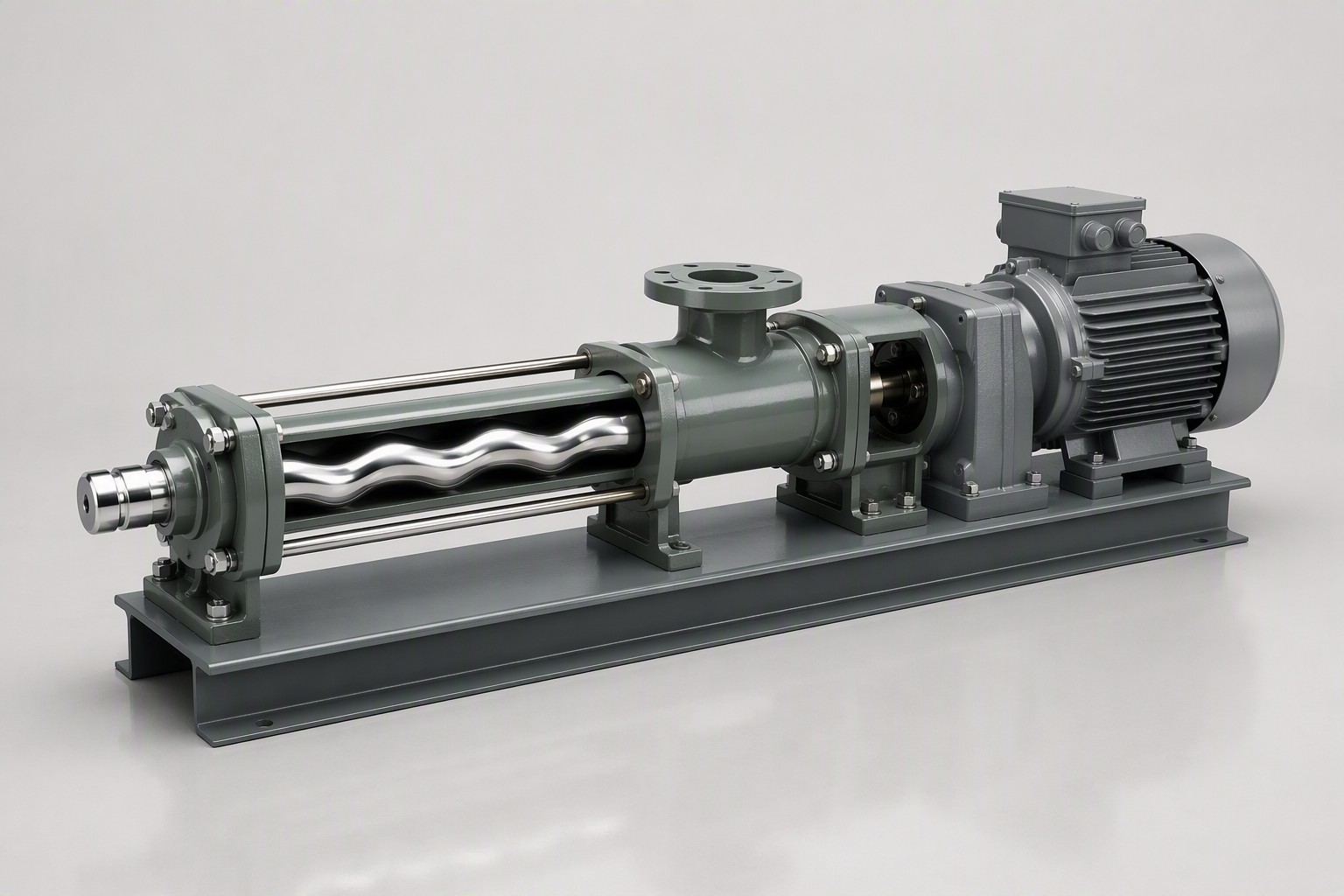
Single screw (progressive cavity) pumps are the workhorse of resin transfer: a helical metal rotor turning inside an elastomeric stator forms sealed cavities that move the resin from suction to discharge with low shear and minimal pulsation. The viscosity span is the widest of the common options and soft solids pass, provided they stay below the minimum flow passage dimension. Two rules matter: never run the pump dry — the rubber stator is destroyed within seconds — and match the stator elastomer to the resin chemistry and temperature. Rotary lobe pumps suit shear-sensitive resins or those carrying larger soft solids, while gear pumps fit only clean, lubricating systems. For most filled, viscous or reactive duties the single screw pump is the first candidate — the technology Qingdao Green Power builds for this class of media.
Materials, Elastomers and Seals Come First
Resin chemistry decides the wetted materials before any sizing begins. NBR, EPDM and FKM stators each resist different liquids, and a stator that swells in styrene or a solvent wash fails quickly, so the elastomer must be matched to the exact formulation and temperature. Stainless steel wetted parts resist the mild acidity and cleaning solvents common in resin work better than carbon steel. Reactive or fast-curing formulations also call for a flushed or double mechanical seal so product cannot set between the seal faces.
Selection Data Checklist at a Glance
Data Needed for a Resin Pump Quotation
| Parameter | What it determines |
|---|---|
| Resin type and formulation | Wetted materials, stator elastomer, seal type |
| Viscosity at pumping and cold-start temperature | Rotor size, speed, drive power, relief setting |
| Flow rate (normal, minimum, maximum) | Pump frame and speed range |
| Discharge pressure and suction conditions | Pressure stage, NPSH, self-priming check |
| Filler type, size and concentration | Minimum flow passage, wear allowance |
| Temperature and heating requirement | Materials, clearances, jacketing need |
| Curing or gelling behaviour | Flushed seal, dead-leg elimination |
Key Selection Checks for the Duty
- Keep the pump full and wet: fit dry-run protection and a relief valve set below the safe limit.
- Check the cold start: the thickest viscosity the pump will see usually sizes the motor, so state the minimum ambient temperature honestly.
- Plan flushing: reactive resins need a solvent flush procedure that stops product setting inside the pump during downtime.
- Watch the speed: run the rotor as slowly as flow allows — less shear heating, less wear, longer stator life.
- Design the suction side: keep suction lines short and use a hopper or auger feed if the resin will not flow into the inlet.
Screw Pumps From Qingdao Green Power
Qingdao Green Power's G-type single screw (progressive cavity) pump range is quoted at 0.1–150 m³/h with pressures of 0.6–2.4 MPa, and its published media list includes high-viscosity oils and resins above 1500 cSt alongside slurries and pastes. Confirm current model availability and specifications with Qingdao Green Power before procurement and share the checklist above so the configuration is matched to your formulation.
Frequently Asked Questions
What type of pump is best for resin transfer?
For resins that are viscous, thixotropic, filled or reactive, a positive displacement pump is normally the best choice — a single screw (progressive cavity) pump in particular, because it moves a fixed volume per revolution at low shear and tolerates thick paste-like media. Centrifugal pumps suit only thin, low-viscosity resin solutions; as a rule of thumb, switch to a gear or screw pump above about 150 cSt.
Can a screw pump handle filled or abrasive resin?
Yes, within limits: single screw (progressive cavity) pumps handle abrasive and fibrous media provided the solids stay below the minimum flow passage dimension of the pump. Glass-fibre, mineral or pigment fillers cause progressive wear in the rotor and stator, so confirm the filler type, size and concentration with the pump manufacturer and plan for regular stator inspection.
Which wetted materials and seals should be specified for resin duty?
Wetted materials must resist the resin and its solvents or hardener: stainless steel parts with a compatible stator elastomer (NBR, EPDM or FKM) are typical, and the elastomer must be matched to the resin chemistry and temperature. Flushed or double mechanical seals are preferred for reactive or fast-curing resins so the product cannot set in the seal faces. Confirm the exact compatibility for your formulation with Qingdao Green Power.
What is the Qingdao Green Power screw pump range for resin transfer?
Qingdao Green Power's G-type single screw (progressive cavity) pump range is published at 0.1–150 m³/h and 0.6–2.4 MPa, with media including high-viscosity oils and resins above 1500 cSt. Confirm current model availability and specifications with Qingdao Green Power before procurement.
Send your resin data — formulation, viscosity at pumping and cold start, fillers, temperature and duty flow — and the engineering team will confirm the pump technology, stator elastomer and seal configuration that fits your line.
Get a Quote
Send your fluid data and duty point. Engineers reply within 24 hours.
Contact Us →💬 WhatsApp NowRelated Products
- Industrial Screw Pump
- Centrifugal Pump
Related Articles
Best Pump for High-Viscosity Liquids
Technology comparison
How to Pump Extremely Viscous Fluids
Practical methods
Heavy Oil Pump Selection
Similar viscous duties