
Bitumen and Asphalt Transfer Pump
Bitumen and asphalt transfer pump guide: heated positive displacement screw and gear options for thick, sticky product, plus heating, tracing, insulation and operating checks for a reliable duty.
Bitumen and asphalt are transferred with heated positive displacement pumps — normally screw or gear machines fed through jacketed, traced and insulated lines. Because the product is semi-solid when cool, the pump must displace a fixed volume rather than depend on impeller velocity: Qingdao Green Power's G-type single screw (progressive cavity) pump lists bitumen among its published media at 0.1–150 m³/h and 0.6–2.4 MPa, while its 3GB triple screw pump serves hot oil at 2.4–241.7 m³/h up to 350°C. Centrifugal pumps are confined to product kept very hot and thin.
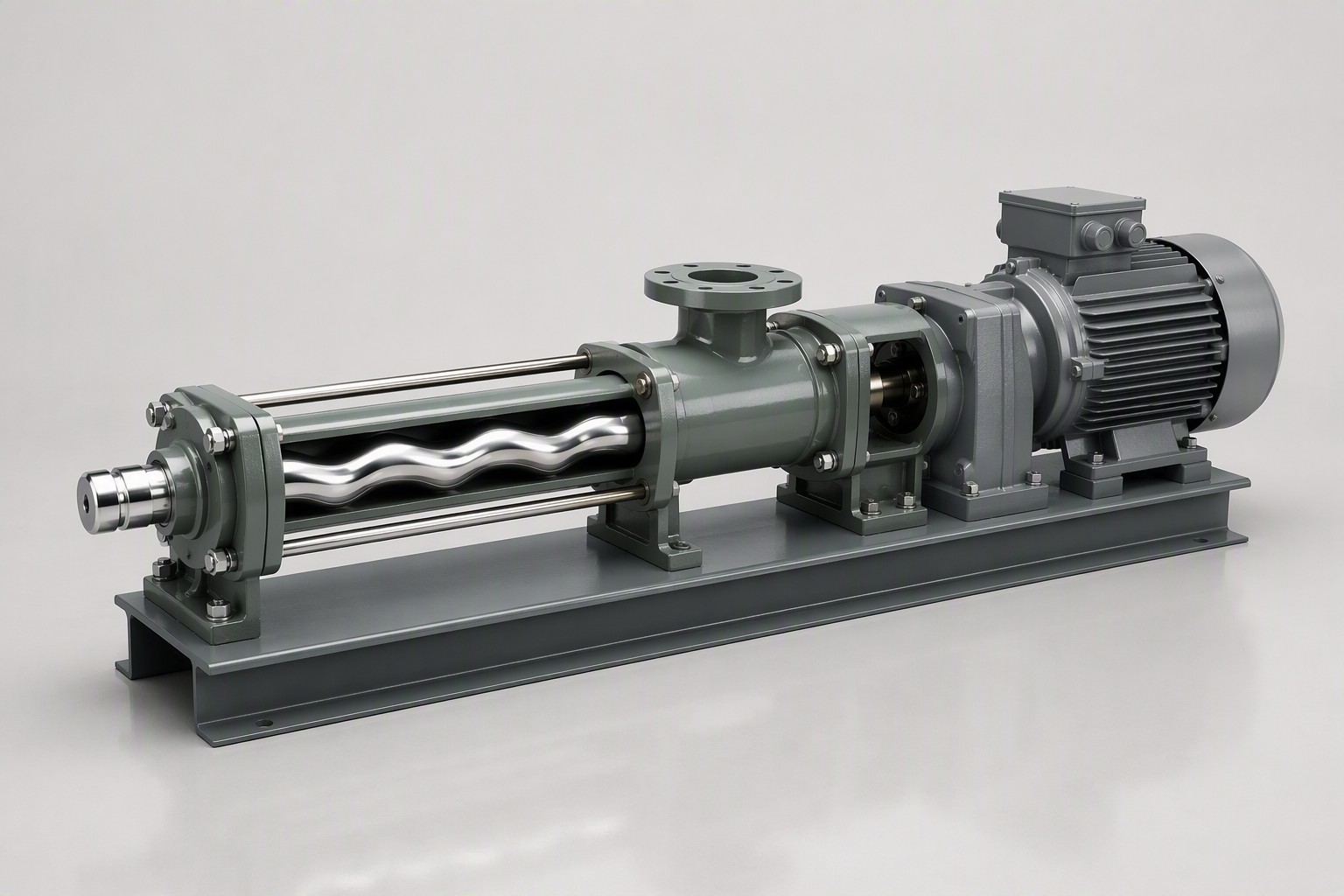
Why Bitumen and Asphalt Need Positive Displacement Pumps
Bitumen (called asphalt in some regions) is the heavy residue of crude oil refining — a black, highly viscous or semi-solid material at ambient temperature. To flow at all it is held hot, usually well above 100°C, where its viscosity drops to a pumpable level. That combination of extreme cold viscosity and hot, sticky running conditions dictates the pump technology.
Centrifugal pumps lose head and efficiency quickly as viscosity climbs, so the published guidance for Qingdao Green Power's centrifugal range is to switch to a gear or screw pump above about 150 cSt — and cold bitumen is orders of magnitude beyond that. A positive displacement pump instead traps a fixed volume per revolution, so it pushes thick product steadily and tolerates viscosity swings as temperature changes. The wider logic of high-viscosity pump selection applies directly to bitumen, and our guide to the best pump for high-viscosity liquids explains the technology comparison behind it.
Pump Options for Hot Bitumen Transfer
Pump Technology vs Bitumen Duty
| Technology | Role in bitumen service | Reference data |
|---|---|---|
| G single screw (progressive cavity) | Bitumen listed among its published media; smooth, low-shear displacement | 0.1–150 m³/h; 0.6–2.4 MPa |
| 3GB triple screw | Clean hot oil service; suitability depends on bitumen viscosity at temperature | 2.4–241.7 m³/h; up to 350°C |
| Jacketed gear pump | Classic heated bitumen transfer; compact and pressure-capable on clean product | Confirm current model availability and specifications with Qingdao Green Power |
| Centrifugal (IS/ISW) | Only very hot, thin product; 80°C temperature limit excludes normal hot bitumen | 1.5–1600 m³/h; ≤80°C; above ~150 cSt use gear or screw |
| Rotary lobe pump | Gentle displacement where product quality and flushing matter | Confirm current model availability and specifications with Qingdao Green Power |
The progressive cavity action of the G-type is a strong match for bitumen because it moves the product in large sealed cavities with low shear and steady flow, and its published media list explicitly includes bitumen. The 3GB triple screw, which conveys clean low-viscosity oil at up to 350°C, is relevant where the product is kept genuinely thin by heat. Both families are shown on the G and 3GB industrial screw pump product page; confirm the exact model, stator elastomer and materials against your bitumen grade and temperature with Qingdao Green Power.
Heating, Tracing and Insulation Are Part of the System
A bitumen transfer pump is only as reliable as its suction supply. If the tank outlet, suction pipe or pump casing cools, bitumen solidifies, the pump starves, and cavitation or seal damage follows. Successful installations therefore treat heat as part of the pump system:
- Heat the tank outlet and suction line with steam coils or electric tracing, and insulate them to the pump flange.
- Keep the pump casing warm with a heating jacket or traced housing so the product stays fluid at the seal and in the clearances.
- Design for cold starts — confirm motor torque and pump limits at the worst-case cold viscosity before the line is warm.
- Flush and standby — provide a flush connection and, on intermittent duties, a standby rotation plan so bitumen does not set solid inside the pump.
Operating Checks for a Bitumen Duty
- Never run a progressive cavity pump dry: without liquid the elastomeric stator is destroyed within seconds — fit low-level protection and a dry-run trip.
- Protect against closed discharge: positive displacement pumps need a relief valve set below the maximum allowable pressure.
- Monitor temperature: keep the product within the range the stator elastomer and seals can tolerate for sustained service.
- Check for solids: oversize particles or agglomerates damage rotor, stator and gear teeth — keep solids below the minimum flow passage.
- Follow a startup sequence: bring the line up to temperature before starting, then purge with hot product before shutdown.
Every bitumen installation differs in grade, temperature, flow and pipe layout, so the final specification belongs with an engineer who can match the machine to the duty — for related context on heated heavy products, see our heavy oil pump selection article.
Frequently Asked Questions
What type of pump is used to transfer bitumen and asphalt?
Bitumen and asphalt are normally transferred with positive displacement pumps. Jacketed gear pumps and screw pumps are the classic choices, and the G-type progressive cavity pump is published for bitumen among its listed media (0.1–150 m³/h at 0.6–2.4 MPa). Centrifugal pumps only suit bitumen kept very hot and thin; confirm current model availability with Qingdao Green Power.
Why must bitumen be heated before pumping?
Bitumen is semi-solid at ambient temperature and its viscosity falls sharply as it is heated, so tank outlets, suction lines and pumps are traced, jacketed and insulated to keep the product fluid. If the suction path cools, bitumen solidifies, the pump starves and cavitation or seal damage follows.
Why is a centrifugal pump a poor choice for bitumen?
Centrifugal pumps lose head and efficiency quickly as viscosity climbs, and above about 150 cSt the published guidance is to use a gear or screw pump. Bitumen is far above that limit unless it is kept very hot — and hot bitumen exceeds the 80°C temperature rating of a standard IS/ISW centrifugal pump — so a heated positive displacement pump is the reliable choice.
Can the 3GB triple screw pump handle hot bitumen?
The 3GB triple screw pump is designed for clean, low-viscosity oil at high temperature, published at 2.4–241.7 m³/h up to 350°C. Whether it fits a bitumen duty depends on the product's viscosity, temperature and cleanliness, so confirm current model suitability and specifications with Qingdao Green Power before procurement.
Describe your bitumen grade, pumping temperature, flow and pipe layout — the engineering team will confirm the right screw or gear pump and heating arrangement.
Get a Quote
Send your fluid data and duty point. Engineers reply within 24 hours.
Contact Us →💬 WhatsApp NowRelated Products
- Industrial Screw Pump (G / 3GB)
- Centrifugal Pump
Related Articles
Best Pump for High-Viscosity Liquids
Technology comparison
Heavy Oil Pump Selection
Heated oil duties
High-Viscosity Oil Transfer Pump
Thick oil transfer