
Heavy Oil Pump Selection Guide
A step-by-step heavy oil pump selection process: which fluid data to collect, how viscosity at pumping temperature rules out pump families, and how to compare centrifugal, gear and screw pumps for a reliable duty.
Heavy oil pump selection is driven by viscosity at the coldest pumping temperature, not by the name of the oil. Define the fluid data and duty point first, then compare pump families: centrifugal pumps only suit heated, low-viscosity oil, while positive displacement pumps — gear, screw and lobe types — displace a fixed volume per revolution. Work through viscosity, pressure and cold start in that order and the right technology becomes obvious.
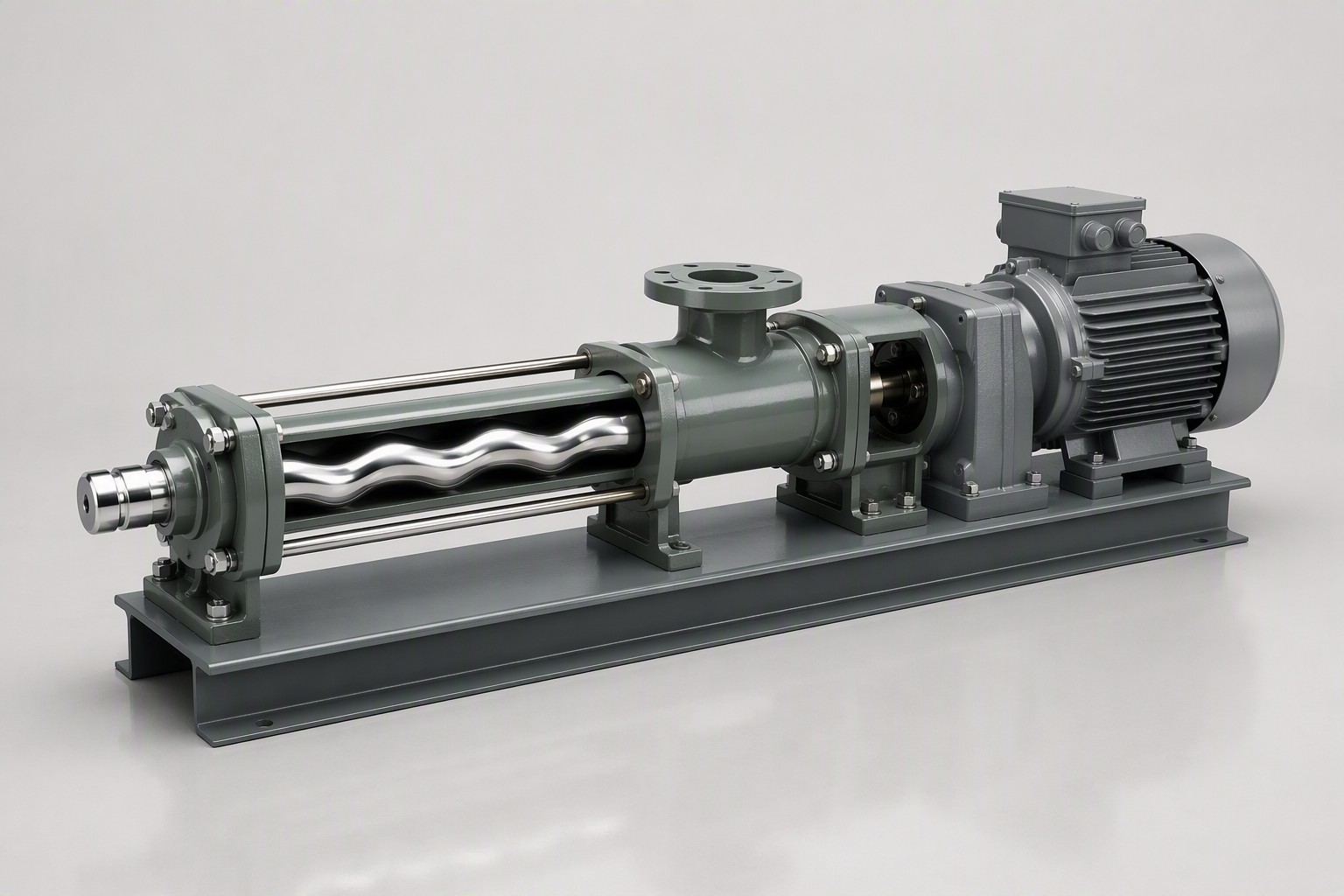
Why Heavy Oil Selection Differs from Light Oil Selection
Heavy fuel oil, residual oil and bunker grades are chosen for heating value, but that makes them hard to pump: viscosity can reach thousands of centistokes at ambient temperature and changes steeply with it. A pump that runs perfectly on diesel will starve, cavitate or overload on cold heavy oil, so the whole heavy oil pump selection exercise starts with the oil's viscosity behaviour, not a catalogue of sizes.
Heavy oil is normally handled hot, and the oil itself is often the only lubricant in the pump. Water, abrasive sediment and asphaltene deposits erode close clearances, ruin seals and block strainers, so the medium must be described honestly before any machine is compared. For difficult-media technology in general, see the best pump for high-viscosity liquids guide.
Step 1: Collect the Fluid and Duty Data First
Every serious selection starts with a written duty specification; without it, a supplier can only guess. The minimum dataset for heavy oil:
- Viscosity at pumping temperature — and at the coldest start-up temperature.
- Pumping temperature and heating method — tank heater, trace heating or jacket.
- Flow rate and discharge pressure — normal, maximum and any low-flow circulation requirement.
- Contaminants — water, solids, wax or asphaltenes.
- Suction conditions — flooded or lift, pipe length, available NPSH at the inlet.
- Duty pattern — continuous, batch, or intermittent with long standstill periods.
Step 2: Match the Pump Family to the Viscosity Band
The first filter is the pump family. Centrifugal pumps are efficient on thin liquids, but performance collapses as viscosity rises: friction losses inside the impeller grow quickly and head and flow fall away. As a general engineering rule, once viscosity exceeds roughly 150 cSt, a positive displacement pump is the more reliable choice.
Pump Families Compared for Heavy Oil Duty
| Characteristic | Centrifugal pump | External gear pump | Screw pump |
|---|---|---|---|
| Viscosity window | Thin, heated oil only | Medium-viscosity clean oil | Very wide, incl. tarry media |
| Flow behaviour | Drops as viscosity rises | Fixed volume per revolution | Smooth continuous axial flow |
| Solids tolerance | Low-moderate | Poor — needs clean oil | Type dependent |
| Typical heavy-oil role | Hot-oil circulation | Heated fuel-oil supply | High-viscosity transfer duty |
Step 3: Choose Between Gear and Screw Machines
Within positive displacement, the two workhorses for heavy oil are external gear pumps and screw pumps. Gear pumps trap oil between meshing teeth and the casing; they are compact and proven on heated fuel-oil supply, but need clean, fluid oil because the pumped liquid seals their clearances.
Where the oil is heavier or hotter, screw pumps take over. Qingdao Green Power's G-type single screw pump moves high-viscosity oils, resins and slurries at 0.1–150 m³/h with pressures of 0.6–2.4 MPa, while the 3GB triple screw pump covers 2.4–241.7 m³/h for lower-viscosity oils at high temperature up to 350°C, with smooth, nearly pulsation-free flow.
Step 4: Check Heating, Cold Start, Sealing and Materials
Most heavy-oil pump failures trace back to start-up, not running: at ambient temperature the oil may be too thick for the motor to reach rated speed, or so solid that the suction line starves. Bring the whole suction path — tank outlet, strainer and pipework — up to temperature before starting, and fit a relief valve, which is mandatory on positive displacement pumps: a closed discharge will otherwise push pressure until a casing, seal or pipe fails.
Heavy oil that cools inside a mechanical seal face can solidify and tear the faces at the next start, so steam-quenched or flushed seal plans are common on hot-oil service, and materials must tolerate the oil's sulphur content at operating temperature. Practical tricks for near-solid media appear in our article on how to pump extremely viscous fluids.
Step 5: Confirm the Model and Drive with the Manufacturer
The final step is confirmation, not guesswork. Frame size, speed, motor power, relief setting, seal plan and heating arrangement must be checked against the real duty — including the cold-start case — because the pump, heating and pipework must be specified as one system. KCB-style gear pumps are treated on this site as a technical-reference topic, so confirm current model availability and specifications with Qingdao Green Power before procurement, and use the contact form to send your duty data for a formal recommendation.
Frequently Asked Questions
What is the most important parameter when selecting a heavy oil pump?
Viscosity at the coldest pumping temperature is the governing parameter. It decides whether the oil can reach the pump inlet, how much shaft power the motor needs, and which pump family can handle the duty at all.
Can a centrifugal pump handle heavy oil?
Only when the oil is heated until it is thin enough to pump efficiently. As a general rule, once viscosity rises above roughly 150 cSt, centrifugal performance falls away and a gear or screw pump is the more reliable choice.
Should I choose a gear pump or a screw pump for heavy oil?
Gear pumps suit clean, medium-viscosity oil kept fluid by heating. Screw pumps handle a wider range, including heavier and hotter media — Qingdao Green Power's G single screw pump covers 0.1–150 m³/h at 0.6–2.4 MPa, and the 3GB triple screw pump reaches 2.4–241.7 m³/h for hot, lower-viscosity oils.
Why does the cold-start condition matter in heavy oil pump selection?
Heavy oil viscosity rises steeply as temperature falls, so breakaway torque at the lowest expected start-up temperature can far exceed running torque. If the pump and motor are not specified for that condition, the drive stalls or the suction line starves at every cold start.
Send your oil grade, viscosity at pumping temperature, cold-start temperature, flow and pressure — the engineering team will walk through the heavy oil pump selection with you and confirm the right configuration.
Get a Quote
Send your fluid data and duty point. Engineers reply within 24 hours.
Contact Us →💬 WhatsApp NowRelated Products
- Industrial Screw Pump
- Centrifugal Pump
Related Articles
Best Pump for High-Viscosity Liquids
Technology overview
High-Viscosity Pump Selection
Selection guidance
Bitumen and Asphalt Transfer
Related heavy-duty pumping