
Boiler Feed Pump Selection Guide
Boiler feed pump selection explained: how to size a multistage feedwater pump from the boiler's flow and head demand, protect the suction with NPSH margin, and choose a reliable configuration for hot treated feedwater.
A boiler feed pump must deliver treated feedwater into the boiler at a pressure reliably above the boiler's operating pressure, at the flow the steam load demands. Because that head is high, the usual machine is a multistage centrifugal pump that builds pressure stage by stage. Sizing starts from the boiler's maximum continuous rating, and the deaerator suction side must supply enough net positive suction head (NPSH) to stop hot feedwater cavitating the first stage.
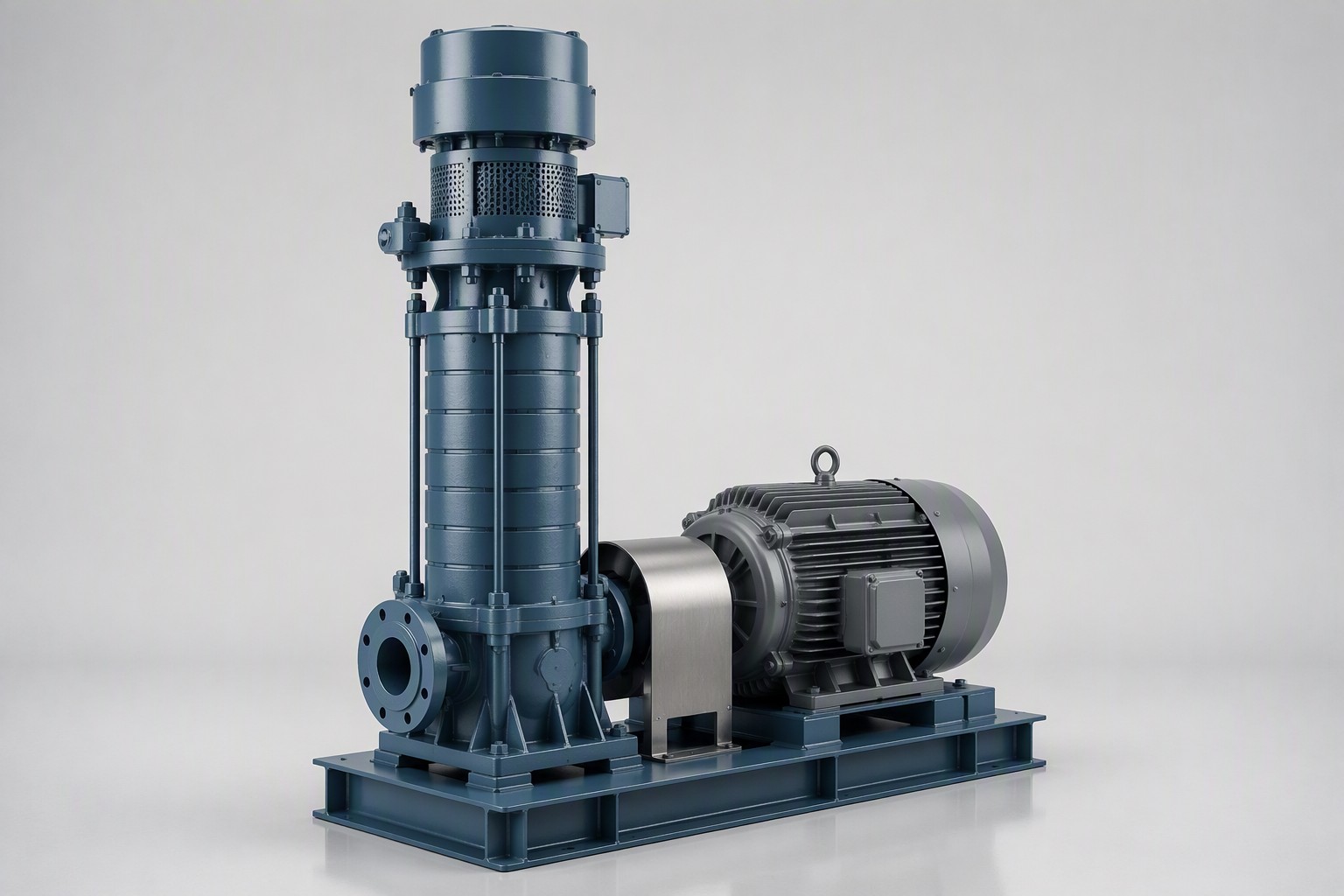
What a Boiler Feed Pump Must Do
The boiler feed pump pushes treated, deaerated water into the boiler at a rate matching steam generation and at a pressure high enough to overcome boiler operating pressure plus every resistance in between. Feedwater is chemically conditioned to protect the boiler, so the pump must handle clean hot water without adding contamination. Because boilers rarely run at fixed load, the pump must accept turndown, and a minimum-flow recirculation line usually protects it when steam demand falls. Our review of boiler feed pump applications shows where these machines sit in the plant.
- Deliver the flow — match maximum continuous steam demand plus blowdown margin.
- Overcome the head — boiler operating pressure, control-valve drop, line losses and static lift.
- Stay reliable — continuous duty with sudden load changes and safe low-load operation.
- Protect the boiler — keep feedwater clean, deaerated and correctly treated to the drum.
Size the Feedwater Pump from Flow and Head
Boiler feed pump selection starts with two numbers: flow and total head. Every kilogram of steam leaving the boiler must be replaced by feedwater, so flow follows the boiler's maximum continuous rating. Head is the harder sum — boiler operating pressure, feedwater control-valve drop, piping and economiser friction, and static lift from the deaerator to the boiler inlet. Check the duty point against the pump curve rather than a catalogue maximum; our pump system design guide covers the method.
Pipeline Pump Series at a Glance
| Characteristic | ISG vertical inline | GDL multistage variant |
|---|---|---|
| Configuration | Single-stage, in-line flanges | Multistage, in-line flanges |
| Published flow | 1.6–1200 m³/h (series) | Within the 1.6–1200 m³/h series range |
| Head coverage | 5–150 m (series) | Higher-head band — above 80 m |
| Typical boiler role | Circulation and low-head transfer | Boiler feed, high-rise boost |
Respect Temperature, Deaerator Suction and NPSH
Feedwater is hot — often above 100°C — and hot water has a high vapour pressure, which dominates suction design. The deaerator stores feedwater close to saturation, so the static column between it and the pump is almost all the available net positive suction head (NPSHa). If the pump's required NPSH (NPSHr) exceeds NPSHa, the first stage flashes and cavitates, eroding the impeller and shaking the machine.
Practical feedwater pump rules:
- Mount the pump below the deaerator for positive static suction head.
- Keep suction piping short and free of needless losses.
- Choose a low-NPSHr model and keep a working margin.
- Watch low-load recirculation — cavitation can occur quietly near vapour pressure.
Match Materials to Temperature and Feedwater Quality
Feedwater quality is the boiler operator's first line of defence, and the pump must not undermine it. Oxygen-scavenged, low-hardness water at temperature is not aggressively corrosive, but wetted materials, pressure rating and shaft sealing must suit the duty — casings rated for working pressure and temperature, seals that handle hot water without steam flashing, and running gear built for continuous operation. Confirm material, gasket and seal-face grades against your actual feedwater chemistry.
Design for Efficiency and Reliability — Then Run It Correctly
Feed pumps run for thousands of hours a year, so efficiency at the duty point and reliability across the load range outweigh first cost; an oversized pump runs far from its best-efficiency point, loads its bearings and can surge on recirculation. Operating rules are non-negotiable: never run against a closed discharge valve — the energy heats the water and the pump in seconds — and never let a centrifugal feed pump run dry. Keep the minimum-flow recirculation valve functional for low-load protection against overheating and vapour binding, and log vibration, seal leakage and bearing temperature to catch faults early. In power and utility plants the feed pump is critical — see how it fits among the other pumps used in thermal power plants.
Selecting from the Qingdao Green Power Range
Qingdao Green Power addresses boiler feed and high-rise boosting in the ISG/GDL pipeline pump range: vertical inline pumps that install directly in the pipe run, saving baseplate and floor space. The published envelope — flow 1.6–1200 m³/h, head 5–150 m, power 0.18–132 kW, temperature -20°C to 120°C — is the starting point; the GDL multistage variant covers the higher-head band above 80 m where boiler feed duties live. Send the boiler rating, deaerator elevation, feedwater temperature and discharge pressure, and the engineering team will check the duty point and confirm model availability before procurement.
Frequently Asked Questions
What is the main job of a boiler feed pump?
To deliver treated, deaerated feedwater into the boiler at a pressure reliably above boiler operating pressure, matching the flow the steam load demands. The pump must do this continuously and recover quickly from load swings, so reliability matters as much as the duty point.
Why are boiler feed pumps usually multistage centrifugal pumps?
Boiler operating pressures translate into high total head, often above 80 m, and a multistage centrifugal pump builds that head stage by stage in one compact inline unit. Qingdao Green Power's GDL multistage pipeline pump variant covers this higher-head band — above 80 m — for boiler feed and high-rise boosting; single-stage ISG pumps serve lower-head circulation.
Why does a boiler feed pump need careful NPSH checks?
Feedwater leaving the deaerator is hot and near its vapour pressure, so available NPSH at the pump suction is low. If required NPSH exceeds it, the first stage cavitates — noise, vibration and impeller damage. Keep suction lines short, give the pump positive static head from the deaerator, and size with an NPSH margin.
What is the published range of Qingdao Green Power's pipeline pumps for feedwater duties?
The ISG vertical inline pipeline range is published at 1.6–1200 m³/h flow, 5–150 m head, 0.18–132 kW and -20°C to 120°C. The GDL multistage variant covers the higher-head band above 80 m for boiler feed duties. Confirm current model availability and specifications with Qingdao Green Power before procurement.
Send boiler rating, feedwater temperature and discharge pressure — the engineering team will confirm the right ISG or GDL configuration.
Get a Quote
Send your fluid data and duty point. Engineers reply within 24 hours.
Contact Us →💬 WhatsApp NowRelated Products
- ISG/GDL Pipeline Pump
Related Articles
Boiler Feed Pump Applications
Where feed pumps are used
Pumps in Thermal Power Plants
Feed and utility pump duties
Pump System Design Guide
Head loss and duty point