
Heavy Oil Transfer Pump Selection Guide
Engineering practice for heavy oil transfer: suction-side design, heating and insulation, pump selection for unloading and feeding duties, vacuum priming, and the operating habits that keep transfer systems reliable.
Moving heavy oil reliably is a system problem, and the transfer pump is only one part of it. Failures usually begin on the suction side — oil too cold to flow, strainers choked with wax, air leaking into a lifting line. A reliable transfer system needs short, heated, well-insulated suction piping, a positive displacement pump sized for cold start, and disciplined operation: preheat, relief protection, flushing.
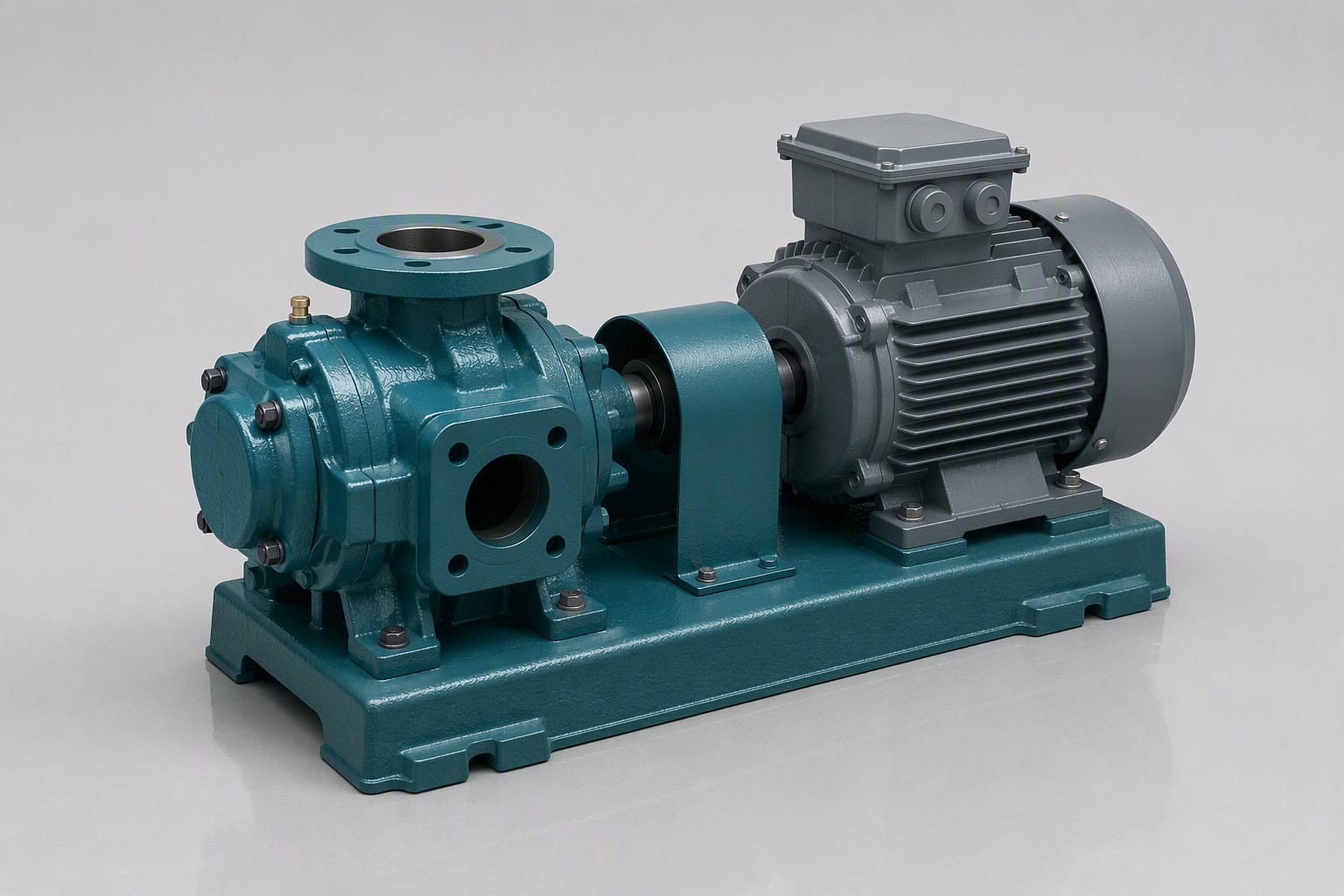
Typical Heavy Oil Transfer Duties
Heavy oil rarely moves itself: it must be unloaded from tank trucks and railcars, transferred between storage tanks, and fed to burners — each leg with its own flow, pressure and running pattern.
Unloading is the hardest case because the oil arrives cold and must be lifted from the vehicle; tank-to-tank transfer is easier, with flooded suction and steady flow; burner feed needs steady, low-pulsation pressure because the flame follows the fuel supply. Often a larger pump fills a day tank while a smaller supply pump feeds the burner. Related heavy-media practice appears in our asphalt and bitumen pump guide.
Design the Suction Side Before Choosing the Pump
On viscous service the suction line, not the pump, sets the limit: if oil reaches the inlet too slowly, the pump starves, vacuum climbs and flow collapses. The rules:
- Keep the suction run short — every unheated metre adds pressure drop and cooling surface.
- Prefer flooded suction — a bottom outlet tank beats lifting from the top.
- Heat and insulate the whole suction path — tank outlet, strainer, valves and pipe to the pump flange.
- Size the strainer generously — it clogs with wax, so give it surface area and a gauge.
- Plan for cool-down — a drain or flush connection clears a standing line before the oil solidifies.
Net positive suction head, pipe sizing and air tightness matter more on viscous duty because every mistake is magnified; where oil must be lifted, priming may need assistance — see the liquid ring vacuum pump selection guide.
Heating Strategy: Keep the Oil Fluid from Tank to Discharge
Viscosity is temperature in disguise: a modest drop multiplies viscosity many times, so the whole path must stay hot. Tank suction heaters warm the bulk oil, tracing keeps the pipe warm, and insulation slows cooling at flanges and valves.
Do not use the pump to warm the oil — circulating cold oil overloads the motor — and do not overheat: oil above its flash point is a vapour hazard, and excess temperature shortens seal life and can coke the oil. A temperature-controlled circuit with its sensor at the pump suction is the practical answer; the boiler feed pump selection guide pairs heat with reliable suction the same way.
Pump Selection for Transfer Service
Transfer pumps for viscous oil are almost always positive displacement. External gear pumps suit heated fuel-oil transfer but need clean, fluid oil, since the pumped liquid seals the gear clearances; on heavier, tarry or solids-laden media an industrial screw pump is more robust. Qingdao Green Power's G single screw pump handles high-viscosity oils at 0.1–150 m³/h with 0.6–2.4 MPa, and the 3GB triple screw pump covers 2.4–241.7 m³/h for hot, lower-viscosity oils up to 350°C.
Centrifugal pumps appear only where oil is circulated hot and thin, such as a heated loop keeping a tank stirred. For unloading, ask whether the pump can pull oil through the vehicle outlet and hose on the coldest day; if not, plan vacuum assist.
Vacuum Priming and Assisted Unloading
Liquid ring vacuum pumps on unloading racks pull air from the hose and pump casing before the oil arrives: a positive displacement pump moves air poorly and can lose prime on a lifting suction, while a liquid ring pump tolerates wet gas, establishes flow and lets the transfer pump take over. The same arrangement serves railcar unloading: place the vacuum pump close to the tank connection and add a separator so oil carry-over never reaches it.
Operating Practice: Preheat, Relief, Flush
Three disciplines prevent most problems. Preheat: bring the tank outlet, strainer and suction line to temperature before starting and jog the pump to confirm flow before opening the discharge. Protect: a relief valve below the maximum allowable pressure is mandatory on a positive displacement machine — a closed block valve will overpressurise the casing, seal or hose. Flush: purge any line that can cool below the pour point with light oil or drain it, or the next start begins with a solid plug.
Troubleshooting Common Transfer Problems
- Flow falls off after start-up — strainer clogging with wax; clean it and watch the suction gauge.
- Pump noisy or vibrating — oil too thick for the suction line; raise the temperature or shorten the run.
- Pump loses prime on a lifting line — air leaking through a flange or hose coupling; check joints above the oil level.
- Motor overloads — cold oil or the relief valve lifting continuously; confirm temperature before full-speed running.
- Seal leaks after a standstill — solidified oil damaged the faces on restart; add a flush or steam quench.
Frequently Asked Questions
How do I unload heavy oil from a tank truck?
Connect the hose, heat the vehicle outlet if fitted with a heater, and use a positive displacement transfer pump on a short suction line. Where lift is unavoidable, pull the line down with a liquid ring vacuum pump first so the transfer pump starts fully primed.
Why does my heavy oil transfer pump lose flow over time?
The usual cause is suction starvation: a strainer clogging with wax or sediment, an over-long or unheated suction line, or air leaking into a lifting line. Check the suction gauge and clean the strainer first.
Should the discharge line also be traced and insulated?
Yes. If the discharge line cools below the oil's pour point during a standstill, the oil solidifies and blocks the next start. Trace and insulate long discharge runs and provide a drain or flush point so the line can be cleared.
Which pump type is best for heavy oil transfer between tanks?
Positive displacement pumps — external gear or screw types — are the normal choice, moving a fixed volume regardless of viscosity. Screw pumps suit heavier and hotter media; KCB-style gear pumps are a technical-reference topic here, so confirm current model availability and specifications with Qingdao Green Power before procurement.
Describe your transfer layout — tank sizes, distances, oil grade, heating available and flow required — and the engineering team will help you design the suction side and select the transfer pump that fits it.
Get a Quote
Send your fluid data and duty point. Engineers reply within 24 hours.
Contact Us →💬 WhatsApp NowRelated Products
- Industrial Screw Pump
- Centrifugal Pump
- Vacuum Pump
Related Articles
Asphalt and Bitumen Pump
Heavy product practice
Liquid Ring Vacuum Pump Selection
Priming and unloading
Chemical Process Pump Selection
Sealing and materials