
Which Pump Is Best for High-Viscosity Liquids? Gear vs Screw vs Lobe
Centrifugal pumps lose efficiency above roughly 200 cSt. For bitumen, heavy fuel oil, molasses and polymer melts, positive-displacement technology — gear, screw or lobe — is required. This guide compares the three.
For liquids above ~200 cSt, use a positive-displacement pump, not a centrifugal. Gear pumps (KCB/YCB) suit clean oils; G-type single-screw pumps handle abrasive and higher-viscosity media; lobe pumps manage shear-sensitive products. Match pressure, viscosity and solids content.
Why Viscosity Changes the Pump Choice
Centrifugal pumps rely on impeller velocity, so performance collapses when the liquid is thick. Above roughly 150–200 cSt, efficiency falls sharply. Positive-displacement pumps push a fixed volume per revolution, so output stays predictable regardless of viscosity — the motor simply works harder.
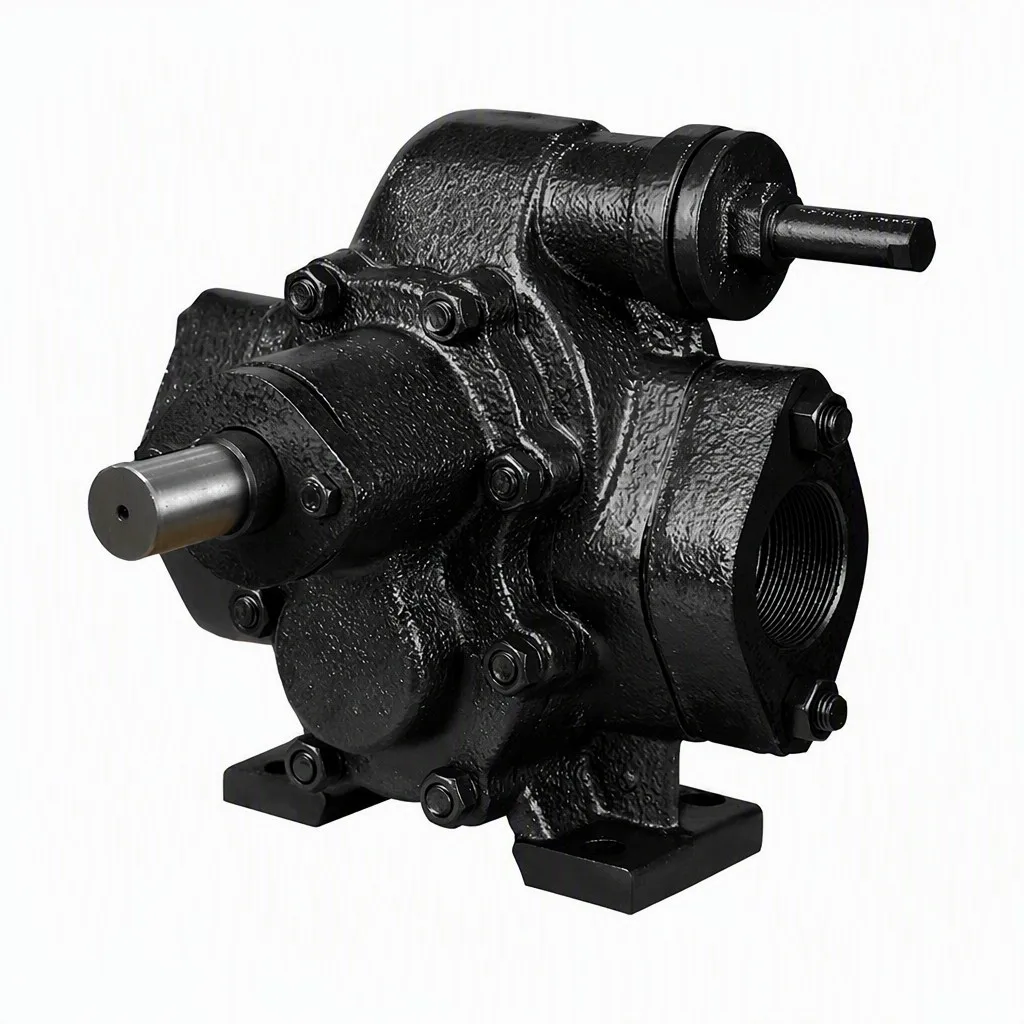
Gear Pumps (KCB / YCB Series)
Two intermeshing gears trap liquid between teeth and casing. Best for: clean, lubricating fluids — heavy fuel oil, diesel, lube oil, bitumen, edible oil. Compact, low cost, tolerant of high pressure. Limit: poor with abrasive particles and no dry-running capability.
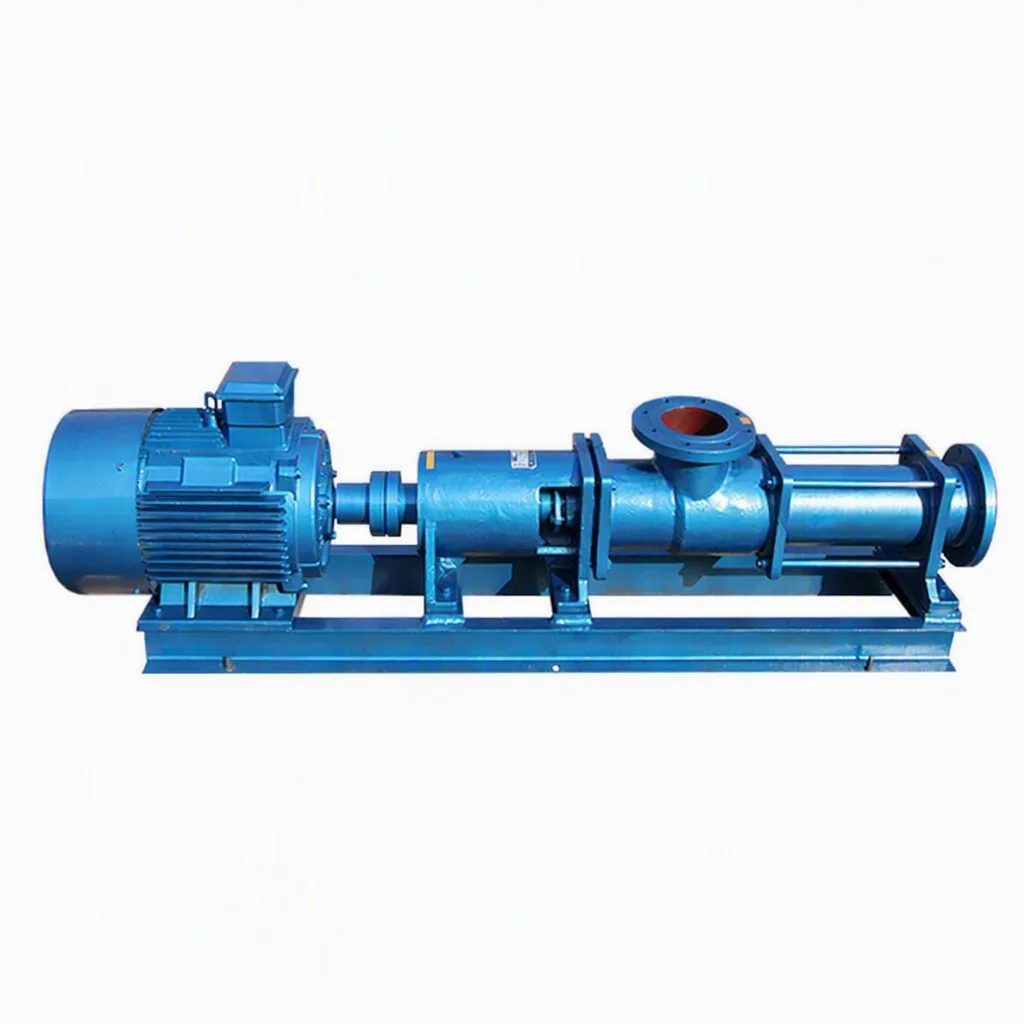
Single-Screw (Progressive Cavity) Pumps — G Series
A steel rotor turns inside a flexible rubber stator, forming sealed cavities that travel from suction to discharge. Best for: abrasive slurries, sludge, high-viscosity and shear-sensitive products. Flow is pulseless and the pump self-primes. G-series units run to high viscosities with proper stator material selection.
Lobe Pumps
Two synchronized lobes rotate without metal-to-metal contact. Best for: shear-sensitive food, pharmaceutical and cosmetic products that also need gentle handling and easy cleaning. Higher cost than gear pumps.
Indicative Technology Comparison
| Gear (KCB/YCB) | Clean oils · up to ~50,000 cSt · compact · lowest cost |
| Single screw (G) | Abrasive & viscous media · self-priming · pulseless |
| Lobe | Shear-sensitive food/pharma · CIP-cleanable · gentle |
What happens if I use a centrifugal pump on 1,000 cSt oil?
Efficiency may drop below 30% and head falls steeply; the pump can also overheat. Select positive displacement instead — even a small gear pump will outperform it.
How do I estimate viscosity before buying?
Ask for the kinematic viscosity at pumping temperature. Fuel oils are commonly quoted at 40°C or 50°C; bitumen at 135°C. Viscosity falls rapidly as temperature rises.
Can a screw pump run dry?
G-series pumps must not run dry for extended periods — the stator overheats. Always protect with a low-level switch or run-dry guard.
Tell us the liquid, viscosity at pumping temperature and required flow — we will recommend the right positive-displacement series.
Get a Quote
Send liquid type, viscosity, temperature and flow. Engineers reply in 1–2 days.
Contact Us →💬 WhatsApp NowRelated Products
- Screw Pump (G / 3GB)